More Rate Hikes Are Coming as Job Growth Accelerated, Unemployment Fell
A blowout jobs report has traders betting the Fed will strike again, yet one crucial piece of the economy is missing, and part of the hiring surge may vanish with the ballots. Who ends up paying for the next move?

This post may contain links from our sponsors and affiliates, and Flywheel Publishing may receive compensation for actions taken through them.

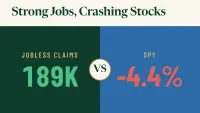
The October jobs report on Friday came in far stronger than forecasters expected. Employers added 165,000 jobs, compared with a Reuters-polled forecast of 65,000. The unemployment rate fell to 4.1% from 4.2% in September, even as more people started looking for work. Revisions added another 84,000 jobs to August and September combined.
Traders responded. They priced in roughly an 80% chance of a Federal Reserve rate hike in December, up from 66.9% on Thursday, according to Reuters. For households, that means credit card balances, auto loans and home equity lines are likely to get more expensive again. Meanwhile, the paychecks that cover those bills are falling behind prices.
Why the Fed’s Case for More Hikes Just Got Stronger
In late October, Michael Gapen of Morgan Stanley (NYSE:MS | MS Price Prediction) described what would push the Fed toward more hikes. He was looking for evidence. He wanted evidence that “employment growth is picking up, the unemployment rate’s moving lower, and wage growth is turning and starting to firm.” At that point, hiring was running at only about 50,000 jobs a month.
October delivered the first two of those three conditions. The Fed has already moved once, raising the upper bound of its target range to 4.00% from 3.75% in September. Inflation gives it more reason to act again. Consumer prices rose 0.6% in September alone and were up 3.7% from a year earlier.
Workers Are Losing the Race Against Prices
The third condition, stronger wages, is still missing. Over the 12 months through October, wages grew 3.1%, down from 3.2% in September. Average hourly earnings reached $38.00, but pay is growing more slowly than prices. The typical worker is losing buying power just as borrowing costs head higher.
Joseph Brusuelas weighed in. The RSM chief economist called the expansion “highly skewed towards upper-end households and corporates.” The broader U-6 measure, which counts discouraged and involuntary part-time workers, rose to 7.9% from 7.6%. The median job search extended to 11.9 weeks, the longest since November 2021. Cory Stahle of Indeed Hiring Lab noted that more than a quarter of unemployed workers had been searching for six months or longer.
Some of October’s Hiring Came From One-Time Spending
Professional and business services added 70,000 jobs and healthcare added 42,000. Manufacturing added 19,000, which Reuters linked to the AI expansion. Construction lost 3,000 jobs and leisure and hospitality lost 13,000. Those two sectors employ many of the workers most exposed to higher rates.
Boston College economist Brian Bethune saw two spending drivers. He attributed much of the strength to a jump in federal spending and roughly $12 billion in election spending from August to October. That election money is now gone. The Fed may be tightening into a labor market whose strength is partly temporary and unevenly shared.
What to Watch Before the December Meeting
The November jobs report, due in early December, is the key test. If payroll gains hold up without election spending, a December hike looks likely, and a pickup of wage growth would complete Gapen’s checklist. He said that combination could get the Fed to more rate hikes in 2027. If hiring falls back toward its earlier pace, a December hike would look like a mistake. Job seekers already waiting the longest would bear the most cost.
Contact [email protected] for any questions or corrections.
After two decades of patrolling the dark corners of suburbia as a police officer, Rich Duprey hung up his badge and gun to begin writing full time about stocks and investing. For the past 20 years, he’s been cruising the markets looking for companies to lock up as long-term holdings in a portfolio while writing extensively on the broad sectors of consumer goods, technology, and industrials. Because his experience isn’t from the typical financial analyst track, Rich is able to break down complex topics into understandable and useful action points for the average investor. His writings have appeared on The Motley Fool, InvestorPlace, Yahoo! Finance, Money Morning, and, of course, 24/7 Wall St. He has been featured in both U.S. and international publications, including MarketWatch, Financial Times, Forbes, Fast Company, and USA Today.