America Just Matched a 57-Year Employment Record. Why Are Workers Still Worried?
Layoffs have nearly vanished, yet consumer sentiment sits at recession levels. A labor market that shields those with jobs while shutting out those seeking one may be setting up the holiday quarter and the Fed for an unexpected collision.

This post may contain links from our sponsors and affiliates, and Flywheel Publishing may receive compensation for actions taken through them.
Fewer Americans filed for unemployment benefits last week than in almost any week in more than half a century. Initial jobless claims fell to 189,000, matching a 57-year low. Employers announced just 43,994 job cuts in October, about 71% fewer than a year earlier. The unemployment rate fell to 4.1% in October from 4.2% in September.
Workers remain gloomy anyway. The University of Michigan’s consumer sentiment index stood at 48.1 in September, below the 60 threshold associated with recessions and far under the 74 reading of December 2024. Both numbers are accurate. America has built a labor market that protects people who already have jobs and blocks everyone trying to get one, and it acts differently from the downturns investors are trained to spot.
Why Record-Low Claims Hide a Frozen Job Market
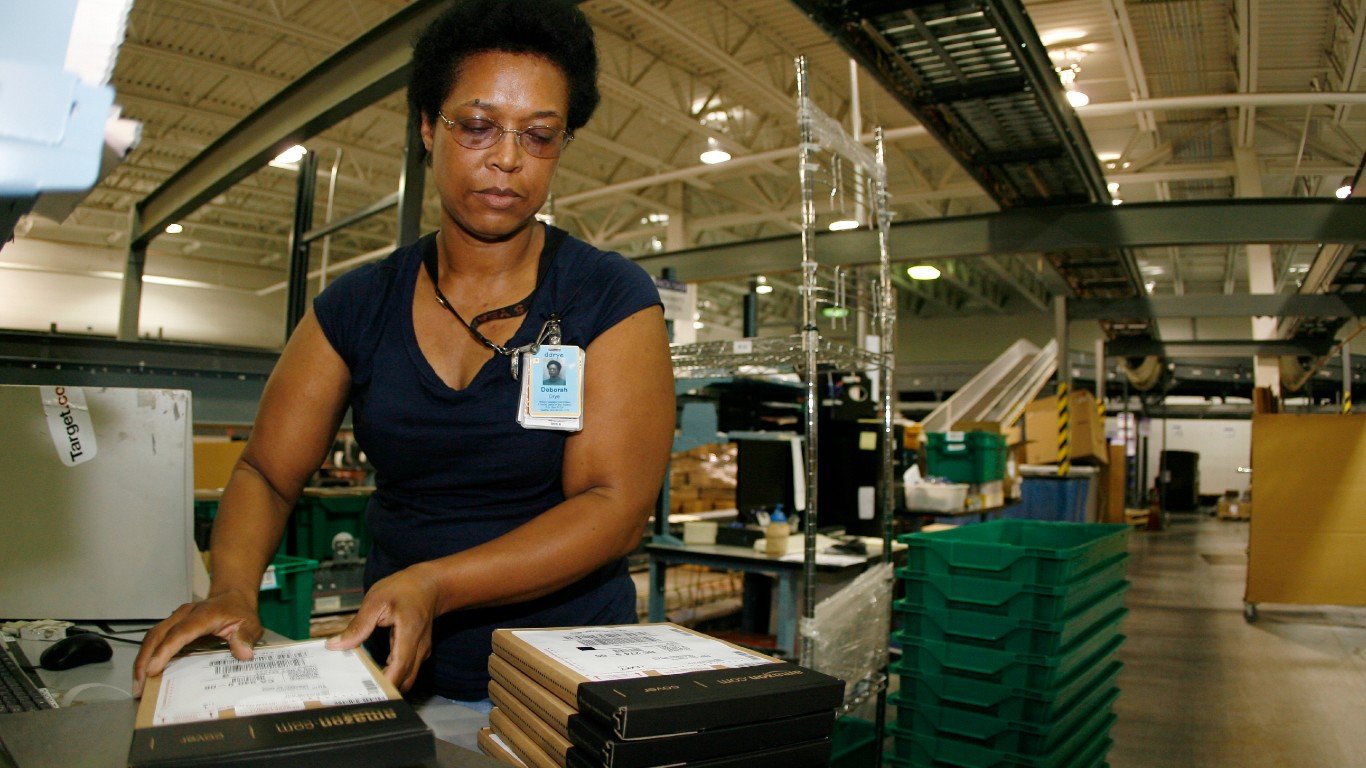
Jobless claims count people who lost work. They say nothing about how hard it is to find work. Companies burned by the post-pandemic hiring scramble are holding on to the staff they have while adding permanent replacements carefully. October hiring announcements totaled 444,692, but much of that reflected seasonal holiday staffing. Even Amazon (NASDAQ:AMZN | AMZN Price Prediction) is cutting jobs again during its holiday ramp.
Overall payroll growth has been slow. Total nonfarm employment reached 159.3 million in October on a preliminary basis, compared with 158.4 million a year earlier. Employers are squeezing more from existing staff: Reuters reported that worker productivity surged in the third quarter. When output grows without new hiring, the open door for job seekers narrows.
Paychecks Are Quietly Losing Ground
Low turnover also drains workers’ bargaining power. People who stay put miss out on the raises that come with switching jobs. Real average hourly earnings for private-sector workers, adjusted for inflation, peaked at $11.38 in January and February 2026 and fell to $11.26 in September. That steady erosion, more than layoff fear, explains why a record-low claims number fails to lift the national mood.
Retailers and the Fed Face a Strange Kind of Slowdown
In a conventional recession, mass layoffs sink spending all at once. A low-fire, low-hire economy produces a floor without a ceiling. Employed households keep spending, so the collapse never arrives, but shrinking real pay caps how much more they spend. Sentiment tends to lead spending by one to three months, which puts the holiday quarter directly in the path of September’s weak reading. Retailers that depend on discretionary splurges look more exposed than value chains that win when shoppers trade down.
The Federal Reserve sees the headline strength. Bloomberg reported that Treasuries stumbled as strong labor data lifted expectations of a Fed rate hike, and The New York Times wrote that the stable job market keeps the Fed on track to raise rates gradually. Axios noted that conflicting numbers complicate those decisions. Tightening into falling real wages risks hitting the consumer the claims data says is safe.
Signals That Will Decide the Next Two Quarters
Keep an eye on three readings. First, whether November hiring announcements hold up once seasonal staffing fades. Second, whether real average hourly earnings stop sliding in October’s data; another decline would confirm that workers are paying for the Fed’s progress. Third, job openings, which rose to 7.52 million in September. If openings keep climbing while hiring stays thin, the freeze reflects employer caution rather than weak demand. If openings roll over while claims stay near record lows, the insiders’ labor market will start to look a lot less secure.
Contact [email protected] for any questions or corrections.
After two decades of patrolling the dark corners of suburbia as a police officer, Rich Duprey hung up his badge and gun to begin writing full time about stocks and investing. For the past 20 years, he’s been cruising the markets looking for companies to lock up as long-term holdings in a portfolio while writing extensively on the broad sectors of consumer goods, technology, and industrials. Because his experience isn’t from the typical financial analyst track, Rich is able to break down complex topics into understandable and useful action points for the average investor. His writings have appeared on The Motley Fool, InvestorPlace, Yahoo! Finance, Money Morning, and, of course, 24/7 Wall St. He has been featured in both U.S. and international publications, including MarketWatch, Financial Times, Forbes, Fast Company, and USA Today.