What To Expect Out of Meta By The End of 2026 With an Announced January Stock Split

This post may contain links from our sponsors and affiliates, and Flywheel Publishing may receive compensation for actions taken through them.
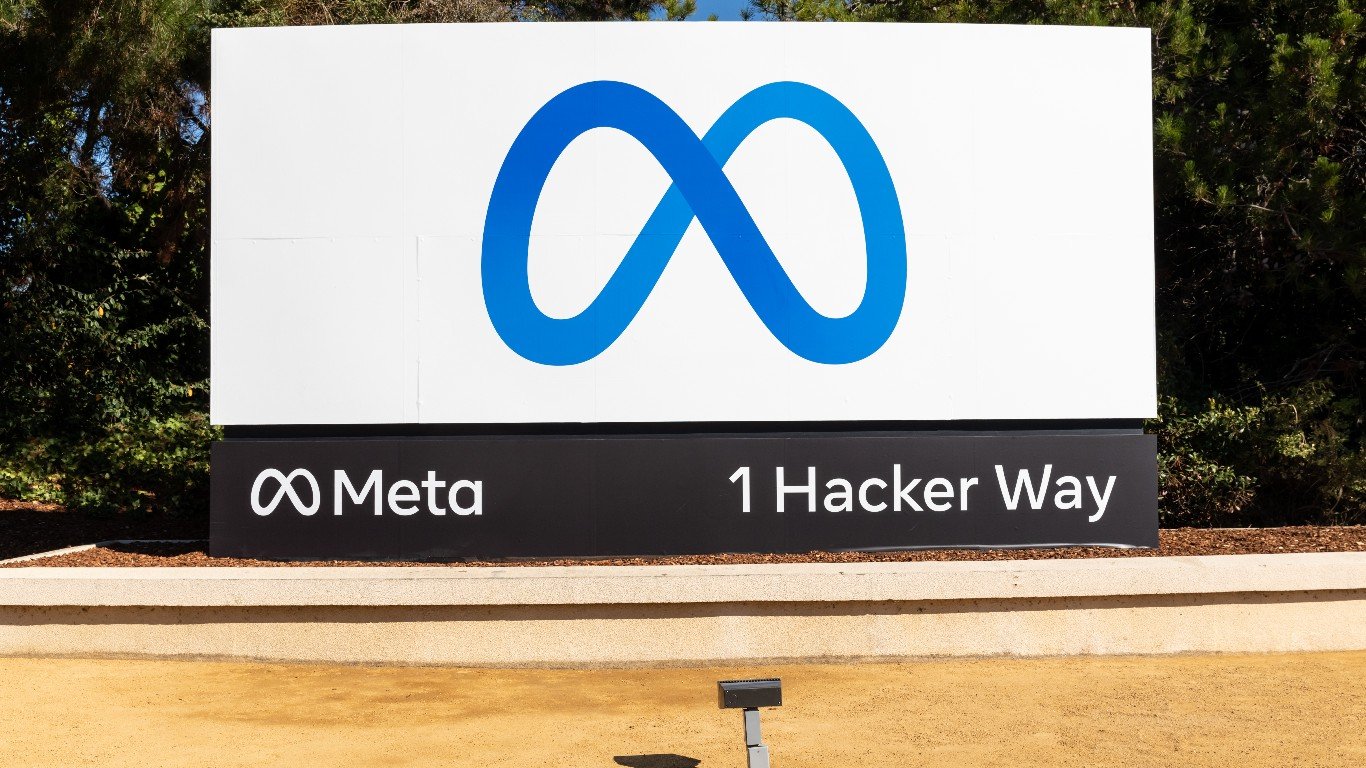
Meta Platforms (NASDAQ:META | META Price Prediction) trades at $641.39. A 2-for-1 split is on the way, and the ad business keeps growing even though the stock has fell behind the market.
Meta owns Facebook, Instagram, WhatsApp and Threads, which together reach 3.64 billion people every day. Shares fell 10.75% over the past month after third-quarter GAAP EPS of $3.83 came in well below the $5.70 consensus. A $9.89 billion legal charge drove most of the miss. In the same report, Meta announced a new nonvoting share class that will go to existing holders one-for-one. That effectively creates a 2-for-1 split, with trading expected in late January.
Ad Pricing Power and Muse Make 18x Forward Earnings Look Cheap
Revenue reached $64.60 billion, up 26.07% and above the $63.39 billion consensus. The average price per ad rose 14% and ad impressions grew 10%. Without the legal charge, EPS would have been $7.40. Fourth-quarter revenue guidance of $73 billion to $76 billion points to further acceleration.
Muse, Meta’s personal AI agent, gives the business a second growth engine. More than 10 million people set up an agent in a month and a half, and about 25% of them use it on any given day. Shopping is the most common use, with average purchases above $200. At a forward P/E of about 18, buyers pay a modest price for consensus EPS of $33.9720 in 2027.
Negative Free Cash Flow and Falling Estimates Flash Warning Signs
Capex of $34.91 billion pushed quarterly free cash flow to negative $2.12 billion. Full-year capex guidance is $135 billion to $145 billion (that spending lands on the power, cooling, and networking suppliers we profiled in a free report on seven non-chipmaker AI infrastructure names), and debt of $83.7 billion now tops cash of $82.4 billion. Analysts have cut their 2026 EPS estimates 40 times over the past 30 days, compared with 7 increases.
Several youth-related trials are still pending, and Reality Labs is expected to lose $18 billion to $19 billion this year. The new Class C shares could also fund capital raising or acquisitions, which opens the door to dilution.
Why 2027 Budget Guidance Could Settle the Debate
Excluding the legal charge, Meta still expects 2026 operating income to exceed 2025. That supports the longer-term earnings case. The 2027 capacity plan is still unknown, and Meta says it will give more detail on the fourth-quarter call. Investors will be watching whether Muse cost efficiency improves more than 10x as promised.
Analysts See 33% Upside While Shares Trail the S&P 500
The 62 covering analysts have an average target of $850.10. That implies 32.5% upside, though price targets are estimates and can miss. Ratings break down as follows:
- Strong Buy: 9
- Buy: 46
- Hold: 6
- Sell: 1
Meta is down 2.6% year to date, while the S&P 500 is up 9.99%. Over one year, Meta has gained 1.85% against the index’s 10.06%. The stock trades at a trailing P/E of about 22.
What Meta’s Split Means for Shareholders
Meta trades at $641.39 ahead of its split.
The split changes the share count and leaves the company’s value the same. At the current price, each pre-split share would equal about $320.70 across two shares. The bigger effect is control. The nonvoting class maintains founder voting power while giving Meta a currency for deals and compensation.
Getting there requires fourth-quarter revenue at or above the guided range, a 2027 spending plan that analysts can model, and early commerce fees from Muse. The case falls apart if 2027 capex rises without matching revenue, if Class C issuance turns heavy, or if youth trials produce charges on the scale of the third-quarter settlement.
At about 18 times forward earnings, Meta’s valuation reflects strong ad pricing at a modest multiple, and the January split is unlikely to change that.
Contact [email protected] for any questions or corrections.
Alex Sirois is a financial writer with experience spanning both retail and institutional investing. He has written for InvestorPlace and held roles at BNY Mellon and Bernstein, giving him a perspective that bridges Main Street portfolios and Wall Street analysis.
Alex holds an MBA from George Washington University and has built his career across multiple industries, including e-commerce, education, and translation — a breadth of experience that informs how he breaks down complex financial topics for everyday investors. His writing is conversational, actionable, and grounded in long-term, buy-and-hold investing principles.
At 247 Wall St., Alex focuses on delivering analysis that is both accessible and useful, with a clear emphasis on helping readers make more informed decisions with their money.