Jamie Dimon Warned the American Dream Was “Slipping Out of Reach.” $19 Trillion in Debt May Explain Why

This post may contain links from our sponsors and affiliates, and Flywheel Publishing may receive compensation for actions taken through them.
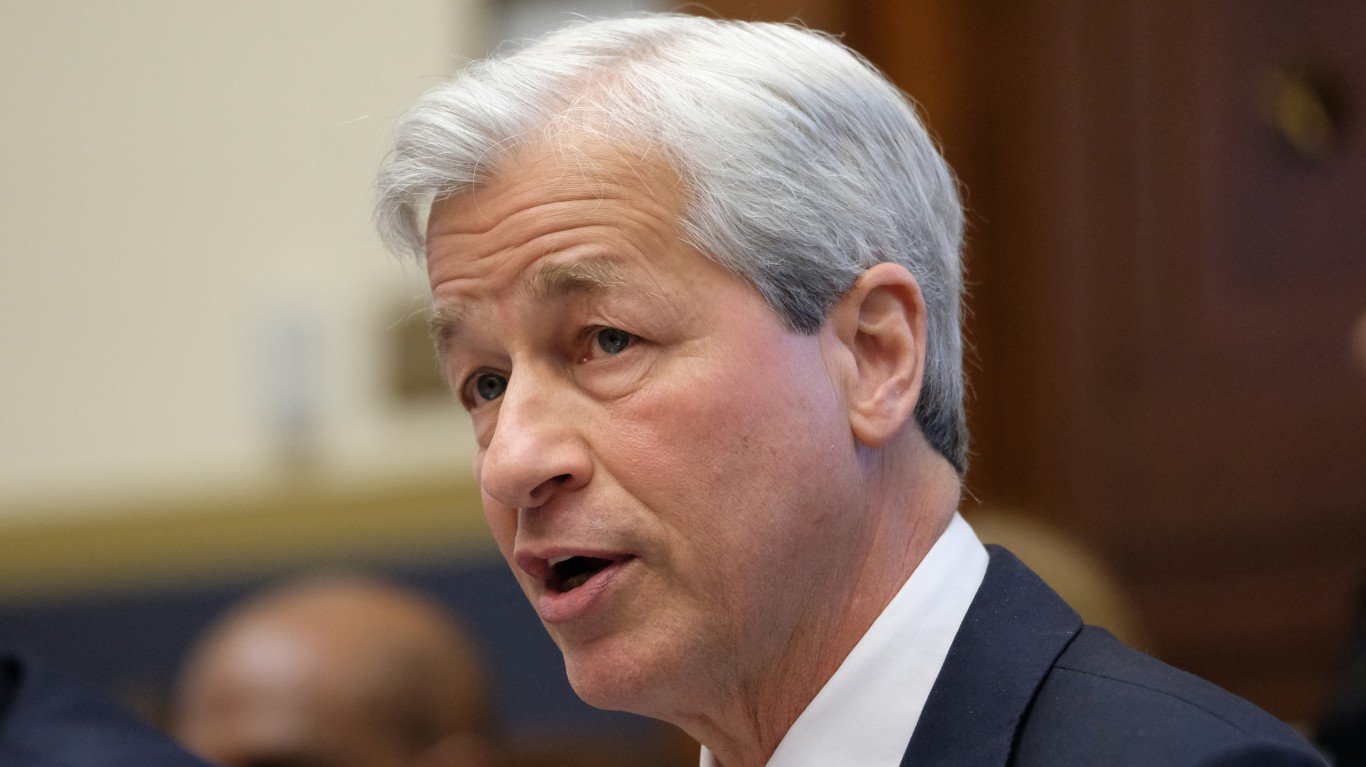
For generations, the American Dream followed a familiar path. Get a good job, buy a home, raise a family, and save enough to enjoy retirement. Each step was supposed to make the next one easier.
Today, however, millions of households are finding that even a steady paycheck no longer guarantees financial progress. Housing costs have climbed, everyday expenses consume more income, and borrowing has become a way to keep up rather than get ahead. The economy keeps growing, but the benefits aren’t reaching everyone equally.
And a new report from the Federal Reserve suggests the financial strain is getting worse.
Jamie Dimon’s Warning Is Looking More Relevant
In March, JPMorgan Chase (NYSE:JPM | JPM Price Prediction) CEO Jamie Dimon issued a warning about America’s economic future.
“The American Dream is alive, but it’s slipping out of reach for too many people — and for future generations,” Dimon said while announcing the bank’s American Dream Initiative. He argued that declining economic opportunity slows growth, hurts communities, and prevents families from getting ahead.
“The American Dream is alive, but it’s slipping out of reach for too many people — and for future generations.”
— Jamie Dimon, CEO, JPMorgan Chase
Now the Federal Reserve Bank of New York has released figures that put hard numbers behind his concerns.
Its Nov. 10 Household Debt and Credit Report found Americans owed a record $19.105 trillion at the end of September, an increase of $334 billion in just three months. Mortgages account for most of that debt, but the financial burden extends well beyond housing.
| Debt Category | Outstanding Balance |
| Mortgages | $13.37 trillion |
| Auto loans | $1.73 trillion |
| Student loans | $1.66 trillion |
| Credit cards | $1.29 trillion |
| Home equity lines | $481 billion |
Source: Federal Reserve Bank of New York, Q3 2026 Household Debt and Credit Report.
Granted, rising household debt isn’t automatically evidence of financial distress. Homeowners build equity, and higher property values support larger mortgages. But borrowing becomes more troubling when families are devoting a growing share of their income to debt payments.
The New York Fed found 5% of outstanding household debt was in some stage of delinquency, up from 4.7% the previous quarter.
Americans Are Borrowing Against Their Future
One particularly revealing number concerns home equity lines of credit, or HELOCs. Outstanding HELOC balances increased $23 billion during the third quarter, the largest quarterly increase since 2005. Total balances reached $481 billion.
These loans allow homeowners to borrow against the value of their property. They can finance renovations or other major expenses, but they also turn accumulated housing wealth into another monthly obligation. Meanwhile, credit card demand recently reached its strongest level in four years.
Money Management International, a nonprofit credit counseling organization, reported that September brought more than 2,500 new debt-management enrollments, its busiest month since March 2011. It now manages more than $1 billion in client debt.
That’s a revealing contrast. Americans collectively hold trillions in housing wealth, yet thousands are seeking professional help simply to manage what they owe.
Inflation Is Making the Climb Steeper
The underlying problem is purchasing power. According to the Bureau of Labor Statistics, consumer prices rose 3.7% over the 12 months ending September 2026, while average hourly earnings increased just 3.2%. That left inflation-adjusted hourly earnings down 0.5%. And those increases come after everyday living costs climbed roughly 30% since 2019.
For a family earning $80,000 annually, a 3.2% raise adds $2,560 before taxes. But a 3.7% increase in an $80,000 household budget adds $2,960 in expenses. That’s a $400 shortfall despite earning more money.
For households already carrying credit card balances, that gap can quickly become additional borrowing.
Key Takeaway
In short, Jamie Dimon’s warning reflects a growing divide between economic prosperity and household financial security. The $19 trillion debt total doesn’t mean the economy is approaching collapse. But rising delinquencies, shrinking purchasing power, and increased borrowing suggest more families are struggling to build wealth.
For households, the priority should be reducing high-interest debt, protecting emergency savings, and avoiding new borrowing that doesn’t improve their long-term finances. The American Dream hasn’t disappeared. But for millions of families, the price of admission keeps rising.
Contact [email protected] for any questions or corrections.
After two decades of patrolling the dark corners of suburbia as a police officer, Rich Duprey hung up his badge and gun to begin writing full time about stocks and investing. For the past 20 years, he’s been cruising the markets looking for companies to lock up as long-term holdings in a portfolio while writing extensively on the broad sectors of consumer goods, technology, and industrials. Because his experience isn’t from the typical financial analyst track, Rich is able to break down complex topics into understandable and useful action points for the average investor. His writings have appeared on The Motley Fool, InvestorPlace, Yahoo! Finance, Money Morning, and, of course, 24/7 Wall St. He has been featured in both U.S. and international publications, including MarketWatch, Financial Times, Forbes, Fast Company, and USA Today.