Jensen Huang Just Resigned and Nvidia Has No Permanent CEO. The Last Company That Did That Left Shareholders 17 Points Behind the Market

This post may contain links from our sponsors and affiliates, and Flywheel Publishing may receive compensation for actions taken through them.
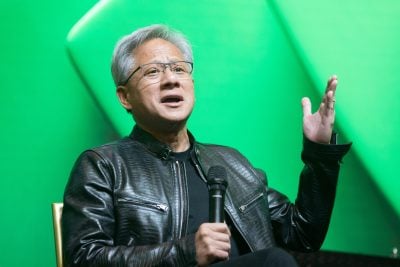
Jensen Huang has resigned as CEO of Nvidia (NASDAQ: NVDA), president and a member of its board, effective immediately, the company announced at 8:47 AM ET on Thursday. The board named Colette Kress, Nvidia’s chief financial officer since 2013, who will remain CFO, as interim CEO while it searches inside and outside the company for a permanent replacement, and appointed Harvey C. Jones, a former Synopsys CEO, as its first-ever chair. “Colette has helped lead NVIDIA through a period of extraordinary growth and has a deep understanding of our business, customers, operations and financial position,” Jones said in the announcement. Huang co-founded Nvidia in 1993 and had run it ever since. His resignation came days after he admitted to an affair with a woman U.S. officials suspect of spying for China, which China calls groundless, and a day after a New York Times report of a relationship with Nvidia executive Kimberly Powell and a Wall Street Journal report that the board was preparing to oust him.
Nvidia was at $158.96 in pre-market trading at 8:45 AM ET, down 8.5% from Wednesday’s close and 14.8% below the November 6 close, the last before Huang’s admission. That is about $668 billion of market value gone in a week.
An interim CEO and an open search is the outcome analysts feared most. “Mr. Huang being removed immediately could be challenging for Nvidia since it does not have a succession plan in place,” Gil Luria of D.A. Davidson told Reuters on Wednesday. The last two big companies that pushed out a CEO over a workplace relationship show why the search matters.
Intel, 2018, and McDonald’s, 2019
Intel CEO Brian Krzanich resigned in June 2018 after an investigation found a past consensual relationship with an employee. Intel had no successor ready, ran on an interim CEO for seven months, and its stock, down 2.4% on the day, was down 8.7% a year later while the S&P 500 rose 8.5%.
McDonald’s fired CEO Steve Easterbrook in November 2019 for a relationship with an employee and named Chris Kempczinski as CEO in the same announcement. The stock fell 2.7% the next day and was up 14.7% a year later, ahead of the S&P 500’s 11.9%.
The first-day drops were under 3% in both cases. Nvidia has already fallen far more than that this week. What separated the two outcomes came later: a ready successor and a healthy business underneath.
What it means for a holder
A holder who had $100,000 in Nvidia at the November 6 close, about 536 shares, has about $85,169 at the pre-market price, a loss of about $14,831. On the Intel path, that stake would be worth about $77,760 a year from now. On the McDonald’s path, about $97,689. Neither history involves a founder who built the company, so the real range is probably wider.
Dan Ives of Yorkville Ives has said Nvidia would be worth 25% to 30% less without Huang. Baird wrote Wednesday that a new CEO was needed to rebuild trust. The market will spend the coming weeks deciding which of them was right.
The decision a holder controls is the size of the position. If Nvidia is more than about 10% of a retirement portfolio, trimming inside an IRA costs nothing in taxes, and trimming in a taxable account turns part of the gain into a tax bill worth knowing before Thursday’s open.
Contact [email protected] for any questions or corrections.
I've been writing about stocks and personal finance for 20+ years. I believe all great companies are tech companies in the long run, and I invest accordingly.