3 Monthly Dividend Stocks Yielding Up to 12%. Two Have November 18 Deadlines

This post may contain links from our sponsors and affiliates, and Flywheel Publishing may receive compensation for actions taken through them.
Rent, utilities, and insurance premiums hit every month, while quarterly income leaves gaps in between. Gladstone Commercial (NASDAQ:GOOD), Gladstone Investment (NASDAQ:GAIN) and Capital Southwest (NASDAQ:CSWC) pay their distributions every month. All three have checks scheduled for November 30, 2026, and the two Gladstone names go ex-dividend on November 19. All three currently yield above 6%, which puts them in ultra-high-yield territory, and the coverage behind each payout is what separates them, so dividend safety comes first below.
Gladstone Commercial: A 12.4% Yield the Market Is Doubting
Current yield: Gladstone Commercial pays $0.10 per share every month, or $1.20 annualized. With shares at $9.70, that works out to about 12.4%.
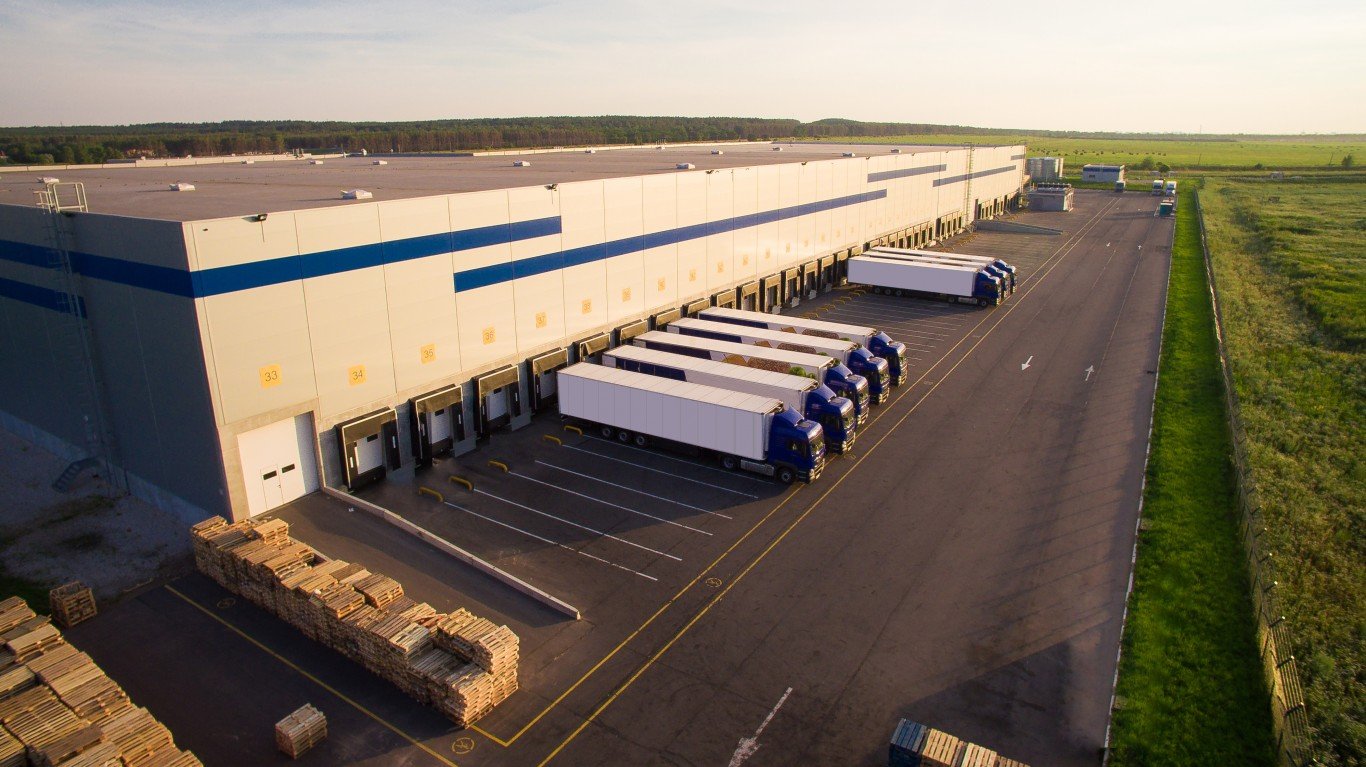
Dividend safety: Gladstone Commercial is a real estate investment trust (REIT) that owns industrial and office properties. Depreciation and impairment charges hold down GAAP earnings at REITs, so funds from operations (FFO) is the better test of whether the payout is covered. The REIT posted a third-quarter net loss of $5.19 million, driven by a $6.5 million property impairment. Core FFO came in at $0.35 per diluted share against $0.30 of declared distributions for the quarter, a payout ratio of roughly 86%. That covers the dividend, but the margin got thinner. Core FFO was $0.38 in the second quarter, though that figure got a boost from a lease termination fee on a sold property. The payout history also shows a mark. Monthly payouts have held at $0.10 through 2024, 2025, and 2026, below the $0.1254 monthly rate it paid in 2022. After the quarter closed, management repaid a $10.2 million fixed-rate mortgage at 4.25%.
Bull case: Buildings are full, and tenants are paying. Occupancy rose to 99.3% from 98.7%, and rent collection was 100% from July through October. Management continues to sell non-core assets and reinvest the proceeds in industrial properties. It recently bought a 146,650-square-foot industrial building for $6.6 million at a 9.16% cap rate, and it expects same-store rent growth of 2%+ to continue. The stock is down 23.83% over the past month, so investors who trust the FFO coverage are getting a much higher starting yield than they would have in October.
Risk: That drop signals investor doubt about the payout. Single-tenant buildings can lose value fast when a tenant leaves, so more impairments are possible, and higher SOFR raises interest expense. If Core FFO keeps sliding, the margin over the $0.10 monthly payout gets thin quickly.
Gladstone Investment: Steady $0.08 Checks Plus Periodic Bonus Payouts
Current yield: Gladstone Investment pays a regular $0.08 per share every month, or $0.96 a year. At $14.75, the regular yield is about 6.5%, just above the high-yield threshold.
Dividend safety: Gladstone Investment is a BDC, meaning it loans to and invests in smaller private businesses. To avoid corporate income tax, a BDC has to pay out at least 90% of its investment company taxable income under 26 U.S.C. § 852(a)(1)(A). That’s why yields run high and why the right test is net investment income (NII) coverage. In the June quarter, adjusted NII was $0.26 per share against three $0.08 monthly payments, a payout ratio of roughly 92%. Coverage has been tight before. Adjusted NII was about $0.20 in the March quarter and $0.21 in the December 2025 quarter. The regular rate has been $0.08 every month since January 2024, and payments are declared through December 31, 2026. On top of that, the company has paid supplemental distributions of $0.54 in June 2025, $0.70 in October 2024, and $0.88 in December 2023. Treat those as extras and leave them out when you budget around the regular payout. The credit facility grew from $300 million to $405 million with a June 2031 maturity, and adjusted availability stood at $163.2 million.
Gladstone Investment and Gladstone Commercial share the same external manager, the Gladstone adviser, and owning both increases manager risk while spreading your money across real estate and private-company loans.
Bull case: Gladstone Investment buys businesses and holds both debt and equity in them, so it makes interest while it waits for sales. Its interest-bearing investments carry a weighted average yield of 12.9%, and the portfolio’s fair value is 122.7% of cost. A significant capital gain on an equity sale could fund another supplemental, as gains like that have in the past. The stock is up 11.3% year to date and still trades below its last reported net asset value of $16.24 per share.
Risk: Buyout portfolios can lose money in chunks. The company recorded a $9 million realized loss restructuring its Home Concepts loan, following a $29.9 million loss on J.R. Hobbs. Per-share NAV fell 3.2% in the quarter, and GAAP results swing with non-cash incentive fee accruals.
Capital Southwest: About 10% Regular Yield With a $0.92 Cushion
Current yield: Capital Southwest pays its $0.58 regular quarterly dividend in three monthly installments of $0.1934. At $23.21, the regular payout yields about 10%. A $0.06 supplemental dividend is payable in December. It’s a bonus, so it doesn’t count toward that regular yield.
Dividend safety: Capital Southwest is a Dallas-based BDC and is internally managed, so no outside adviser collects fees. It switched from quarterly to monthly payments beginning in July 2025 and has paid $0.1934 regular installments since. In the September quarter, pre-tax NII of $0.58 per share exactly matched the regular dividend. Adjusted NII came in at $0.56, in line with estimates. The real support is estimated retained taxable income of $0.92 per share, which is earnings already recorded but not yet paid out. Non-accruals ticked up to 1.4% of the portfolio at fair value from 1.1%, and the regulatory leverage ratio rose to 1.00x from 0.91x.
Bull case: Lending is growing fast. Total investment income rose 28.2% from a year earlier to $67.16 million, and the weighted average yield on debt investments rose to 11.1% from 10.8%. CEO Michael Sarner said “Capital Southwest delivered the largest origination quarter in our history,” with about $391 million committed across 30 portfolio companies. Funding got cheaper too. The credit facility now totals $595 million at SOFR+2.00% and matures in September 2031, and the company sold $67 million of stock at 148% of NAV, which adds value for existing holders. The stock is up 23.75% over the past year.
Risk: Falling rates cut into earnings. Management estimates each 25 bps rate move changes annual NII by about $0.06 per share, and adjusted NII already is just below the regular payout.
Monthly Income With Coverage You Can Check
These three cover a range of risk. Capital Southwest has the largest margin. It has $0.92 of retained income, Gladstone Investment adds bonus payouts when it sells holdings, and Gladstone Commercial offers the highest yield for income investors who trust the Core FFO coverage. Each pays monthly, each declares payments through year-end, and each reports coverage in plain numbers every quarter. Retirees can line those checks up against their monthly bills. They can judge each payout on FFO or NII coverage, with the yield coming second.
Contact [email protected] for any questions or corrections.
Chris Lange is a financial and geopolitical writer with more than a decade of experience covering a myriad of topics. He has published thousands of articles for 24/7 Wall St., with past coverage focused heavily on stocks, IPOs, healthcare, defense, global affairs, and technology.
His work has been quoted, or referenced by a number of outlets including Business Insider, USA Today, Yahoo Finance, MSN, The Motley Fool, and many other publications. A graduate of Southwestern University, he studied business with a focus on investments and has previous experience in banking and startups.
When not reading or writing the news, he is following his passion for Lacrosse, playing chess, or building solar projects with his dad.