4 Dividend Kings That Kept Raising Payouts Through Recessions and High Interest Rates

This post may contain links from our sponsors and affiliates, and Flywheel Publishing may receive compensation for actions taken through them.
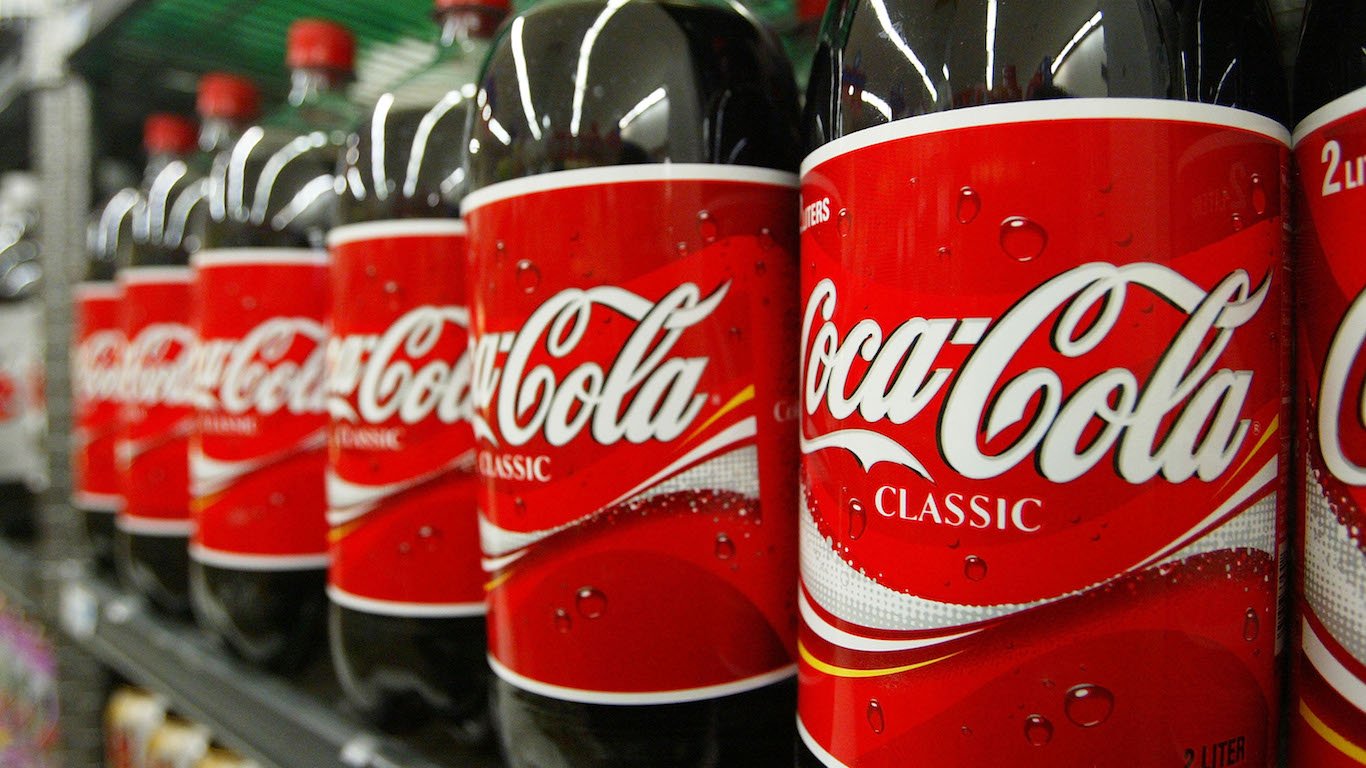
Interest rates have shifted from emergency lows to aggressive increases and back to easing over the past several years. Through it all, a short list of Dividend Kings kept sending retirees a bigger check every year. Johnson & Johnson (NYSE:JNJ | JNJ Price Prediction) set the tone this year when its board approved a 3.1% increase to $1.34 per share quarterly, marking its 64th consecutive year of dividend increases. The four names below are all high-quality growers with income that grows every year, and one of them also carries a high yield. Each new raise still has to be earned.
Johnson & Johnson: 64 Straight Raises and a Record Revenue Year
J&J yields 1.88%, which is low because the stock has risen 39.89% year to date to $284.92. The rate-cycle record backs up the streak. When the Fed hiked hard, the quarterly payout rose from $1.06 to $1.13 in 2022 and to $1.19 in 2023. When rates fell to near zero in 2020, it still went up, from $0.95 to $1.01. During the financial crisis, it rose from $0.415 to $0.46 in 2008 and to $0.49 in 2009.
Dividend safety: The annualized forward dividend of $5.36 works out to about 46% of the $11.60 to $11.75 adjusted EPS range in its second-quarter 2026 guidance. Free cash flow came to $19.7 billion in 2025, while the current rate costs roughly $12.9 billion a year. Amortization and one-time charges hold down GAAP earnings, which is why the trailing P/E is 43 while the forward P/E is 24.
Bull case: Second-quarter revenue rose 6.6% to $25.31 billion, and management said the company is “on track to meet our 2026 target of more than $100 billion in annual revenue for the first time in our Company’s 140-year history.” Oncology and TREMFYA, which grew 72.5% in the quarter, give J&J new growth drivers to fund future increases.
Risk: STELARA sales fell 55.2% year over year in the second quarter as biosimilar competitors took share. Newer drugs have to keep filling that hole.
Coca-Cola: A 64th Straight Raise Backed by Rising Cash Flow
Coca-Cola (NYSE:KO) yields 2.09%. In February, its board approved a 64th consecutive annual dividend increase, raising the quarterly payout from 51 cents to 53 cents. The rate-cycle record holds up: the quarterly dividend was $0.41 in 2020 and $0.42 in 2021, then climbed to $0.44 in 2022 and $0.46 in 2023 as rates rose fast.
Dividend safety: The $2.12 annualized dividend uses about 63% of trailing EPS of $3.39. Management raised its 2026 free cash flow outlook to at least $13.0 billion from $12.4 billion, while the current dividend rate costs about $9.1 billion a year. Net debt stands at 2.49 times EBITDA, and operating profit covers interest 8.32 times.
Bull case: Third-quarter revenue rose 7.4% to $13.38 billion, and adjusted EPS of $0.91 beat the $0.88 estimate. Global unit case volume grew 5%, Coca-Cola Zero Sugar grew 16%, and management now expects at least 11% comparable EPS growth for the year. For income investors, that is the kind of volume growth that supports future increases.
Risk: Coca-Cola is still in a tax dispute with the IRS that could materially impact the company if it goes against it. With the stock at about 32 times earnings, investors are paying a premium for safety.
Lowe’s: Every-Year Raises Since 1961 With Room to Spare
Lowe’s (NYSE:LOW) yields 2.07%. The company describes its streak as “increasing our dividend every year since going public in 1961.” It raised the payout again this spring, a 4% increase to $1.25 per quarter. Lowe’s kept raising through every rate cycle. The quarterly dividend went from $0.55 in 2020 to $0.80 in 2021, then jumped to $1.05 in 2022 and $1.10 in 2023 while mortgage rates rose sharply. During the housing bust, it still moved from $0.08 in 2008 to $0.085 in 2009.
Dividend safety: The $5 annualized dividend is about 41% of the roughly $12.25 in adjusted EPS management expects for fiscal 2026. Fiscal 2025 operating cash flow of $9.864 billion minus capital spending of $2.213 billion left about $7.65 billion in free cash flow. Dividends that year cost $2.6 billion. The free cash flow yield of 6.00% is nearly triple the dividend yield. Years of buybacks have driven shareholders’ equity to-$7.4 billion, so interest coverage of 6.65 is a better measure of balance-sheet strength.
Bull case: Second-quarter revenue rose 8.3% to $25.96 billion, and adjusted EPS of $4.40 beat the $4.22 estimate. Lowe’s CEO Marvin Ellison said, “Sustained growth in Pro, Online, and Home Services led to our fifth consecutive quarter of positive comp sales.” At about 19 times earnings, it is the cheapest stock on this list by P/E.
Risk: Do-it-yourself spending is still weak. Gross margin contracted 77 basis points, and management cut its full-year outlook to the low end of its prior range.
Hormel Foods: 60 Years of Raises and the Highest Yield Here
Hormel Foods (NYSE:HRL) is the high-yield option on this list at 5.32%. Part of the reason is its share price, which has fallen 39.44% over five years. The latest raise marked 60 consecutive years of dividend increases. Jeff Ettinger said in the company’s fiscal fourth-quarter 2025 release that it was “an impressive milestone, 60 years of uninterrupted dividend increases at Hormel Foods.” The quarterly payout rose from $0.2325 in 2020 to $0.26 in 2022 and $0.275 in 2023. It also went from $0.185 in 2008 to $0.19 in 2009.
Dividend safety: The $1.17 annual dividend is about 81% of the low end of raised fiscal 2026 adjusted EPS guidance of $1.45 to $1.51. Third-quarter operating cash flow rose 54% to $240.6 million, and cash stands at $839.6 million. The forward P/E is 14.
Bull case: Foodservice posted its 12th consecutive quarter of organic growth, and adjusted operating margin expanded to 9.0% from 8.4%. If restructuring keeps raising margins, earnings growth can catch up to the dividend.
Risk: Free cash flow is thin. Fiscal 2025 produced roughly $534 million, less than the roughly $644 million the current rate costs per year. The most recent increase was only 1%.
Rising Income Through Every Rate Regime
All four companies raised their payouts in 2008, in 2020, and through the 2022-2023 rate hikes. Johnson & Johnson and Lowe’s pay out less than half of expected earnings, giving them the most room for future increases. Coca-Cola has the most reliable cash flow. Hormel offers the most income today but has the lowest coverage in the group, so its next raise is the one to watch. (If you want a wider short list, we ranked ten Dividend Kings by valuation right now in a free report here.)
Contact [email protected] for any questions or corrections.
Chris Lange is a financial and geopolitical writer with more than a decade of experience covering a myriad of topics. He has published thousands of articles for 24/7 Wall St., with past coverage focused heavily on stocks, IPOs, healthcare, defense, global affairs, and technology.
His work has been quoted, or referenced by a number of outlets including Business Insider, USA Today, Yahoo Finance, MSN, The Motley Fool, and many other publications. A graduate of Southwestern University, he studied business with a focus on investments and has previous experience in banking and startups.
When not reading or writing the news, he is following his passion for Lacrosse, playing chess, or building solar projects with his dad.