AMDL 2X AMD ETF Tumbles 18% as AMD Sinks Amid Michael Burry’s Bearish Chip Bets

This post may contain links from our sponsors and affiliates, and Flywheel Publishing may receive compensation for actions taken through them.

A steep run in semiconductor shares is partly reversing, and the leveraged fund tied to Advanced Micro Devices (NASDAQ:AMD | AMD Price Prediction) is taking the biggest hit. GraniteShares 2x Long AMD Daily ETF (NASDAQ:AMDL) is at $51.35, down 18% as the session wears on. The exchange-traded fund (ETF) aims to deliver twice AMD’s daily move and resets each day, so its longer-term results may not match that multiple.
AMD stock is at $532.68, down 9%. Both the stock and the fund rallied hard over the past week before the reversal. Despite the slide, AMD stock is up 149% year to date.
That gain rests on a record Q3 2026, reported on November 3[1], when AMD’s revenue rose 44.7% year over year to $13.38 billion. The company’s Data Center segment revenue jumped 97%[1] to $8.55 billion, and AMD guided Q4 2026 revenue to $17 billion, plus or minus 3%.

Michael Burry Sharpens His Case Against Chip Valuations
Scion Asset Management founder Michael Burry said in a Substack post on the evening of November 12[2] that he doubled his puts on the NASDAQ 100. In that post, Burry disclosed that he bought back 25%[2] of previously reduced puts on the VanEck Semiconductor ETF (NASDAQ:SMH). A put option gains value when the underlying asset falls. He argued that chip valuations “still have a ways to fall,” and he expects earnings to decline over the next couple of years.
His post singled out AMD as a potential beneficiary if the lead of NVIDIA (NASDAQ:NVDA) weakens. He placed Broadcom (NASDAQ:AVGO) in the same camp. That’s why he prefers the VanEck fund over a competing iShares semiconductor ETF for shorting, since AMD and Broadcom carry the largest weights in the iShares fund.
AMD stock is falling amid Burry’s bearish position and a wider chip selloff tied to leadership turmoil at NVIDIA. Sector-wide, the chip selloff accelerated as NVIDIA kept sliding. Technology is the weakest sector in the S&P 500, while consumer staples leads. The NASDAQ 100 is lower as well.
What the Peer Group Says About AMD
NVIDIA stock is at $162.69, down 2%. That’s a softer decline than AMD’s, even though NVIDIA lies at the center of the turmoil. NVIDIA is on track for its worst week since the Trump tariff selloff.
Broadcom stock is at $346.50, down 5%. On November 12, AMD and Broadcom were getting a boost from NVIDIA’s loss, which left both with fresh gains to give back. AMD’s steeper drop lines up with its bigger run over the past week.

How AMD’s Business Model Differs From NVIDIA and Broadcom
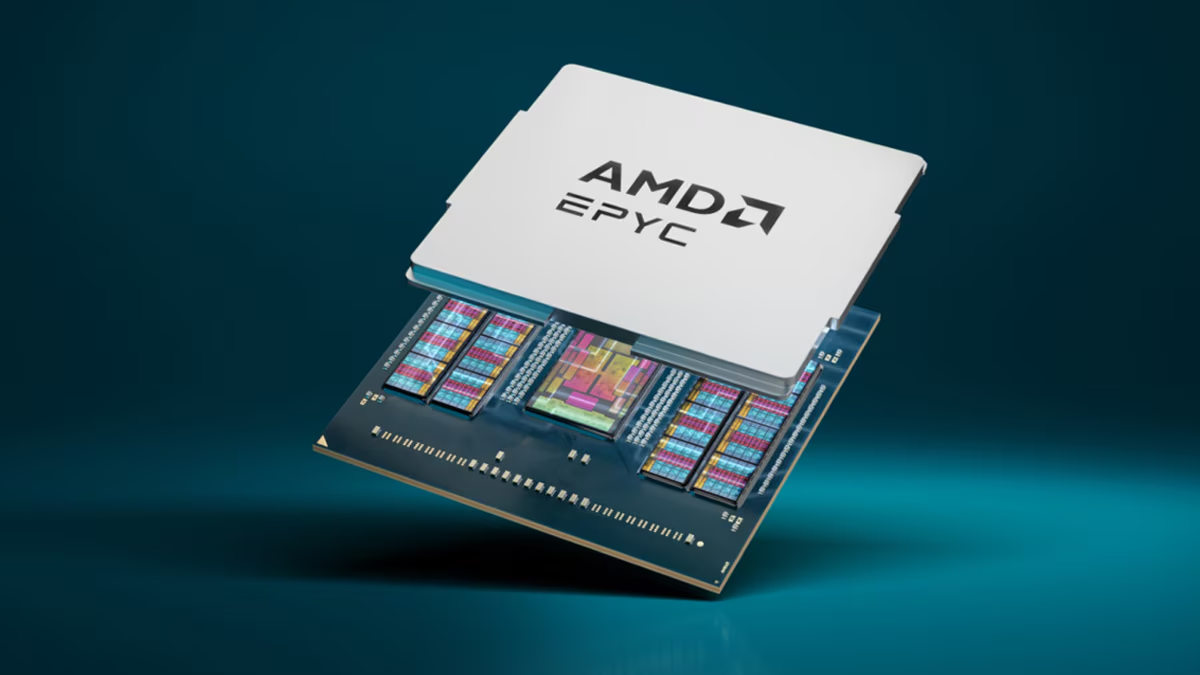
Server processors and AI accelerators anchor AMD’s data center business, which pairs EPYC central processing units (CPUs) with Instinct graphics processing units (GPUs) in its Helios rack-scale systems. AMD also runs client, gaming and embedded businesses that tie part of its results to PCs, game consoles and industrial markets. CEO Lisa Su said on the November 3[3] call that competing with custom chips is “all about TCO,” meaning total cost of ownership.
Its GPUs, networking gear and CUDA software ecosystem form the core of NVIDIA’s full AI platform. Broadcom designs custom AI accelerators and networking chips for hyperscale customers and adds a separate enterprise software revenue stream through VMware. AMDL stands apart from all three because it tracks AMD alone with daily leverage.
AMD’s Next Move Depends on Chip Stocks Finding a Floor
AMD faces the question of whether chip stocks steady after the selloff tied to NVIDIA’s leadership turmoil. The bulls can point to the company’s Q4 outlook and to Su’s remark that “demand is higher than supply”[3] across parts of its data center lineup. Management expects Helios and Venice production to scale and said data center AI revenue should grow faster in 2027 than it previously projected.
The bears have a case of their own, starting with AMD’s triple-digit price-to-earnings (P/E) ratio and Burry’s forecast of falling chip earnings. Riding a chip mania is fine as long as the exit is planned, which is the whole subject of our free bubble survivor’s handbook. Leveraged funds such as AMDL magnify losses as well as gains, and the fund charges a net expense ratio of 1.87%[4]. Volatility in leveraged products such as AMDL could stay elevated until the debate over Burry’s bearish chip thesis resolves.
Contact [email protected] for any questions or corrections.
David Moadel is financial writer specializing in stocks, ETFs, options, precious metals, and Bitcoin. David has written well over 1,000 articles for leading online publications, helping investors understand markets, income strategies, and risk. His work has appeared in 24/7 Wall St., The Motley Fool, InvestorPlace, U.S. News & World Report, TipRanks, ValueWalk, Benzinga, Market Realist, MarketScreener, TalkMarkets, Finmasters, and others. With a master’s degree in education, David has taught at the elementary, high school, and college levels. That teaching background shapes his writing style: clear, educational, and practical. David has also built a loyal social-media audience by providing trustworthy financial content on YouTube, X/Twitter, and StockTwits.