Chevron Bets $7B on Venezuela While Exxon Mobil Plays It Safe: One Has a Distinct Edge Now

This post may contain links from our sponsors and affiliates, and Flywheel Publishing may receive compensation for actions taken through them.
Chevron (NYSE:CVX | CVX Price Prediction) and Exxon Mobil (NYSE:XOM) both topped expectations on October 30, 2026, helped by Brent crude averaging $97 a barrel. They split sharply on how to spend that cash. Chevron is investing $7 billion to Venezuela. Exxon is holding off in Venezuela and planning $20 billion of buybacks in 2027.
Refineries Carried Both Quarters, and Chevron Added New Barrels
Chevron earned an adjusted $5.28 per share, above the $4.83 consensus. U.S. downstream earnings jumped to $3.58 billion from $638 million as its refineries ran a record 1.09 million barrels per day. That jump shows how well a tight diesel market pays Gulf Coast capacity. Chevron also uses its own catalyst, which raised distillate yields by more than 10%. That catalyst gives Chevron a technology advantage in distillate output.
Exxon posted adjusted EPS of $4.23, ahead of the $3.98 expected, while its Gulf Coast crude units ran at 100% utilization. Guyana passed 1 billion barrels of production. CEO Darren Woods said $16.9 billion in structural cost savings since 2019 are “expanding our earnings power.” I mostly accept that, although oil near $97 makes every company look better.
| Business Driver | Chevron | Exxon Mobil |
|---|---|---|
| Free cash flow | $12.00B | $19.1B |
| Refining highlight | Record U.S. throughput | Full Gulf Coast utilization |
| Upstream engine | Gulf of America, Venezuela | Guyana, Permian, Golden Pass LNG |
Chevron Moves Into Venezuela While Exxon Waits for Better Terms
Chevron’s Venezuelan joint ventures plan to spend $7 billion over five years. The goal is to double output to about 600,000 barrels per day by 2031. CFO Eimear Bonner said total costs will be under $20 per barrel, which would make these some of Chevron’s cheapest barrels. Chairman and CEO Mike Wirth stressed that Chevron now sells the crude itself: “We are lifting all of the oil.” Most of it goes to Chevron’s Pascagoula and El Segundo refineries, so the new supply feeds directly into its own plants.
Woods sounded much more conservative. He wants Venezuela to improve its tax and legal rules and add protections for investors before Exxon investing. “We’re not in a rush,” he said. Chevron is keeping its buyback rate at $2.5 billion to $3 billion. Venezuela has seized foreign oil assets before, so I give Exxon credit for being patient.f
Year-End Startups Will Test Both Growth Stories
The key question is whether Chevron reaches about 300,000 barrels per day of gross Venezuelan production by year-end. For Exxon, keep an eye on the Uaru startup in Guyana and a final investment decision on Rovuma LNG, both expected this quarter. Refining is the risk both share. Chevron expects today’s high margins to ease as refinery runs recover.
Why Exxon’s Dividend Record Gives It the Income Edge Right Now
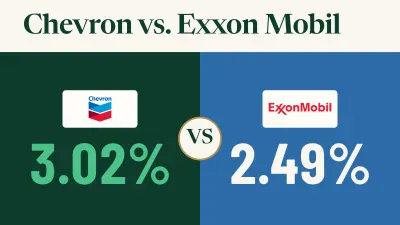
Chevron shares are up 45.98% over the period shown above, against 43.93% for Exxon. The two stocks have moved nearly in step. Chevron yields about 3.02%, compared with 2.49% for Exxon, which is extra pay for taking on more political risk. Exxon has raised its dividend for 44 consecutive years, putting it in the same rare club we ranked by valuation in a free Dividend Kings report, and Woods said, “We’re not going to ever cut our dividend.”
For income-focused investors, Exxon’s profile tends toward stability. Guyana, automated drilling in the Permian and the buyback plan add up to visible growth with less political exposure. Chevron offers more upside per barrel, coupled with greater exposure to Venezuela risk. If Venezuela sticks to the new terms through 2027, Chevron’s case improves.
Contact [email protected] for any questions or corrections.
Alex Sirois is a financial writer with experience spanning both retail and institutional investing. He has written for InvestorPlace and held roles at BNY Mellon and Bernstein, giving him a perspective that bridges Main Street portfolios and Wall Street analysis.
Alex holds an MBA from George Washington University and has built his career across multiple industries, including e-commerce, education, and translation — a breadth of experience that informs how he breaks down complex financial topics for everyday investors. His writing is conversational, actionable, and grounded in long-term, buy-and-hold investing principles.
At 247 Wall St., Alex focuses on delivering analysis that is both accessible and useful, with a clear emphasis on helping readers make more informed decisions with their money.