U.S. Oil Imports From Venezuela Just Exploded to a 9-Year High — Chevron Could Be the Biggest Winner
Venezuelan crude is flooding back into American refineries at levels not seen in nearly a decade, and one oil major has quietly positioned itself to capture more of that surge than any other company on the market.


U.S. imports of Venezuelan crude jumped by 183,000 barrels per day in the week ended Sept. 11, reaching 782,000 barrels per day, according to the U.S. Energy Information Administration. That was the highest weekly total since August 2017.
The bigger trend is even more striking. Over the past six months, Venezuelan imports have increased by 550,000 barrels per day, or 237%, while the three-month average reached 626,000 barrels per day.
That is a long way from Venezuela’s historical peak, when U.S. imports reached roughly 1.5 million barrels per day in 1997 and routinely exceeded 1 million barrels per day between 1995 and 2007. Still, the direction is unmistakable: American refiners are consuming more Venezuelan oil again.
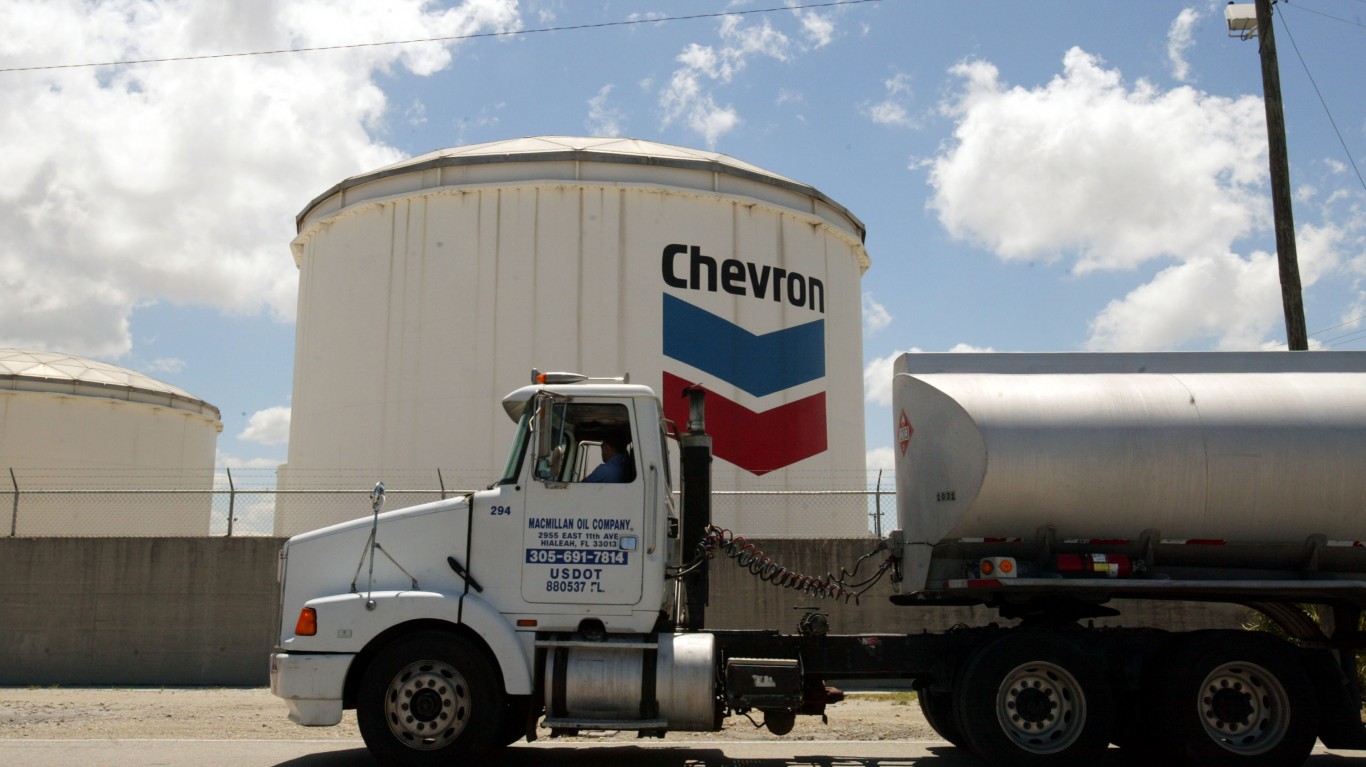
And that creates an unusually direct opportunity for Chevron (NYSE:CVX | CVX Price Prediction).
Chevron Has a Front-Row Seat
Chevron isn’t merely watching Venezuela’s oil industry recover. It is helping drive the recovery.
On Sept. 2, Chevron announced updated agreements covering its Venezuelan joint ventures, including additional acreage in the Orinoco Belt. The company plans to invest more than $7 billion over the next five years and expects production from its Venezuelan ventures to more than double to approximately 600,000 barrels per day. Chevron says total production costs are below $20 per barrel.
That puts Chevron’s Venezuela opportunity alongside its broader financial strength. The oil and gas giant reported total revenue of $70 billion in the second quarter, up 56% from the year-ago figure, generating earnings of $12 billion, or $6.06 per share on an adjusted basis, more than quadruple the $1.45 per share it earned last year. Adjusted free cash flow was $15.4 billion while reducing debt by a record $8.4 billion.
Chevron’s board also declared a quarterly dividend of $1.78 per share, equal to a roughly 3.4% annualized yield at the Sept. 18 closing price.
The Refining Angle Matters, Too
Venezuelan crude is generally heavier than the crude produced in many U.S. shale fields, making refinery configuration important. Chevron has another advantage here: its U.S. refineries processed a record 1.07 million barrels per day of crude in the second quarter, operating at more than 97% utilization.
That creates a potentially valuable combination. Chevron can participate in Venezuela’s upstream production while its downstream business benefits from access to crude suited to sophisticated U.S. refining infrastructure.
U.S. markets have historically been the most attractive for Venezuela’s crude due to the short distance across the Gulf of America and the Gulf Coast refineries there are designed to process it.
Granted, Venezuela remains a geopolitical and regulatory risk. The U.S. Treasury continues to regulate activities involving Venezuelan entities, but the Sept. 11 Federal Register lists Chevron among companies authorized to conduct specified Venezuela-related activities.
Still, that means investors shouldn’t treat 600,000 barrels a day as guaranteed future production.
Key Takeaway
In short, Venezuela’s return to the U.S. oil supply chain is becoming a measurable trend, with imports reaching 782,000 barrels per day and a three-month average of 626,000 barrels per day. President Trump has said he will use Venezuelan oil to help refill the U.S.’s Strategic Petroleum Reserve that are near depletion levels.
Chevron has the clearest direct connection to that growth. Its Venezuelan production could more than double, while its U.S. refining system is already operating at record throughput. With $15.4 billion of quarterly adjusted free cash flow, a 3.4% dividend yield, and a plan to invest $7 billion in Venezuela, Chevron gives investors a way to participate in Venezuela’s oil revival without making a pure bet on Venezuela itself.
That makes Chevron stock worth putting on the watch list for investors seeking energy exposure with a growing Venezuelan catalyst.
Contact [email protected] for any questions or corrections.
After two decades of patrolling the dark corners of suburbia as a police officer, Rich Duprey hung up his badge and gun to begin writing full time about stocks and investing. For the past 20 years, he’s been cruising the markets looking for companies to lock up as long-term holdings in a portfolio while writing extensively on the broad sectors of consumer goods, technology, and industrials. Because his experience isn’t from the typical financial analyst track, Rich is able to break down complex topics into understandable and useful action points for the average investor. His writings have appeared on The Motley Fool, InvestorPlace, Yahoo! Finance, Money Morning, and, of course, 24/7 Wall St. He has been featured in both U.S. and international publications, including MarketWatch, Financial Times, Forbes, Fast Company, and USA Today.