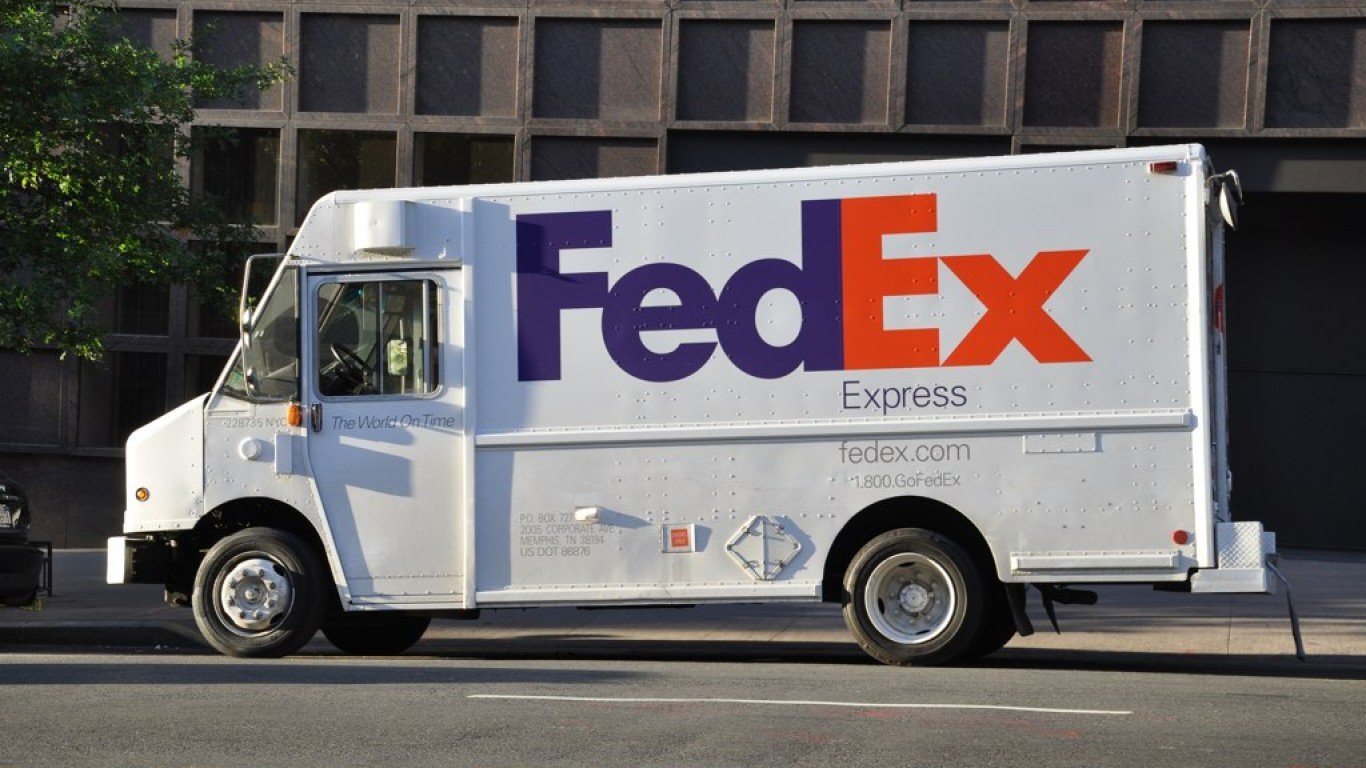
FedEx Was Down to Its Last $5,000 When Its Founder, a Marine Who Served Two Tours in Vietnam, Flew to Las Vegas and Sat Down at a Blackjack Table. He Came Back With $27,000, and the Planes Kept Flying

This post may contain links from our sponsors and affiliates, and Flywheel Publishing may receive compensation for actions taken through them.
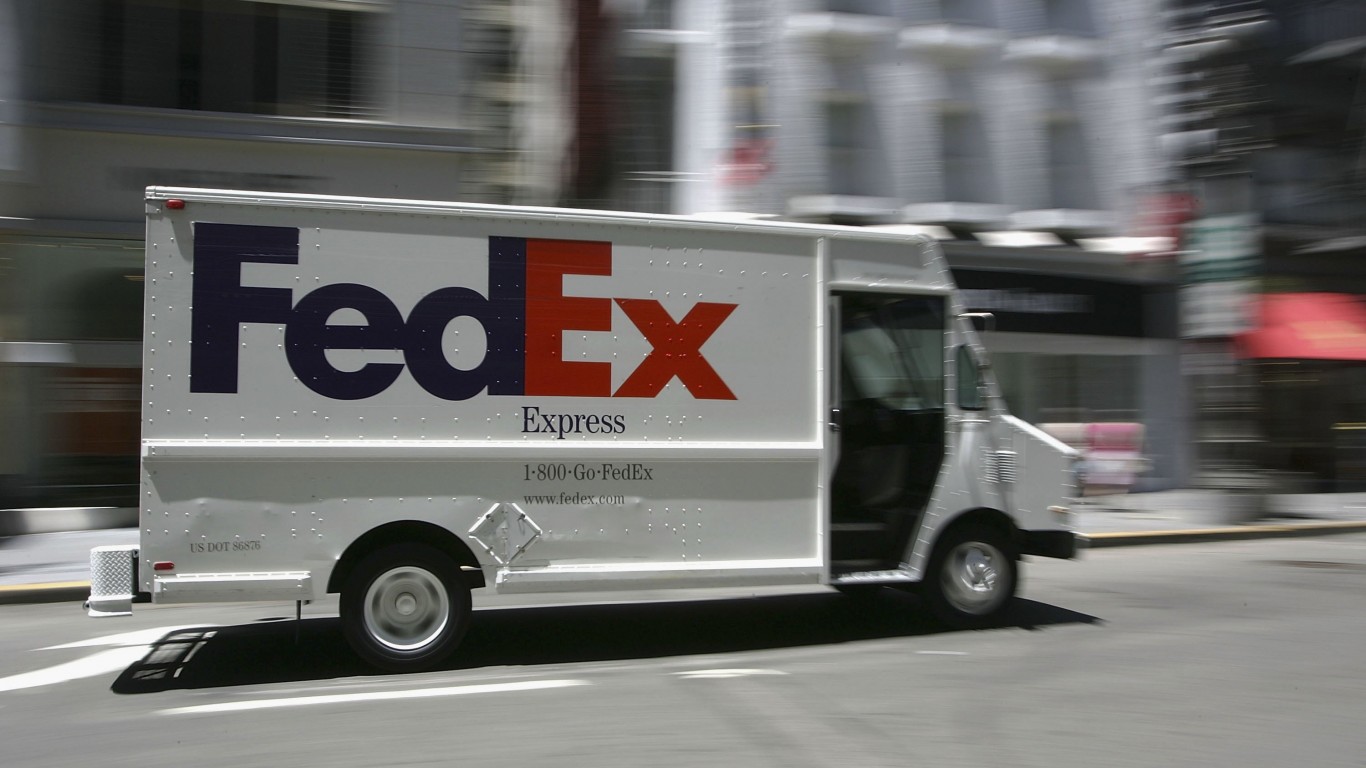
The company had planes, pilots and a plan. It did not have money. Federal Express was down to about $5,000 after General Dynamics declined to put in more, and the founder, a 20-something former Marine named Fred Smith, needed cash fast.
So he flew to Las Vegas.
He sat down at a blackjack table with the company’s last few thousand dollars. By the time he got up, he had $27,000, according to accounts in Forbes and Entrepreneur retold by Fox Business. He wired the money back to Memphis. It was enough to keep the planes flying a little longer.
That is the part of the story people remember. What Smith said about it later is the part worth keeping.
The man at the table
Frederick W. Smith grew up in Memphis. At Yale he wrote a paper on overnight delivery of time-sensitive shipments, the idea that became FedEx. It earned an average grade, according to the Associated Press. The professor’s verdict did not stop him.
After Yale he spent four years in the U.S. Marine Corps, including two tours in Vietnam, and was decorated for bravery and for wounds, the AP reported. “Everything I did running FedEx came from my experience in the Marines,” he told the AP in 2023. “Not from Yale.”
He founded Federal Express in 1971. When it began operations in Memphis in April 1973, it had 389 employees and 14 aircraft, and it carried 186 packages to 25 cities.
A night of 186 packages does not pay for 14 jets. The money ran short early, and in that cash crunch came the Las Vegas weekend.
What Smith said about the $27,000
The win turned $5,000 into $27,000, about 5.4 times the stake. It makes a great story. Smith never pretended it was a plan.
“The $27,000 wasn’t decisive, but it was an omen that things would get better,” he said, according to Entrepreneur.
The record backs him up. After the blackjack weekend, Smith went back to work raising money and brought in about $11 million more from investors, Fox Business reported. Then, in 1977, Congress deregulated air cargo, which let FedEx fly larger planes. Those two things built the company. The $27,000 bought time.
FedEx went public in 1978. Smith ran it for about half a century and stepped down as chief executive in 2022, staying on as executive chairman. He died on June 21, 2025, at 80. By then the business he started with 14 planes served 220 countries and territories, according to the AP. Its revenue over the past four quarters was $94.7 billion, and FedEx (NYSE: FDX) is worth about $75.6 billion today.
What the luck bought
Smith’s own words carry the lesson. A lucky weekend kept the doors open for a few more days. What saved the company was a founder who used those days to raise real capital and refused to quit when the numbers looked hopeless.
For anyone living on savings, that is the useful part. The story that matters runs for decades, built on money that was raised, planned and patient, and on a business that kept doing the same useful thing every night.
Most retirees will never be in Smith’s seat. Plenty have been tempted to treat a shortfall like he treated that weekend: one bold move to fix everything. Smith himself called the win an omen. The $27,000 made headlines. The $11 million and the years of hard work made FedEx.
Three things to take from it
A shortfall needs a plan. When a retirement budget comes up short, the tempting fix is a single bold move: a hot stock, a risky bet, a big withdrawal to chase a loss. Smith’s win came with odds most people never beat. The fix that lasted was the dull one, more capital raised on terms he could live with.
Time is the asset. The $27,000 did one thing well. It bought a little time, and Smith used that time to do the real work. For a retiree, a cash reserve does the same job. A year or two of spending set aside means a bad market never forces a sale at the worst moment.
Staying power beats a hot streak. The company that nearly ran out of money in its first years went on to run for decades. Its founder stayed with it through all of them.
What patience in FedEx stock has paid
The same lesson shows up in the stock. Price data from our provider begins on Nov. 1, 1999. A $10,000 investment in FedEx that day, with dividends reinvested, would be worth about $120,700 at Thursday’s close of $319.30, about 12.1 times the money in 27 years.
The same $10,000 in an S&P 500 index fund over the same days would be worth about $89,600, roughly 9.0 times. FedEx beat the market over that stretch, with deep slumps along the way. Investors who held through them collected the result. Investors who traded in and out on hunches mostly did not.
None of that makes FedEx a buy today. A single stock carries risks an index fund spreads out, and no one should build a retirement on one company. It does show the difference between a lucky hand and a long holding.
The omen and the work
Smith’s blackjack weekend is retold so often because it is so unlikely. A Marine back from Vietnam, a company down to its last $5,000, a trip to Las Vegas and a win. Most people who try the same thing lose the $5,000.
The founder who lived it knew that. He called the win an omen. Then he went back to Memphis and did the part that actually worked.
Contact [email protected] for any questions or corrections.
I've spent more than 15 years inside enterprise software, working alongside the finance, sales operations, and HR leaders who run the revenue engines at some of the largest tech companies in the country.
My day job is helping enterprise executives make smarter decisions about retention, compensation, and growth. These are the same operational levers that show up in every earnings report investors actually read. That perspective shapes my writing for 24/7 Wall St.
The headline numbers are easy. The interesting stuff is underneath: how companies make money, what executives are worried about, and what any of it means for the person checking their 401(k) on a Sunday afternoon. I write about personal finance and business as someone who has spent her career inside the rooms where these decisions get made.