Charlie Bilello Calls Leveraged Single-Stock ETFs ‘One of the Worst Financial Innovations’

This post may contain links from our sponsors and affiliates, and Flywheel Publishing may receive compensation for actions taken through them.

Charlie Bilello went after one of Wall Street’s fastest-growing product lines on November 16, 2026. In a post on X, Bilello wrote: “One of the worst financial innovations: Leveraged and inverse single-stock ETFs. -38% median investor return. >$500 million in management fees collected.”
Bilello was quoting Peter Mallouk, who pointed out that investors can now choose from 600+ ETFs linked to a single stock. Many of them add leverage, and their median expense ratio is 1% a year. Mallouk’s point was that ETFs won investors over by offering diversification and low fees. These funds put all the risk on one stock and charge more for it.
How Daily Resets Quietly Eat Returns
A leveraged single-stock ETF tries to deliver a multiple, usually 2x, of one stock’s move for a single day. An inverse fund tries to deliver the opposite of that move. The word that matters is daily. These funds reset their exposure every session, so over weeks or months their returns drift away from a simple multiple of what the stock did.
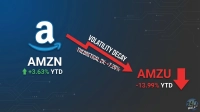
Here’s a simple example. Say a stock rises 10% one day and falls 10% the next. The stock ends down 1%. A 2x fund gains 20% and then loses 20%, which leaves it down 4%. This drag is called volatility decay. It gets worse as the stock gets choppier, and the funds tend to track the most volatile names in the market.
Fees make it worse. The GraniteShares 2x Long NVDA Daily ETF (NASDAQ:NVDL) has a net expense ratio of 1.64%[1], according to its prospectus. Then there is investor behavior. Traders tend to pile in after a big run and bail out after a sharp drop, locking in losses at the worst moments. That pattern helps explain why Charlie Bilello puts the median investor return at -38%. Over the same period, Charlie Bilello says the funds collected more than $500 million in management fees.
Why Leveraged Funds Clash With Retirement Goals
Income investors need two things: capital that compounds and cash that keeps coming. Leveraged single-stock funds work against both. They pay little or no real income, they experience decay, and a deep drop takes years of normal returns to recover. These funds are built as day-trading tools, a poor match for most retirement goals.
Two Dividend Kings Show How Slow Compounding Wins
Procter & Gamble (NYSE:PG | PG Price Prediction) is in its 70th consecutive year of dividend increases and its 136th consecutive year of payments. The quarterly dividend is $1.0885 per share. Shares closed at $173.14. They are up 24.21% year to date and 176.92% over ten years. In fiscal Q1, core EPS came in at $2.00[2], ahead of the $1.89 consensus, and organic sales grew 4%. P&G plans to pay over $10 billion in dividends in fiscal 2027.
Coca-Cola (NYSE:KO) has raised its dividend for 63+ consecutive years and pays $0.53 per share each quarter. The next payment is due December 15, 2026. Shares sit at $99.60, up 45.07% year to date and 231.58% over ten years. The stock rallied Friday, helping lift the Dow (MarketWatch). In its Q3 earnings release, Coca-Cola reported adjusted EPS of $0.91[3] against a $0.88 consensus. Coca-Cola Zero Sugar grew 16%[3]. The company lifted its comparable EPS growth outlook to at least 11%[3] and its free cash flow outlook to at least $13.0B.
The 2026 rally makes valuation worth checking. Coca-Cola trades at about 33 times earnings with a yield near 2.05%, so new money buys less income than it did a year ago.
Bilello’s Case Holds Up
The data supports Bilello: leveraged single-stock funds expose investors to volatility decay, high fees, and concentrated risk, and sponsors keep collecting fees whether investors win or lose. P&G and Coca-Cola get their returns from rising earnings and dividends that keep growing. For investors building retirement income, Coca-Cola’s full 2027 guidance with its Q4 results and P&G’s progress toward its $6.89-$7.11[2] core EPS range are more worth tracking than the next 2x fund launch.
Contact [email protected] for any questions or corrections.
Chris Lange is a financial and geopolitical writer with more than a decade of experience covering a myriad of topics. He has published thousands of articles for 24/7 Wall St., with past coverage focused heavily on stocks, IPOs, healthcare, defense, global affairs, and technology.
His work has been quoted, or referenced by a number of outlets including Business Insider, USA Today, Yahoo Finance, MSN, The Motley Fool, and many other publications. A graduate of Southwestern University, he studied business with a focus on investments and has previous experience in banking and startups.
When not reading or writing the news, he is following his passion for Lacrosse, playing chess, or building solar projects with his dad.