Stanley Druckenmiller Dumped AMD and Alphabet. His Next 3 AI Bets May Surprise Investors

This post may contain links from our sponsors and affiliates, and Flywheel Publishing may receive compensation for actions taken through them.
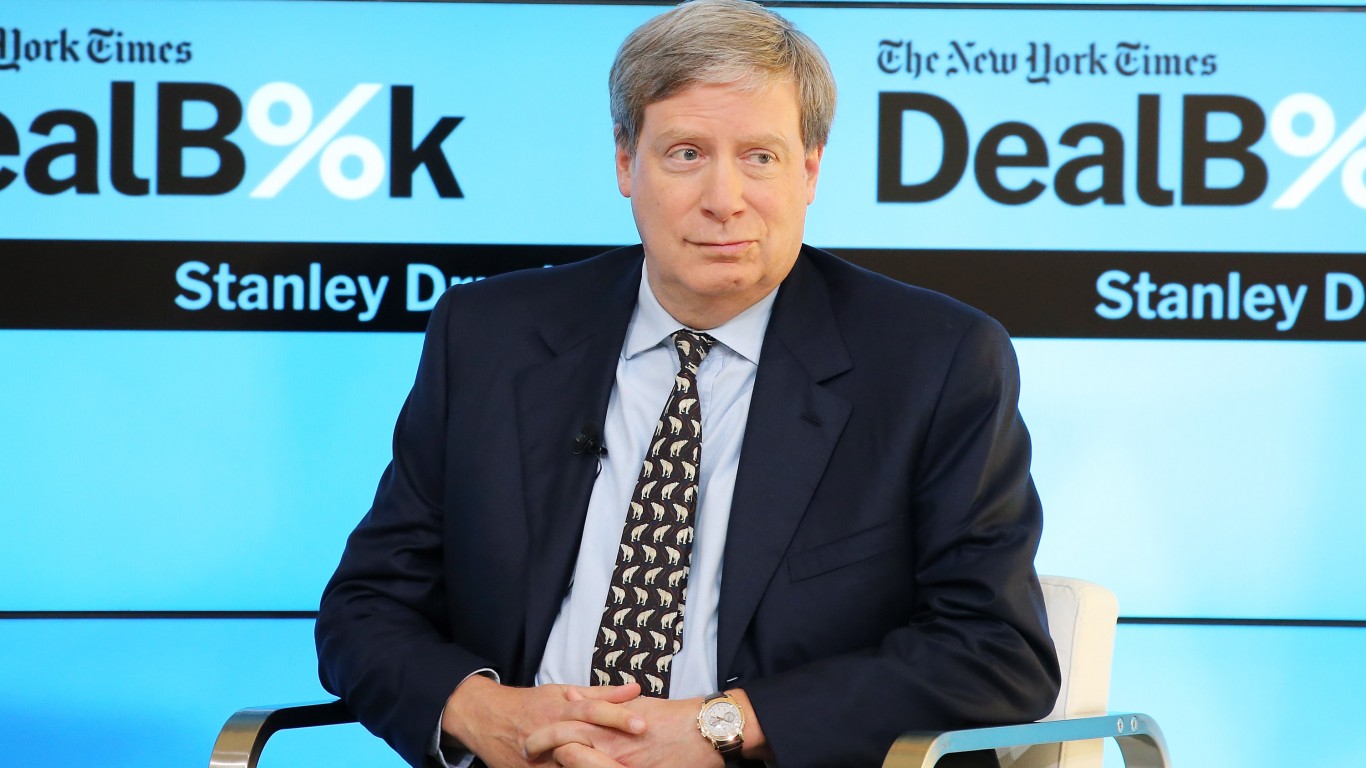
Stanley Druckenmiller is still buying artificial intelligence. He is changing which AI businesses he owns. Duquesne Family Office’s third-quarter 13F shows complete exits from AMD and Alphabet, alongside new positions in SpaceX, Palantir, and AppLovin, according to MarketWatch’s review of the filing. The filing does not show his sale prices or exact trade dates, so investors can’t tell how well the exits were timed.
Since then, AMD (NASDAQ:AMD | AMD Price Prediction) has fallen 22.35% from its October 6 close of $649.42. Since the quarter ended, Alphabet (NASDAQ:GOOGL) has dropped 17.54%. Earlier this year, Druckenmiller said AI-linked stocks looked “disturbingly heated”. In a Morgan Stanley interview, he summed up the market’s view: “The consensus right now for AI is something like: AI will be very deflationary, and it will lead to massive job losses.”
Strong Growth With Heavy Spending
Both stocks he sold were still growing quickly. AMD’s third-quarter revenue rose 44.7% to $13.38 billion[1], and Data Center sales grew 97% to $8.55 billion. The company guided fourth-quarter revenue to approximately $17 billion[1]. Even so, the stock trades near 191 times trailing earnings. GAAP EPS was $1.46[1] after a $1,097M customer warrant charge.
Alphabet’s Google Cloud revenue grew 103% to $30.71 billion[2]. But capital spending reached $51.36 billion[2], and free cash flow was negative $9.07 billion. Alphabet is now paying for its expansion partly through debt, at-the-market equity issuance and mandatory convertible preferred stock. GAAP EPS of $2.12[2] missed expectations, falling short of the $2.97 estimate, ending a 12-quarter beat streak.
Palantir’s Commercial Business Passes Government Sales
Palantir Technologies (NASDAQ:PLTR) sells software that lets companies and governments run AI on their own data. In its third-quarter release, U.S. commercial revenue of $984M[3] exceeded U.S. government revenue of $953M[3] for the first time. The adjusted operating margin was 62%[3], and full-year revenue guidance rose to $8.53B. CEO Alex Karp said “The Sovereign AI moment is purpose-built for Palantir.”
The risks: Palantir trades near 228 times earnings, total contract value grew just 6% year over year, and shares are down 11.81% year to date.
SpaceX Adds AI Computing to Starlink
SpaceX (NASDAQ:SPCX) reported revenue of $14.60B[4]. Its Super Intelligence segment, which includes Grok and Cursor, brought in $7.60B, up 830%[4]. That segment leases data center capacity to outside customers and expanded with the Cursor acquisition at an implied $60B equity value[4]. Starlink had 13.6M[4] consumer subscribers. Shares trade at $141.48, down 12.1% from their first available close on June 12. On Tuesday, MarketWatch reported that SpaceX got a vote of confidence from Nvidia.
AppLovin Turns Its AI Ad Engine Into Cash
AppLovin (NASDAQ:APP) uses AI models to place ads. Revenue rose 55.5% to $2.18B[5], and adjusted EBITDA reached $1.84B at an 84% margin. Adjusted EBITDA is a measure of operating profit before certain costs. The company bought back $1.4B[5] of stock during the quarter. CEO Adam Foroughi said, “We believe this business can compound at roughly 30% annually over the long term.” At about 38 times earnings, AppLovin trades at a far lower multiple than Palantir. Shares are up 46.53% over the past month but down 42.13% year to date.
Four Signals to Track Before the Next 13F
The pattern points to a preference for companies that sell AI-driven results through software, ads, and connectivity, with less exposure to the chip spending cycle (we featured seven suppliers riding the same AI expansion, from power to networking, in a free report you can grab here). Here is what will show whether that shift was well timed:
- Whether AMD delivers its ~$17B[1] fourth-quarter revenue target as its Helios server racks scale up
- Palantir’s fourth-quarter revenue against its $2.649–$2.653 billion guidance, and whether contract value starts growing faster
- AppLovin’s results against its $2.365B–$2.395B[5] fourth-quarter range
- SpaceX’s spectrum purchase, which is expected to close in H1 2027[4]
The next 13F will show whether Druckenmiller kept, added to, or cut these positions.
Contact [email protected] for any questions or corrections.
After two decades of patrolling the dark corners of suburbia as a police officer, Rich Duprey hung up his badge and gun to begin writing full time about stocks and investing. For the past 20 years, he’s been cruising the markets looking for companies to lock up as long-term holdings in a portfolio while writing extensively on the broad sectors of consumer goods, technology, and industrials. Because his experience isn’t from the typical financial analyst track, Rich is able to break down complex topics into understandable and useful action points for the average investor. His writings have appeared on The Motley Fool, InvestorPlace, Yahoo! Finance, Money Morning, and, of course, 24/7 Wall St. He has been featured in both U.S. and international publications, including MarketWatch, Financial Times, Forbes, Fast Company, and USA Today.