Boeing Is Down 25% This Year. What Will It Take to Get BA Stock Back to $200?

This post may contain links from our sponsors and affiliates, and Flywheel Publishing may receive compensation for actions taken through them.
A record backlog and fresh 737[1] certifications haven’t stopped the slide in Boeing (NYSE:BA | BA Price Prediction) stock this year. Boeing stock is down 25% year to date (YTD) to $163.76. That figure includes a 0.9% decline during the afternoon session.
At the start of 2026, Boeing stock sat at $217.12, so $200 is a level it traded above earlier this year. The stock’s 52-week high is $254.35, while the consensus analyst price target on Boeing stands at $233.35. Recovering $200 would likely take steadier commercial jet production and fewer setbacks in the space and defense units.

Earnings Miss and a Launch Failure Weigh on Boeing
Boeing reported Q3 2026[1] results on October 27 that missed expectations. The adjusted loss per share was $0.34[1]. Consensus called for a loss of $0.20[1], and its revenue of $24.19 billion trailed the $24.37 billion estimate despite growing 3.9% year over year (YoY). Inside the Commercial Airplanes unit, the company’s operating margin came in at negative 6.5%[1] on production-rate changes and higher supply chain costs.
Higher defense volume raised Boeing’s Defense, Space & Security revenue 15%[1], though the segment’s margin included a $252 million gain on the HRL Laboratories sale. Management also shifted its free cash flow plan out by approximately one year[2], now targeting $3 billion in 2027 and $10 billion in 2029. CEO Kelly Ortberg said, “It is more important that we do this ramp right than in what particular month we achieve a rate break.”[2]

On November 16, a Vulcan rocket from United Launch Alliance (ULA), Boeing’s joint venture, failed after launch and destroyed a batch of satellites owned by Amazon (NASDAQ:AMZN). ULA reported the vehicle suffered an anomaly about 10 minutes[3] into flight. The cause hasn’t been identified yet.
GE Aerospace and RTX Hold Up While Boeing Slides
GE Aerospace (NYSE:GE) stock is up 5% YTD to $323.53. Over the same stretch, RTX (NYSE:RTX) stock is up 9% YTD to $197.13. Both companies raised their 2026 expectations on October 20[4], with GE Aerospace lifting its adjusted earnings per share (EPS) guidance to $8 to $8.10 and RTX raising its range to $7.65 to $7.75[5].
Engines and aftermarket service drive GE Aerospace, which earns from Boeing and Airbus deliveries and from aging fleets that need maintenance, while Collins avionics, Pratt & Whitney engines and Raytheon missiles give RTX exposure to both commercial aerospace and rising defense spending. Boeing alone among the three bears the airframe production risk, where one supplier delay or certification hold can stall deliveries.
What It Would Take to Get Boeing Back to $200
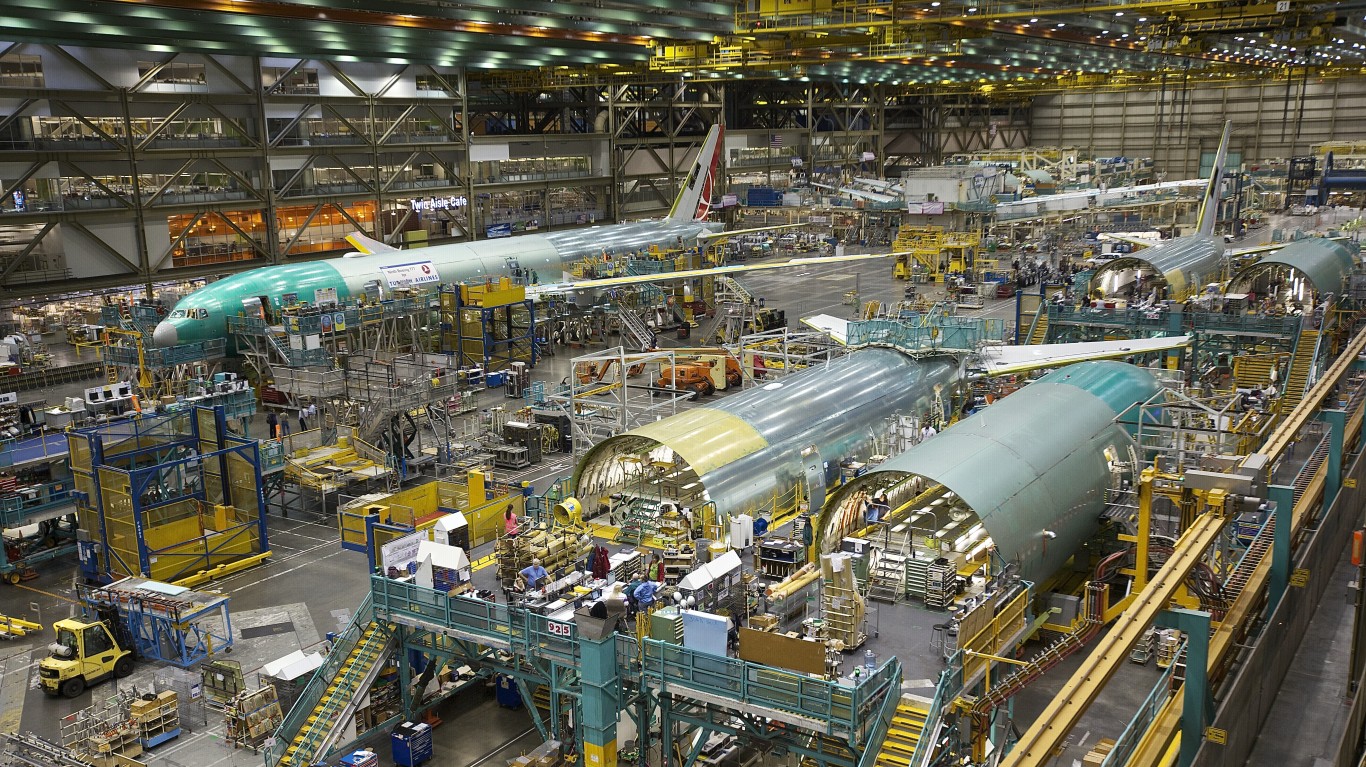
The bulls point to a record $745 billion[1] backlog. They also point to milestones Ortberg highlighted, including “certification of the 737-7 and 737-10 and selection to design and build the Navy’s sixth-generation fighter aircraft.”[1] Management is targeting a 737 rate of 52 per month in the back half of 2027[2] and still expects first 777X delivery in 2027. Breakeven for Boeing’s Commercial Airplanes unit is targeted for early 2028[2].

On the other side, the bears see a commercial unit still losing money and $45.9 billion[2] of debt on Boeing’s balance sheet. Delays continue in stabilizing 737 output at 47 per month[2]. They are expected to keep deliveries below the company’s 500-delivery target[2], and the rest of the 777X flight-test program still needs approval. The Vulcan failure adds a fresh question mark over Boeing’s space exposure.
Next up for Boeing is whether 737 production holds steady at 47 per month[2] into 2027. A second test is whether the Federal Aviation Administration (FAA) certifies the 777X by midyear 2027[2], as Boeing’s financial plan assumes.
Boeing’s Road Back to $200 Runs Through Its Factories
Boeing’s order book and recent certifications give the bulls a concrete case for a recovery toward $200, while steady quarters from GE Aerospace and RTX show what the market has rewarded this year: predictable output and rising guidance.
Missed production targets or another 777X delay could keep Boeing stock under pressure, while cleaner execution may let it recovering ground it held earlier this year. The clearest read on the ramp may come from Boeing’s next quarterly delivery report. For cautious investors, Boeing’s production ramp remains a key variable to monitor.
Contact [email protected] for any questions or corrections.
David Moadel is financial writer specializing in stocks, ETFs, options, precious metals, and Bitcoin. David has written well over 1,000 articles for leading online publications, helping investors understand markets, income strategies, and risk. His work has appeared in 24/7 Wall St., The Motley Fool, InvestorPlace, U.S. News & World Report, TipRanks, ValueWalk, Benzinga, Market Realist, MarketScreener, TalkMarkets, Finmasters, and others. With a master’s degree in education, David has taught at the elementary, high school, and college levels. That teaching background shapes his writing style: clear, educational, and practical. David has also built a loyal social-media audience by providing trustworthy financial content on YouTube, X/Twitter, and StockTwits.