AMD Is Actually Cheap With Projected Earnings Now Costing Less Than 50 Cents on The Dollar

This post may contain links from our sponsors and affiliates, and Flywheel Publishing may receive compensation for actions taken through them.
I have added to my AMD (NASDAQ:AMD | AMD Price Prediction) position after every earnings report this year, and the latest one gave me my best reason yet to keep going. The stock trades at 201 times trailing earnings, and that number scares plenty of people away. I look one year ahead instead. That forward view is why I keep buying.
Why I Keep Hitting the Buy Button
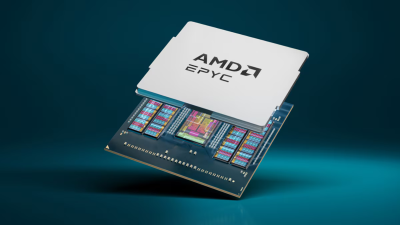
AMD sells the two chips every AI data center needs: EPYC server CPUs and Instinct GPUs. Customers keep signing up. Anthropic, Meta, Microsoft, OpenAI and Oracle Cloud Infrastructure[1] run workloads on its Helios rack-scale systems. Data Center revenue reached $8.546 billion[1] in the third quarter, up 97%, and segment operating margin widened to 34% from 25%. AMD pays no dividend, so I treat it as the compounding engine of my retirement portfolio and collect income elsewhere.
Growth on Sale Before the Q4 Ramp
Growth-at-a-reasonable-price investors treat a PEG ratio (forward P/E divided by expected earnings growth) of 1.0x as fair value. Consensus calls for $17.6907 in 2027 EPS from 50 analysts, against $8.0844 for 2026. The implied growth rate is roughly 119% growth. At $530.14, AMD trades at about 30x 2027 earnings, for a PEG near 0.25. I pay well under 50 cents for every dollar of expected growth.
Those estimates keep climbing. The 2027 figure was at $15.3249 90 days ago, and the past month brought 35 upward revisions versus 3 downward. Fourth-quarter revenue guidance came in at about $17.0 billion[1], roughly 66% year-over-year growth. Lisa Su said she expects “revenue to grow more than 80% in 2027.”[2] AMD has beaten EPS estimates four consecutive times, including $2.09[1] against $1.9366 last quarter. The stock slipped 4.12% over the past week, and I used that dip.
Solid finances let me sleep: debt-to-equity of 0.071, a net cash position, and interest coverage of 28.2x.
Why I Pass on NVIDIA and Intel
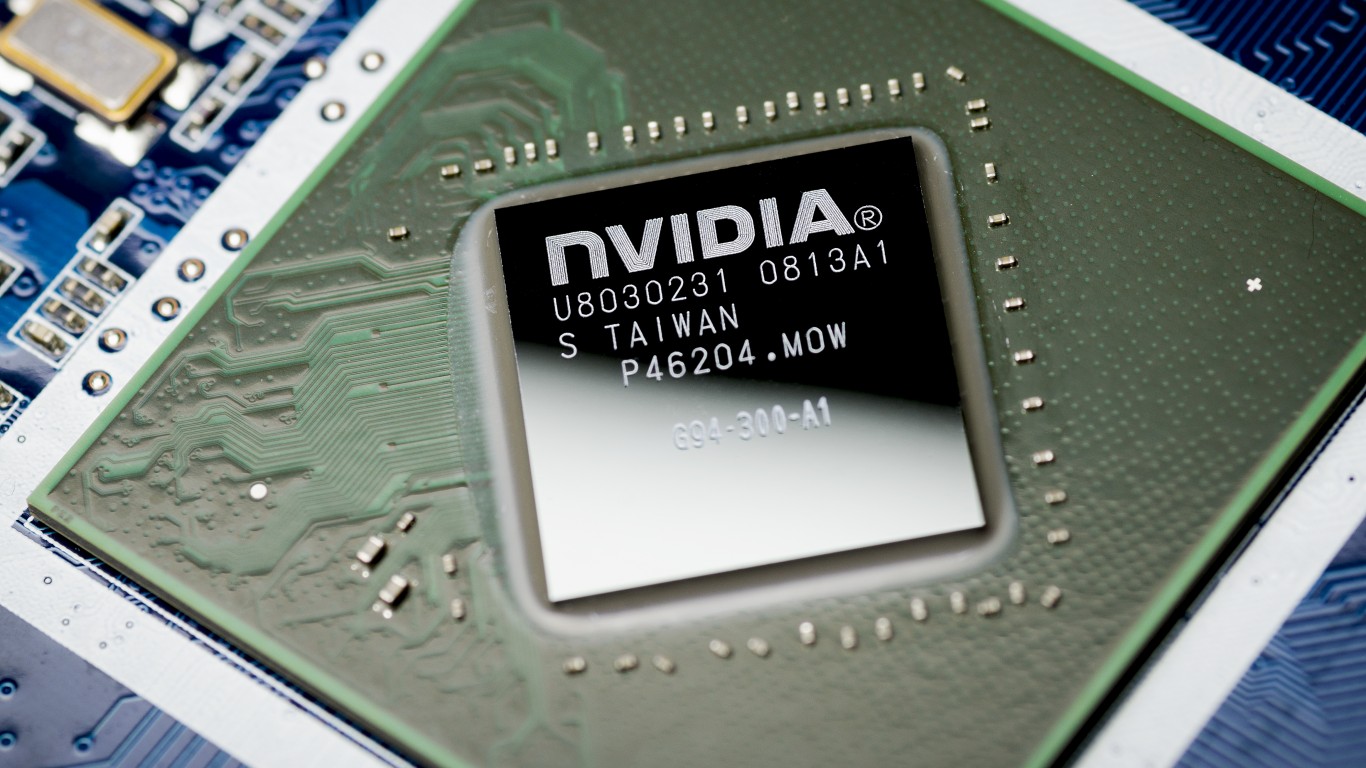
NVIDIA (NASDAQ:NVDA) trades near 30 times trailing earnings at a $3.645 trillion market cap. AMD sits at roughly that multiple on 2027 earnings with a $877.416 billion base that has far more room to compound. NVIDIA also flags a leadership transition with a search for a new CEO and an ongoing independent board committee investigation.
Intel (NASDAQ:INTC) posts a negative operating margin. It also reports a net-debt-to-EBITDA ratio of 3.40 versus AMD at -0.159 and an Intel Foundry operating loss of $1.85 billion last quarter.
Cash Flow Risk I Track Every Quarter
Free cash flow fell to $554 million[1], down 70.86%, as inventory swelled to $11.463 billion. If AI demand cools or export rules tighten, that inventory turns into a write-down. AMD already absorbed about $440 million[3] in charges linked to MI308 export restrictions in 2025.
I hold anyway because Lisa Su says “demand is higher than supply,”[2] and that inventory feeds a quarter guided ~27%[1] higher sequentially. Fiscal 2025 free cash flow of $5.519 billion[3] shows what this business generates once a ramp settles.
What Keeps My Buy Button Active
I want AMD’s Data Center business to reach more than 80% of total revenue in 2027[2]. Operating expenses have to grow at less than half the top-line rate. Each earnings report that confirms that path makes today’s 201x trailing multiple look smaller in hindsight, and I keep buying because the future earnings already cost me less than the past ones.
Contact [email protected] for any questions or corrections.
Alex Sirois is a financial writer with experience spanning both retail and institutional investing. He has written for InvestorPlace and held roles at BNY Mellon and Bernstein, giving him a perspective that bridges Main Street portfolios and Wall Street analysis.
Alex holds an MBA from George Washington University and has built his career across multiple industries, including e-commerce, education, and translation — a breadth of experience that informs how he breaks down complex financial topics for everyday investors. His writing is conversational, actionable, and grounded in long-term, buy-and-hold investing principles.
At 247 Wall St., Alex focuses on delivering analysis that is both accessible and useful, with a clear emphasis on helping readers make more informed decisions with their money.