AMD Is Still Up 125% This Year. Did Today Just Mark the Top for AMD Stock?

This post may contain links from our sponsors and affiliates, and Flywheel Publishing may receive compensation for actions taken through them.
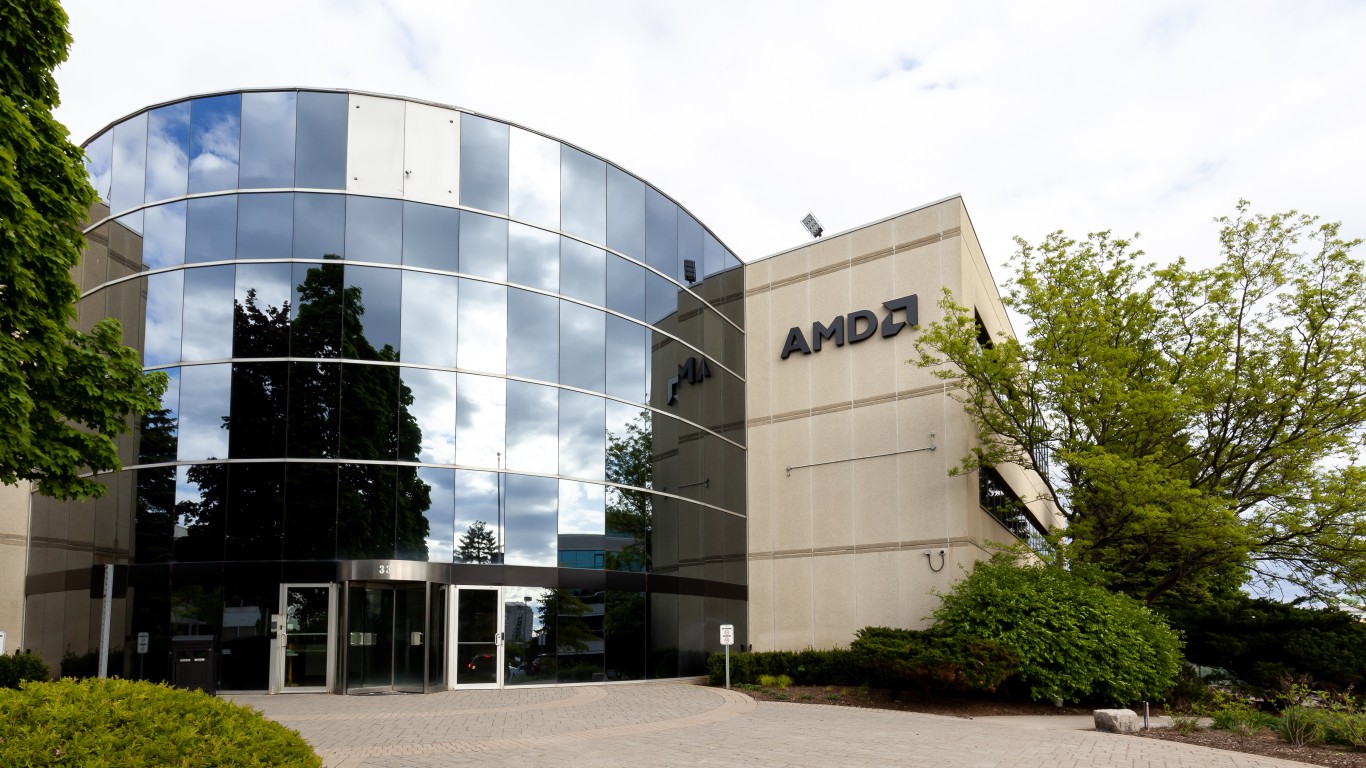
One of 2026’s biggest chip rallies just ran into a short seller. Advanced Micro Devices (NASDAQ:AMD | AMD Price Prediction) stock is up 125% year to date (YTD) to $481.21 in current trading. That price reflects a 9% drop on November 19, after Hunterbrook Media disclosed a short position in AMD and published a critical report.
AMD opened higher at $542.17 and climbed to an daily high of $555.01 before the sellers took over. The reversal pulled the stock to an daily low of $470.56, wiping out the early gain. Even so, AMD stock’s 52-week high of $658.52 sits above its entire November 19 range.

What Hunterbrook Alleged About AMD’s China Ties
Hunterbrook Media’s report alleged that banned Chinese server maker IEIT Systems kept receiving newer AMD firmware, CNBC reported. According to Hunterbrook Media, AMD bills over 20%[1] of its revenue to customers in China and Hong Kong. The short seller also claimed AMD depends on a Chinese partner to finish most of its chips, and Bloomberg’s headline said the report cited circular deals. CNBC didn’t independently verify the claims.
In a statement, AMD asserted that the claims “misrepresent AMD’s business practices and relationships” and that it follows with U.S. export control laws. These remain allegations, and no violation by AMD has been established.
Before the report, AMD’s rally rested on the Q3 2026 results the company released on November 3[2]. AMD’s revenue rose 44.7%[2] year over year (YoY) to $13.38 billion, and its Data Center segment jumped 97% to $8.55 billion. Management set its Q4 2026 revenue outlook at $17 billion, plus or minus 3%[2], as Helios rack-scale systems and “Venice” server chips scale.

How AMD’s Business Model Compares With NVIDIA and Intel
NVIDIA (NASDAQ:NVDA) stock is down 20% YTD to $149.29 and is slightly lower on November 19. That’s a sharp contrast with AMD, and it shows the AI chip trade hasn’t lifted every leader this year. Under its model, NVIDIA packages graphics processing units (GPUs), central processing units (CPUs), networking, rack-scale systems and software into complete AI infrastructure, with its Vera Rubin platform now ramping.
Intel (NASDAQ:INTC) stock is up 53% YTD to $56.42 and is higher on November 19. Unlike AMD, Intel both designs and manufactures chips, and it runs a foundry business for outside customers. Xeon server demand is driving Intel’s Data Center and AI growth, even as its PC chip business moderates.
AMD sits between those two models, outsourcing manufacturing to third-party foundries while selling Instinct GPUs, EPYC server CPUs and Helios racks. Gaming remains AMD’s weak spot, and management expects the PC market to decline in 2027[3].
Weighing Whether AMD Stock Has Already Peaked
The bears point first to export-control risk, since Hunterbrook’s allegations center on AMD’s dealings in China. On valuation, AMD stock carries a trailing price-to-earnings (P/E) ratio of 108x, a steep multiple even for a fast grower. A crowded AI chip trade has been cooling, too, and a broad selloff pushed the S&P 500 lower on November 19.

Meanwhile, the bulls counter with a forward P/E of 30x, which reflects how fast AMD’s earnings are expected to grow. Wall Street’s consensus price target on AMD stands at $657.74. AMD has been seen as a beneficiary of scrutiny on NVIDIA’s China-linked sales.

During the November 3 call, CEO Lisa Su acknowledged, “It is true that demand is higher than supply.”[3] That constraint may limit how quickly AMD can ship, though it also points to demand running ahead of the company’s output.
What Comes Next for AMD After the Hunterbrook Report
AMD now faces the question of whether it will deliver a fuller response of Hunterbrook’s claims. Traders should watch for any regulatory action tied to the IEIT Systems allegations. Price action matters too, with AMD’s ability to hold above its November 19 daily low serving as a near-term gauge.
A detailed answer from AMD could shift attention back to the Helios ramp and the company’s 2027 growth plan. Should more evidence emerge backing Hunterbrook, pressure on a highly valued AMD may build. Some AMD stock investors may prefer a cautious approach until the Hunterbrook dispute ends (riding an AI chip rally this hot is fine as long as you plan the exit, which is the whole subject of our free bubble survivor’s handbook).
Contact [email protected] for any questions or corrections.
David Moadel is financial writer specializing in stocks, ETFs, options, precious metals, and Bitcoin. David has written well over 1,000 articles for leading online publications, helping investors understand markets, income strategies, and risk. His work has appeared in 24/7 Wall St., The Motley Fool, InvestorPlace, U.S. News & World Report, TipRanks, ValueWalk, Benzinga, Market Realist, MarketScreener, TalkMarkets, Finmasters, and others. With a master’s degree in education, David has taught at the elementary, high school, and college levels. That teaching background shapes his writing style: clear, educational, and practical. David has also built a loyal social-media audience by providing trustworthy financial content on YouTube, X/Twitter, and StockTwits.