IREN Gains 7% as IEA Sees $4 Trillion in Data Center Investment by 2030; Applied Digital and TeraWulf Rise 6%

This post may contain links from our sponsors and affiliates, and Flywheel Publishing may receive compensation for actions taken through them.
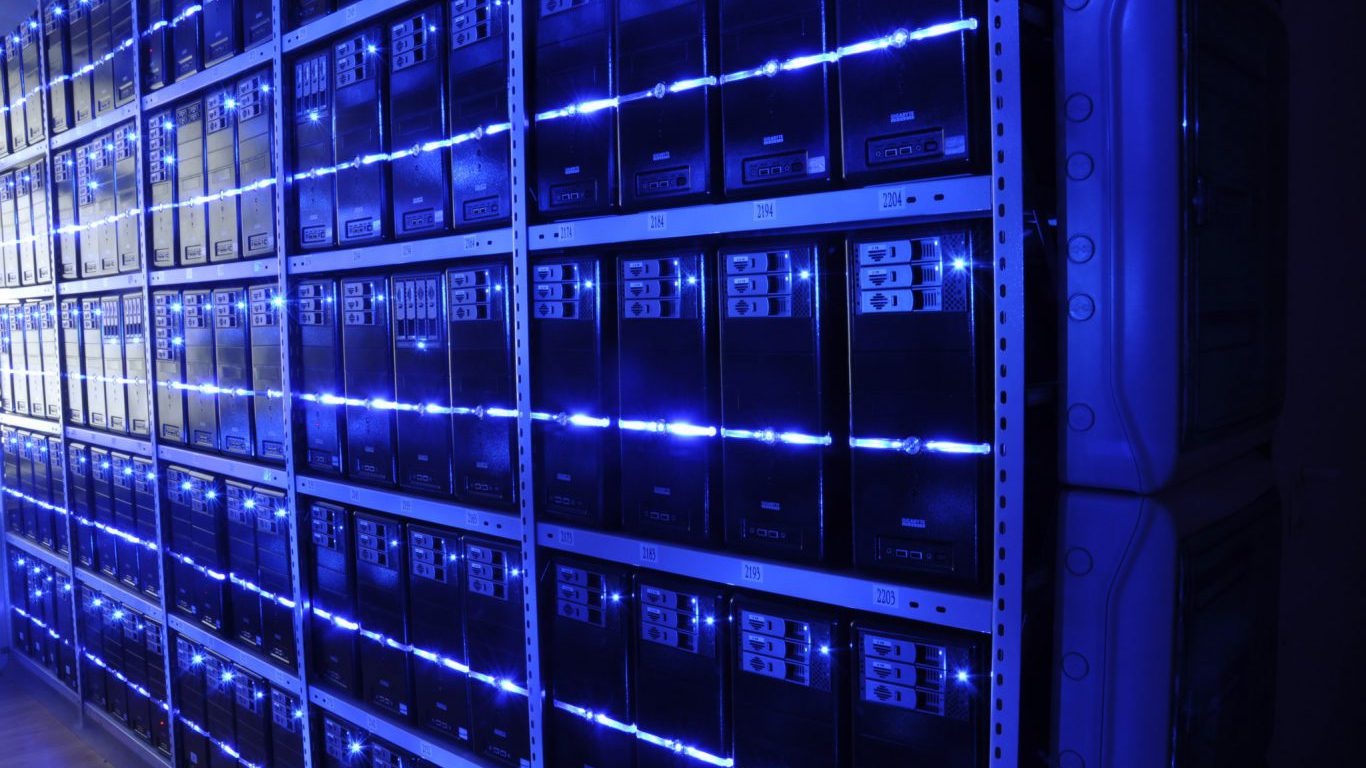
Power-hungry AI infrastructure names are rallying after a global energy forecast put a fresh price tag on the data center buildout. IREN (NASDAQ:IREN) stock is at $16.30, up 7% in morning trading. The company owns land and grid-connected power across North America, Europe and Asia-Pacific, and it’s shifting from legacy crypto mining toward AI cloud services for customers such as Microsoft (NASDAQ:MSFT | MSFT Price Prediction).
The International Energy Agency (IEA) said in its World Energy Outlook, published November 19[1], that it expects $4 trillion in additional data center associated investment by 2030. That spending covers buildings, chips and electronics, and energy equipment such as batteries, transformers, grids and gas turbines. For IREN, which holds more than 5 gigawatts of secured power, the report focuses a question about whether a power-starved expansion favors operators that already control energy and sites.
IEA Sees AI Pushing Data Center Power Use Higher
Spending is already running hot, as the International Energy Agency put global data center investment at $565 billion[1] in 2025 and noted electricity use at those facilities rose 17% that year. Under its Stated Policies Scenario, the International Energy Agency expects global data center electricity consumption to double to 1,000 terawatt-hours[1] by 2030, with AI-optimized facilities driving 75% of the increase.
Purpose-built AI campuses carry much of that growth. Among the 93[1] purpose-built AI data centers tracked by the International Energy Agency, inferred potential capacity reached 17 gigawatts as of September, with combined capacity expected at approximately 50 gigawatts once the sites are completed.
Grids are where the forecast runs into trouble. Planned capacity in Northern Virginia, Texas, Denmark and Finland far exceeds what local grids can support, according to the International Energy Agency, which also highlighted shortages of advanced chip packaging, memory chips and power equipment as a speed limit on growth. As the agency put it, “not all this prospective capacity will be built.”
IREN Outpaces Applied Digital and TeraWulf in the Rebound
Applied Digital (NASDAQ:APLD) stock is at $15.35, up 6%. That gain trails IREN’s move, and Applied Digital stock remains down 37% year to date (YTD). The data center developer reported Q1 FY2027[2] results on October 7 showing 1.41 gigawatts of leased critical information technology (IT) load across five campuses.
IREN stock is still down 57% YTD after a steep slide in recent sessions. On November 5[3], the company reported Q1 FY2027 AI Cloud revenue up 182% sequentially to $200 million alongside a net loss of $263 million, while its revenue backlog grew to $20.3 billion.
TeraWulf (NASDAQ:WULF) stock is at $12.72, up 6%. Unlike its two peers, TeraWulf stock is up 11% YTD, which makes it the group’s clear outlier. Broader AI sentiment is stronger too, with Anthropic, TeraWulf’s tenant at its Justified campus in Kentucky, pricing its initial public offering above its range ahead of its Nasdaq debut following a losing week for the NASDAQ 100.
Three Business Models Built on Power and Land
IREN runs a vertically integrated AI cloud, owning the data centers, the graphics processing unit (GPU) compute and a software layer from its Mirantis acquisition, so it rents out computing power directly. Applied Digital operates more like a landlord, designing and building AI factory campuses for hyperscalers under long-term leases while also hosting crypto miners.
TeraWulf leans hardest on energy-market expertise, leasing critical IT capacity to AI tenants under long-duration, credit-backed leases as its legacy mining business contracts. In the company’s latest quarterly release, Applied Digital CEO Wes Cummins framed the scarcity argument all three share: “Put simply, we view every new restriction elsewhere as making what we already own harder to replicate.”[4]
Can Owned Power Carry IREN Through the Buildout?
IREN now faces the challenge of bringing its contracted AI capacity online on schedule as grid and equipment bottlenecks tighten. The bullish case rests on the International Energy Agency’s demand outlook and energized sites that newer entrants can’t easily replicate. The bears also have a case, since heavy capital spending and large debt loads leave all three companies exposed to construction delays.
For shareholders, the IEA’s warning cuts both ways with IREN: scarcity may raise the value of energized land, while shortages of power gear and memory chips may slow the projects meant to capture that demand (we covered seven of the suppliers behind that expansion, from power to cooling, in a free report here). The timing of IREN’s capacity deliveries could determine how much of that demand the company ultimately captures.
Contact [email protected] for any questions or corrections.
David Moadel is financial writer specializing in stocks, ETFs, options, precious metals, and Bitcoin. David has written well over 1,000 articles for leading online publications, helping investors understand markets, income strategies, and risk. His work has appeared in 24/7 Wall St., The Motley Fool, InvestorPlace, U.S. News & World Report, TipRanks, ValueWalk, Benzinga, Market Realist, MarketScreener, TalkMarkets, Finmasters, and others. With a master’s degree in education, David has taught at the elementary, high school, and college levels. That teaching background shapes his writing style: clear, educational, and practical. David has also built a loyal social-media audience by providing trustworthy financial content on YouTube, X/Twitter, and StockTwits.