Lisa Su Cashed Out $35 Million as AMD Trades 19% Below Its High

This post may contain links from our sponsors and affiliates, and Flywheel Publishing may receive compensation for actions taken through them.
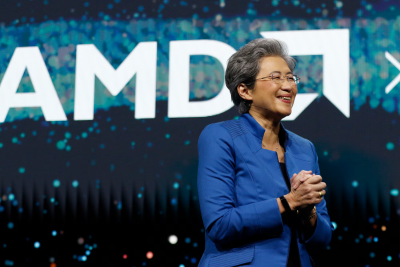
Advanced Micro Devices (NASDAQ:AMD | AMD Price Prediction) Chair, President and CEO Lisa Su sold 70,000 shares of the company on Monday, November 16, 2026, for a total of $35.49 million. The SEC accepted the Form 4 at 4:19 p.m. ET on Wednesday, November 18, after the market closed.
AMD closed November 18 at $530.14, up 5.31%, and traded at $536.99 at 7:59 p.m. ET. That after-hours quote can change before the next open.
Despite that gain, the close remains about 19.5% below October 6’s $658.52 intraday 52-week high and 18.4% below that day’s $649.42 closing high.
A CEO selling while her stock is well off its peak can look like a warning. The filing points the other way, and the stock’s recent swings matter more to you than the sale does.
What Su’s Form 4 Actually Shows
The sale was split into 23 lots at weighted-average prices from $502.06 to $525.94, averaging about $507.00 per share. The largest lot was 31,761 shares at $503.41.
Every share was sold under a Rule 10b5-1 plan Su adopted on June 8, 2026. A 10b5-1 plan is a written schedule that sets future trades in advance, so executives can sell without being accused of trading on inside information.
Because the schedule was fixed in June, the sale tells you very little about what Su thinks of the current price. Trades where an insider picks the moment carry far more signal, and none show up here.
Su Sold a Small Slice and Kept the Rest
The sale totaled about 2.3% of her direct stake. She still holds 2,951,546 shares directly, worth roughly $1.56 billion at the November 18 close, plus shares in a family trust and several grantor retained annuity trusts. Her personal wealth is still heavily tied to AMD’s share price, so her interests stay lined up with yours as a shareholder.
Her average price came in about 4.4% below the November 18 close, so two days later the shares she sold were worth about $37.1 million. That gap reflects how quickly AMD’s share price moves over just a few trading days.
Volatility Is the Bigger Risk
AMD closed at $404.40 on November 5 and at $585.30 on November 12, and Su’s largest lot sold at $503.41. With swings that wide in under two weeks, a full position can gain or lose a large share of its value well before the next earnings report.
The business backs up a premium price. Third-quarter revenue grew 44.68%[1] to $13.377 billion, Data Center sales rose 97%, and management guided fourth-quarter revenue to about $17 billion.

Even so, the valuation is rich. AMD trades at about 201 times trailing earnings, and quarterly free cash flow fell 70.86%[1] as inventory rose to $11.463 billion.
OpenAI co-founder Greg Brockman said OpenAI’s models helped AMD fit about a year of top GPU design work into five months, with gains of up to 14% in power, performance and area. The data centers running those chips still have to be powered, cooled and networked by somebody, and we pulled together seven of the suppliers behind that expansion in a free report.
What Could Change the Outlook for AMD Stock
The bullish case for AMD holds up after this filing. A planned sale of a small part of the CEO’s stake is routine. A stock about 19.5% below its October intraday high, with growth speeding up, looks more reasonably priced than it did at the peak.
Because of the volatility, shareholders face wide price swings over short periods. A stock that went from $404.40 to $585.30 in one week could easily return to either level.
Two things would weaken this view. One is a new Form 4 showing Su or another senior executive selling outside a 10b5-1 plan. The other is a close below the $404.40 November 5 level, which would suggest the market questions the fourth-quarter outlook.
Until either happens, the real test is the fourth-quarter earnings report against the roughly $17 billion[1] revenue guide. That report will likely shape the stock’s direction more than this filing does.

Contact [email protected] for any questions or corrections.
Omor Ibne Ehsan is a writer at 24/7 Wall St. He is a self-taught investor with a focus on growth, cyclical, and dividend equities that have strong fundamentals, value, and long-term potential. He also has an interest in high-risk, high-reward investments such as penny stocks.