Meet Wall Street’s Safe Passive Income Dividend Stocks: 4 Companies That Keep Paying Through Downturns

This post may contain links from our sponsors and affiliates, and Flywheel Publishing may receive compensation for actions taken through them.
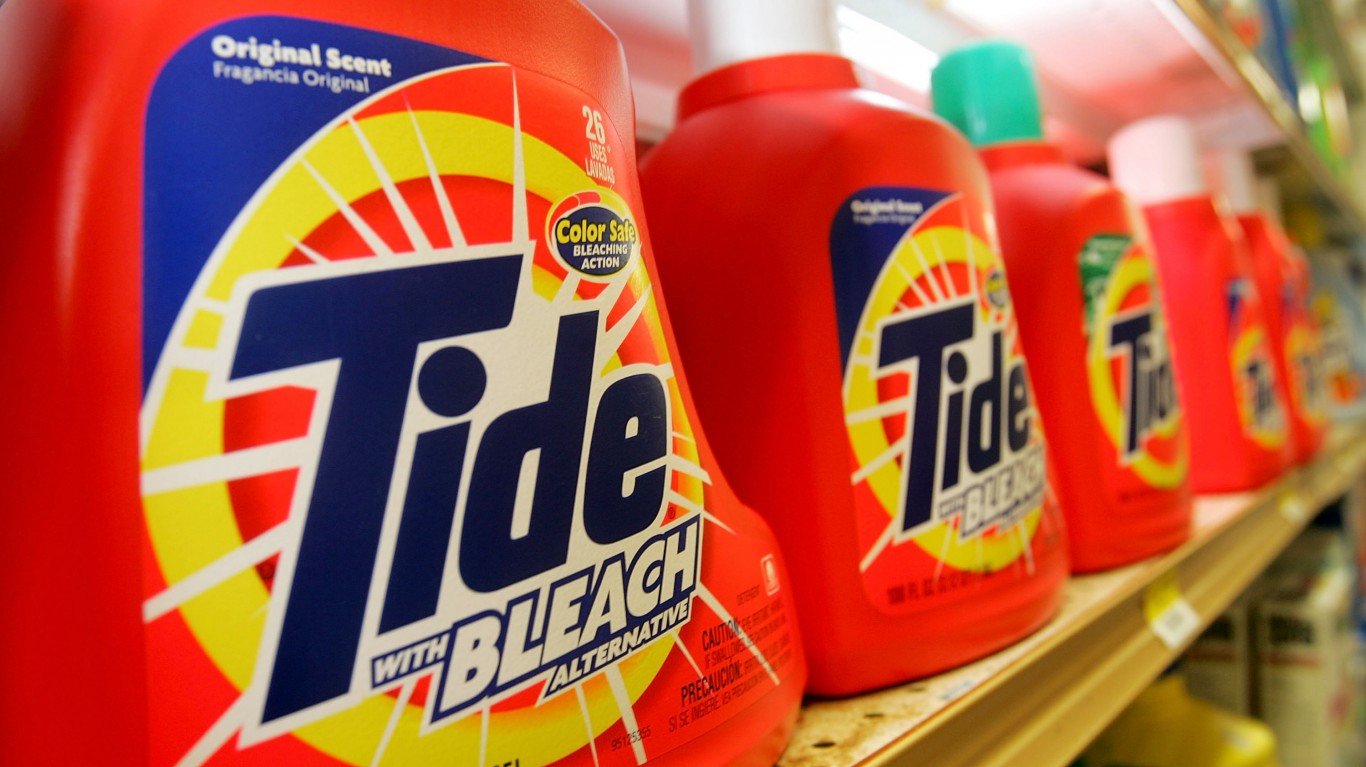
Downturns test a dividend. People keep buying detergent, soda, and toothpaste, and they keep the lights on. This fourth edition of our weekday dividend series groups three consumer staples giants with one regulated utility. All four make their money from purchases households keep making in a weak economy. The group’s anchor, Procter & Gamble (NYSE: PG | PG Price Prediction), says its latest payout marks its 70th consecutive year of dividend increases[1]. Below are each stock’s yield, a read on how safe its dividend is, and what its payout actually did in past recessions and the pandemic.
Procter & Gamble: A Dividend King Built on Everyday Essentials
P&G yields 2.48%, based on $4.291 in annual dividends per share and a quarterly payout of $1.0885. The stock last closed at $170.29.
Dividend safety: P&G produced $15.835 billion[1] in free cash flow in fiscal 2026, up 12.74%, on operating cash flow of $19.556 billion. For fiscal 2027, management plans to pay more than $10 billion[2] in dividends and buy back about $5 billion of stock, with a free cash flow productivity target of 85% to 90%. Trailing EPS of $6.59 comfortably covers the $4.291 annual payout. The company also mentions its 136th consecutive year of dividend payments[1].
How it held up in past downturns: The quarterly dividend rose from $0.35 to $0.40 during 2008, then to $0.44 in 2009. In 2020, it went from $0.7459 to $0.7907. Tide, Pampers, Charmin, and Crest are bought on a regular schedule, and that steady demand keeps the payout rising.
The bull case: first-quarter fiscal 2027 organic sales grew 4%[2], and all five segments grew. Core EPS of $2.00[2] beat the $1.89 estimate, and management kept full-year core EPS guidance at $6.89 to $7.11. The stock’s beta of 0.361 means it has historically moved much less than the overall market.
Risk: Costs are rising. P&G expects about $1.4 billion in after-tax commodity cost pressures this fiscal year. Combined with interest, FX, and non-operating items, those pressures amount to $0.79 per share, an 11% drag on core EPS growth. That could slow future dividend raises, though it does not put the payout itself at risk.
Coca-Cola: An All-Weather Beverage Franchise With a Rising Payout
Shares of Coca-Cola (NYSE: KO) yield 2.11% on an annual dividend of $2.10 per share. The quarterly payout is $0.53 this year, up from $0.51 last year. Shares last closed at $98.09.
Dividend safety: Free cash flow through the first three quarters reached $11.4 billion[3], and management raised its full-year target to at least $13.0 billion[4]. Net debt is 1.3 times EBITDA[3], below the company’s own two to 2.5 times target range. Interest coverage stands at 8.32x, and trailing EPS of $3.39 covers the $2.10 annual dividend. CFO John Murphy said capital returns are “primarily through our dividend.”
How it held up in past downturns: In 2008, Coca-Cola paid $0.38 every quarter, up from $0.34 in 2007. The payout rose to $0.41 in 2009 and again moved from $0.40 in 2019 to $0.41 in 2020. Every year in the dividend record from 1999 forward shows a higher payout than the year before, once the 2012 stock split is accounted for.
Bull case: Third-quarter revenue rose 7.4%[4] to $13.38 billion, unit case volume grew 5%, and Coca-Cola Zero Sugar jumped 16%. CEO Henrique Braun called the company’s approach a “proven all-weather strategy,” supported by 32 billion-dollar brands. Cheaper single-serve packs keep shoppers buying when budgets get tight.
Risk: The stock is expensive. Shares are up 43.05% year to date and trade at a trailing P/E of 29. Barron’s reports the valuation is the highest in 25 years. New buyers are paying up for a 2.11% starting yield.
Duke Energy: Regulated Power and the Highest Yield in the Group
Duke Energy (NYSE: DUK) yields 3.28%, the highest of the four, on an annual dividend of $4.28. The quarterly payout rose this year to $1.085 from $1.065. Shares closed at $130.05.
Dividend safety: Duke narrowed its full-year adjusted EPS guidance to $6.70-$6.80[5] and expects to finish near the top end. That comfortably covers the $4.28 annual dividend. Management says it is on track for its 14.5% FFO-to-debt target[6], a key credit metric for utilities, and confirmed long-term EPS growth of 5% to 7%[5] through 2030. The dividend record shows a raise every year from 2020 through this year.
How it held up in past downturns: The quarterly dividend went from $0.22 at the end of 2007 to $0.23 at the end of 2008 and $0.24 at the end of 2009. In 2020, it rose from $0.945 to $0.965. Households and businesses pay their power bills in any economy, and regulated rates keep that revenue predictable.
Bull case: Third-quarter adjusted EPS of $1.99[5] beat the $1.86 estimate, and retail electric sales grew 5.2%. Duke’s $103 billion[6] capital plan and 16 GW[5] of new generation by 2031 expand the rate base, the asset pool that regulated returns are earned on. Data center projects totaling 5.2 gigawatts[6] are under construction. At a forward P/E of 18, Duke is cheaper than the two US staples names.
Risk: The expansion is expensive. Duke plans to raise $10 billion in equity, which will dilute existing shareholders. Management also noted higher interest expense linked to its growing asset base. If rate cases go badly or borrowing costs keep rising, future dividend raises could get smaller.
Unilever: A Global Staples Payer Trading on the NYSE
Unilever (NYSE: UL), the UK consumer goods company, trades in New York as an ADR (a US-listed receipt for foreign shares). It yields 3.12% on $1.886 in annual dividends. The latest quarterly ADR dividend is $0.5219[7], up 3.0% from the same quarter last year. Shares closed at $64.53.
Dividend safety: Trailing EPS of $4.84 covers the $1.886 payout with room to spare. Unilever is also running a €6 billion buyback through 2029 and finished a €1.5 billion portion this year. Third-quarter underlying sales grew 5.2%[7], and volume grew 2.9%.
How it held up in past downturns: The ADR dividend record shows payments in both 2008 and 2009 and all four quarters of 2020. Brands such as Dove, Vaseline, and Knorr are everyday purchases, and emerging markets grew 9.5%[7] last quarter.
Bull case: After spinning off its ice cream business and agreeing to combine its Foods unit with McCormick (NYSE: MKC) in a deal expected to close by mid-2027, Unilever will focus on home and personal care, where Home Care grew 9.1%[7]. Management raised its full-year sales growth target to 4% to 6%. The stock trades at a trailing P/E of 13.
Caveat: Currency swings and foreign taxes can change what you actually collect. Unilever announces its dividend outside the US, so the dollar amount you receive moves with exchange rates. In 2022, quarterly ADR payments fell from $0.4873 in the first quarter to $0.4211 in the fourth. Foreign governments can also withhold tax on dividends before the money reaches US investors. US taxpayers can generally claim a credit for income taxes paid to a foreign country under 26 U.S.C. § 901(b)(1)[8], subject to limits.
Four Payouts That Kept Growing Through Past Recessions
All four of these companies kept paying, and in most years raised, their dividends through the financial crisis and the pandemic. The payouts are supported by free cash flow from goods and services people buy no matter what the economy is doing. P&G offers the longest record of raises, Coca-Cola the strongest balance sheet, Duke Energy the highest yield, and Unilever global reach at the lowest trailing P/E. Together, they give income investors cash flow built to withstand a recession.
Contact [email protected] for any questions or corrections.
Lee Jackson has covered Wall Street analysts' equity and debt research and equity strategy daily for 24/7 Wall St. since 2012. His broad, diverse career, including a stint as creative services director at an NBC affiliate in Austin, Texas, gives him unique insight into the financial industry.
Lee Jackson's journey in the financial industry spans more than 30 years, including nearly two decades as an institutional equity salesperson at Bear Stearns, Lehman Brothers, and Morgan Stanley. His career spanned pivotal sell-side Wall Street events, from the dot-com rise and bubble to the Long-Term Capital Management debacle, 9/11, and the Great Recession of 2008. This reflects his resilience and adaptability amid market volatility.
Lee Jackson’s practical financial industry experience, gained through a career at some of the biggest banks and brokerage firms, is complemented by a lifetime of writing across various platforms. This unique combination allows him to shed light on the intricacies of Wall Street in a way only someone with deep insider experience and knowledge can. Moreover, his extensive network across Wall Street continues to provide direct access for him and 24/7 Wall St., a privilege few firms enjoy.
Since 2012, Jackson’s work for 24/7 Wall St. has been featured in Barron’s, Yahoo Finance, MarketWatch, Business Insider, TradingView, Real Money, The Street, Seeking Alpha, Benzinga, and other media outlets. He attended the prestigious Cranbrook Schools in Bloomfield Hills, Michigan, and has a degree in broadcasting from the Specs Howard School of Media Arts.