3 Beverage Stocks With Dependable Brands. Are Their Dividends Just as Dependable?
Soda and coffee brands hold up when the economy wobbles, but the cash flowing to shareholders from these three beverage giants varies far more than their reputations suggest. One pays a dividend that barely keeps pace with its own free…

Soda, sparkling water, and coffee keep selling even when the economy slows, and that steady demand is why beverage makers have long been core holdings for income investors. The three big US-listed names pay dividends from very different businesses, though, and the cash behind each payout varies widely. The scale is large: PepsiCo alone plans to pay $7.9 billion in dividends this fiscal year. Below, each company is graded on payout coverage, free cash flow, leverage, and track record, with headline yield coming last.
Coca-Cola: Pure Beverage Economics and the Widest Cash Cushion
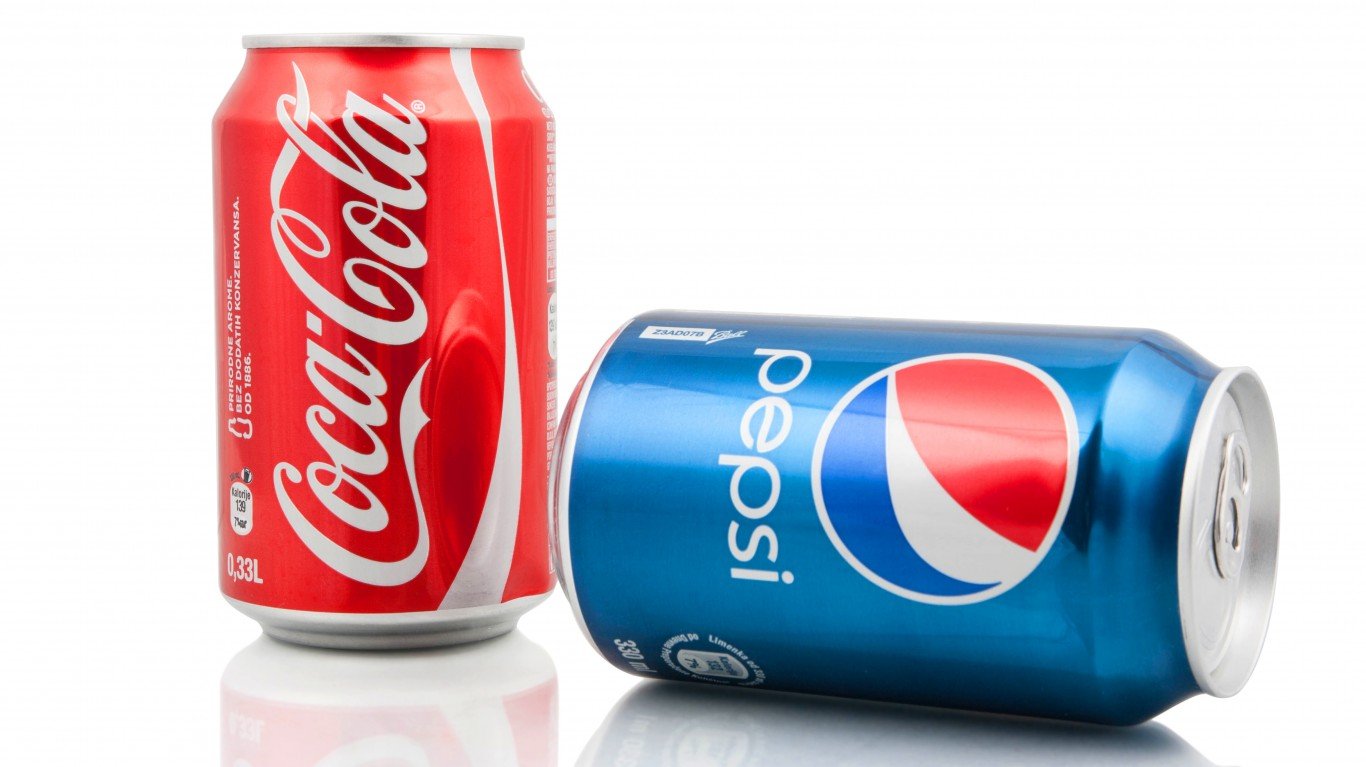
Coca-Cola (NYSE:KO | KO Price Prediction) yields 2.24% at a share price of $91.54. It is the lowest yield of the three, mainly because the stock is up 33.49% year to date and now trades at a P/E of 30. The business itself is simple. Coca-Cola is almost all beverages: it sells concentrate to franchise bottlers in more than 200 countries and territories and keeps only a few bottling operations of its own. That asset-light model produces an operating margin of 28.7%.
Dividend safety: The annualized forward dividend of $2.12 per share, set against trailing EPS of $3.33, gives a payout ratio of about 63.7%. The trailing free cash flow yield of 1.35% is below the dividend yield, so the forward cash outlook matters more here. On that front, management raised its free cash flow guidance to at least $13.0 billion, up from about $12.4 billion. The annual dividend costs roughly $9.12 billion, so forecast free cash flow covers it about 1.43 times. The balance sheet holds up: net debt to EBITDA is 2.49, interest coverage is 8.32x, and cash stands at $13.454 billion. The quarterly dividend has risen from $0.16 in 1999 to $0.53 today. Every year in that record shows a higher quarterly rate (the record also reflects a stock split partway through 2012).
Bull case: The latest quarter supports the payout. Adjusted EPS of $0.91 beat the $0.88 estimate. Revenue of $13.38 billion grew 7.4%, and global unit case volume rose 5%, helped by Coca-Cola Zero Sugar at +16%. Comparable operating margin expanded to 32.9% from 31.9%, and management now expects comparable EPS growth of at least 11%. Growing earnings and rising free cash flow fund future raises.
Risk: Coca-Cola is still in tax litigation with the IRS, and the company has flagged that the outcome could be significant. A large adverse ruling would draw on the same cash that funds the dividend.
PepsiCo: The Richest Yield, Backed by Snacks but Thinner Coverage
PepsiCo (NASDAQ:PEP) yields 4.20% at $132.43, nearly double Coca-Cola’s rate. Part of that comes from a weak stock: shares are down 9.72% over the past year. PepsiCo’s business is the most diversified of the three. It pairs Pepsi and Gatorade with a large snack portfolio led by Lay’s and Doritos, across six reporting segments on several continents.
Dividend safety: The forward dividend of $5.92 against trailing EPS of $7.95 works out to a payout ratio of about 74.5%. The more telling figure is the free cash flow yield of 4.22%, which barely tops the 4.20% dividend yield. In other words, trailing free cash flow only covers the dividend. Planned cash returns total $8.9 billion, with $1.0 billion going to buybacks, and that buyback piece is the main buffer. Leverage is higher than Coca-Cola’s, with debt-to-equity of 2.45 and net debt to EBITDA of 2.60. The interest coverage ratio comes in strong at 10.26x. The quarterly dividend has grown from $0.13 in 1999 to $1.48, rising every year. The latest increase took the payout from $1.4225 to $1.48.
Bull case: Income buyers get the higher yield at a lower multiple: PepsiCo trades at a P/E of 22. Fortune recently pointed out that PepsiCo brings in far more revenue than Coca-Cola yet has a much smaller market value (Fortune). The data supports that, with market caps of about $180.6 billion versus $393.1 billion. Results are holding up. Third-quarter adjusted EPS of $2.34 came in ahead of the $2.30 estimate, revenue of $25.27 billion grew 5.6%, and organic growth in EMEA reached 9%.
Risk: North American snacks are dragging on profits. Core operating profit at PepsiCo Foods North America fell 12%. Management cut core EPS growth guidance to 2.5% to 3.5% while warning about rising input costs. When earnings barely grow, future dividend raises have less to draw on.
Keurig Dr Pepper: Soda and Coffee Growth Weighed Down by Deal Debt
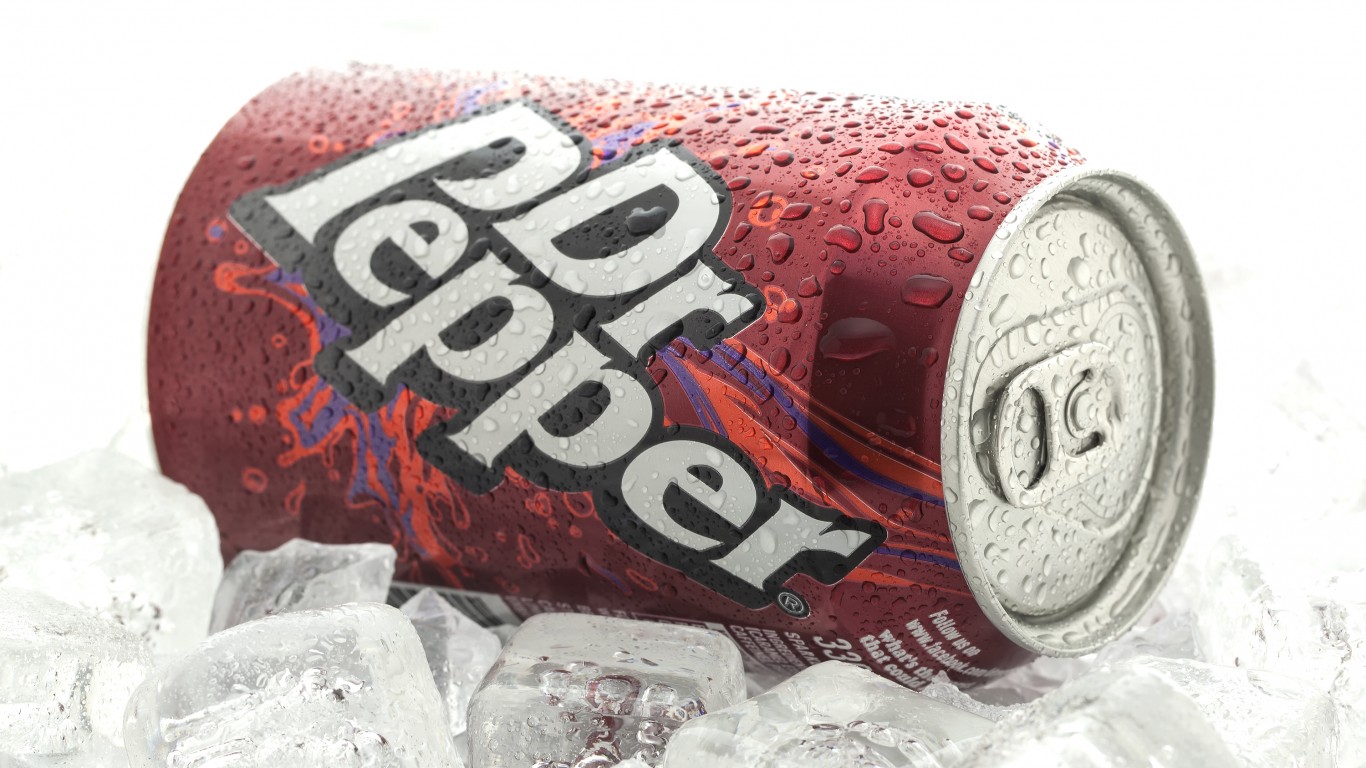
Keurig Dr Pepper (NASDAQ:KDP) yields 2.65% at $34.67, on an annualized dividend of $0.92. Its business spans soft drinks and coffee. Brands include Dr Pepper, Canada Dry, 7UP and GHOST, plus the Keurig single-serve system and the JDE Peet’s brands Peet’s, L’OR and Jacobs. The JDE Peet’s acquisition expanded the coffee business to more than 100 markets.
Dividend safety: The GAAP payout ratio is roughly 92.9% of trailing EPS of $0.99. That figure is skewed by $850 million of acquisition-related charges, so cash flow is the better measure. Second-quarter free cash flow came to $714 million, up 35.48%. For comparison, cash dividends were $312 million in the first quarter, and the full-year dividend bill runs about $1.25 billion. The balance sheet is the weak point. Total debt principal is $30.4 billion and pro-forma leverage is 4.4x, with a target of about 4.1x by year-end. On the track record, the dividend was reset to $0.15 per quarter after the 2018 merger and later rose in steps to $0.23. It has stayed at that level since the September 27, 2024 ex-dividend date.
Bull case: Investors have been buying in, with shares up 27.69% year to date. The stock trades at a forward P/E of 14. U.S. Refreshment Beverages revenue grew 10.0%, and International grew 19.6%. Management reaffirmed guidance for net sales of $25.9 billion to $26.4 billion and low-double-digit constant-currency adjusted EPS growth. If the company pays down debt as planned, it will have more room to resume dividend increases.
Risk: The planned separation of the beverage and coffee businesses, targeted for early 2027, leaves open how the current dividend would be divided between the two new companies. That uncertainty comes on top of a recent earnings miss: second-quarter adjusted EPS of $0.57 missed the $0.64 estimate.
Ranking the Beverage Dividends Built to Last
Coca-Cola ranks first. Forecasted free cash flow covers its dividend about 1.43 times; it has the lowest leverage of the three, and its record shows a raise every year since 1999. PepsiCo comes second, with the highest yield and an equally long record of raises, but free cash flow that only covers the payout. Keurig Dr Pepper ranks third. Its 4.4x leverage, a dividend that hasn’t moved in two years, and an upcoming separation all put its income stream at greater risk.
Contact [email protected] for any questions or corrections.
Chris Lange is a financial and geopolitical writer with more than a decade of experience covering a myriad of topics. He has published thousands of articles for 24/7 Wall St., with past coverage focused heavily on stocks, IPOs, healthcare, defense, global affairs, and technology.
His work has been quoted, or referenced by a number of outlets including Business Insider, USA Today, Yahoo Finance, MSN, The Motley Fool, and many other publications. A graduate of Southwestern University, he studied business with a focus on investments and has previous experience in banking and startups.
When not reading or writing the news, he is following his passion for Lacrosse, playing chess, or building solar projects with his dad.