Nvidia Is Moving Up Pay Raises to Keep Employees After Huang’s Exit

This post may contain links from our sponsors and affiliates, and Flywheel Publishing may receive compensation for actions taken through them.
NVIDIA (NASDAQ:NVDA | NVDA Price Prediction) held its first all-hands meeting since Jensen Huang resigned, and it ended with a promise about money.
Interim CEO Colette Kress told staff at the Santa Clara meeting. The yearly review, when employees typically get raises and more stock, will move to December from March. The change was reportedly made to retain employees. NVIDIA disclosed no amounts and gave no reason for the timing.
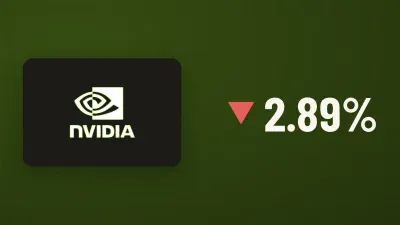
Shares fell $4.50, or 2.89%, to $150.96, the lowest close since June 24, 2025, for a market value of $3.65 trillion. They then traded at $151.90 after hours at 7:59 p.m. ET.
The close finished about 13% below the $173.73 finish on November 11, the last close before the resignation announcement. It is also about 37% under the October 6, 2026 record close of $239.24.
Because much of NVIDIA’s pay arrives as stock, that slip cuts directly into what employees hold. Moving the review up is management’s first concrete answer to the problem, and it arrives while the board still has no permanent CEO.

What NVIDIA Committed To
The committed part is the timing, with raises and extra equity arriving months earlier than planned. Kress said the priority is caring for every employee. She wants them not to worry about their pay, and co-founder Chris Malachowsky told staff the company would be fine. The size of raises, the value of grants, and whether every employee qualifies were not disclosed.
Staff reportedly submitted about 700 questions in advance, ranking compensation first and board transparency second. Board chair Harvey Jones discussed the CEO search but gave no timeline or candidates.
Why Stock-Heavy Pay Makes Timing Matter
When pay is mostly stock, a falling price reduces unvested grants and makes rival offers look better, and an earlier review gets fresh grants to employees sooner, while competitors are hiring the engineers behind NVIDIA’s chips and software.
Shareholders cover part of that cost. More shares go out per dollar of grant value. Refresh grants set at a lower share price point toward higher dilution and stock-based compensation expense, although the size is unknown.
The business can absorb it. NVIDIA reported third-quarter free cash flow of $43.78 billion[1] and has $227.3 billion left in buyback authorization, which can offset new share issuance over time.
Questions the All-Hands Left Open
On the November 17[2] earnings call, Jones said the board unanimously accepted Huang’s resignation and does not intend to bring him back. Huang said the same day that he was ready to return if the board wanted him.
An attendee said the general sentiment in the room was that employees want him back, and a senior employee reportedly wrote to the board warning that it could lose key talent.
Kress also remains CFO while serving as interim CEO. Changing an established pay process this quickly looks like a symptom of serious unrest, and the longer the search runs, the more weight the raises have to carry.
What the Leadership Turmoil Means for NVIDIA Shareholders
The business is still growing despite the trouble. Third-quarter revenue of $115.84 billion[1] beat the $108.73 billion consensus, and non-GAAP EPS of $2.68 exceeded the $2.47 estimate.

Management guided fourth-quarter revenue to $130.0 billion, plus or minus 3%[1], and the stock trades at a trailing P/E of 30.

Risks include an ongoing independent board committee investigation[1] and a CEO search with no timeline. Keep an eye on the December raises and grants, any senior technical departures, and news from the search. If a senior engineering leader leaves before the December review, or the stock closes below $150.96 after the grants land, the retention plan is likely failing.
Contact [email protected] for any questions or corrections.
Omor Ibne Ehsan is a writer at 24/7 Wall St. He is a self-taught investor with a focus on growth, cyclical, and dividend equities that have strong fundamentals, value, and long-term potential. He also has an interest in high-risk, high-reward investments such as penny stocks.