Moody’s Says Jensen Huang’s Exit Is “Credit Negative” for Nvidia

This post may contain links from our sponsors and affiliates, and Flywheel Publishing may receive compensation for actions taken through them.
After the market closed on November 18, 2026, Moody’s Ratings confirmed the Aa1 senior unsecured rating of NVIDIA (NASDAQ:NVDA | NVDA Price Prediction) and changed its outlook to stable from positive. Moody’s Ratings also confirmed the chipmaker’s Prime-1 commercial paper rating, so both grades stayed the same.
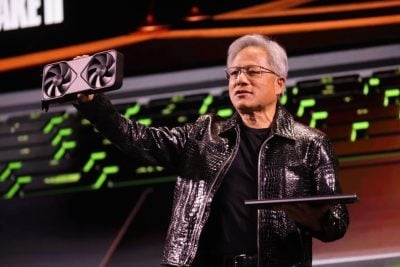
The change followed Jensen Huang’s resignation as president, CEO and director on November 12. The company had no formal succession plan when he left. Moody’s views the exit as credit negative, and Senior Vice President Raj Joshi said the leadership change created uncertainty about NVIDIA’s business strategy and financial policies.
The stock was already falling before Moody’s acted. Shares closed at $150.96 on November 18, down 2.89%. That was the fifth straight daily loss and the lowest close since June 24, 2025, when the stock ended at $147.90.
An after-hours quote of $151.90 at 7:59 p.m. ET showed little added selling, although that price can change before the November 19 open. With a market value of about $3.65 trillion, NVIDIA has a very strong balance sheet and no permanent chief executive.

What Moody’s Changed and What It Kept
A rating outlook shows which way a rating is likely to move. A positive outlook means an upgrade is possible, and a stable outlook removes that possibility for now.
Moody’s Ratings said an upgrade is unlikely over the next 12 to 18 months while the board searches for a permanent CEO. It still described NVIDIA’s market leadership and financial position as extremely strong.
NVIDIA can easily pay its debts. It holds about $98 billion in cash and marketable securities against roughly $39 billion of debt and lease liabilities.
A company with that much cash still cares about its outlook because the outlook affects borrowing costs and how partners judge its strength. That carries weight when NVIDIA has $118 billion[1] in guarantees supporting data center buildouts.
Where Moody’s Sees Weak Spots
Partnerships are the first exposure. Huang, as founder, personally held relationships with hyperscalers, AI labs and governments, and those ties now run through interim CEO Colette Kress, who is also CFO.
On the November 17[2] earnings call, Kress said: “From a business perspective, it’s business as usual.” That statement describes what management plans, and Moody’s wants to see it hold up in practice.
Financial policy is the second exposure. Buybacks, dividends, acquisitions and debt can change under new leadership, and NVIDIA plans to use its remaining $227.3 billion[1] buyback authorization through fiscal 2028.
Moody’s also highlighted weak spots in governance and operations tied to U.S. export controls, along with NVIDIA’s reliance on manufacturing in Taiwan. It added that pending government investigations into the circumstances of the resignation could distract management.
Why Shareholders Are Paying the Bigger Price
Bondholders need NVIDIA to stay solvent. Shareholders are paying for years of growth that depend on execution. The business itself is still growing fast: third-quarter revenue reached $115.84 billion[1], up 103.2%, and fourth-quarter guidance calls for $130.0 billion.

Even so, the stock fell 30.46% over the month ending November 18. That gap between results and share price reflects how much leadership risk investors are pricing in. Moody’s is waiting on milestones you can track as well, mainly who permanently leads NVIDIA, how the board’s investigation ends, and whether the partnerships hold.
What Could Restore NVIDIA’s Positive Outlook
NVIDIA’s valuation already reflects some of this risk. At roughly 30 times earnings, the shares carry a discount for the leadership gap even as revenue keeps growing and the credit rating stays near the top of the scale.
Several risks could still weigh on the shares, because a long CEO search or a major partner leaving would justify a lower price, and trouble with export controls or Taiwan manufacturing would hurt no matter who runs the company. A strong pick for permanent CEO, by contrast, would answer Moody’s main question and could restore a positive outlook.

A close below $147.90 would show the market expects more serious damage. A named permanent CEO, well within the 12- to 18-month timeframe Moody’s Ratings laid out, would likely ease the leadership discount in the shares.
Contact [email protected] for any questions or corrections.
Omor Ibne Ehsan is a writer at 24/7 Wall St. He is a self-taught investor with a focus on growth, cyclical, and dividend equities that have strong fundamentals, value, and long-term potential. He also has an interest in high-risk, high-reward investments such as penny stocks.