Jim Cramer Says Nvidia’s New CEO Asked the Questions Jensen Huang Wouldn’t Answer

This post may contain links from our sponsors and affiliates, and Flywheel Publishing may receive compensation for actions taken through them.
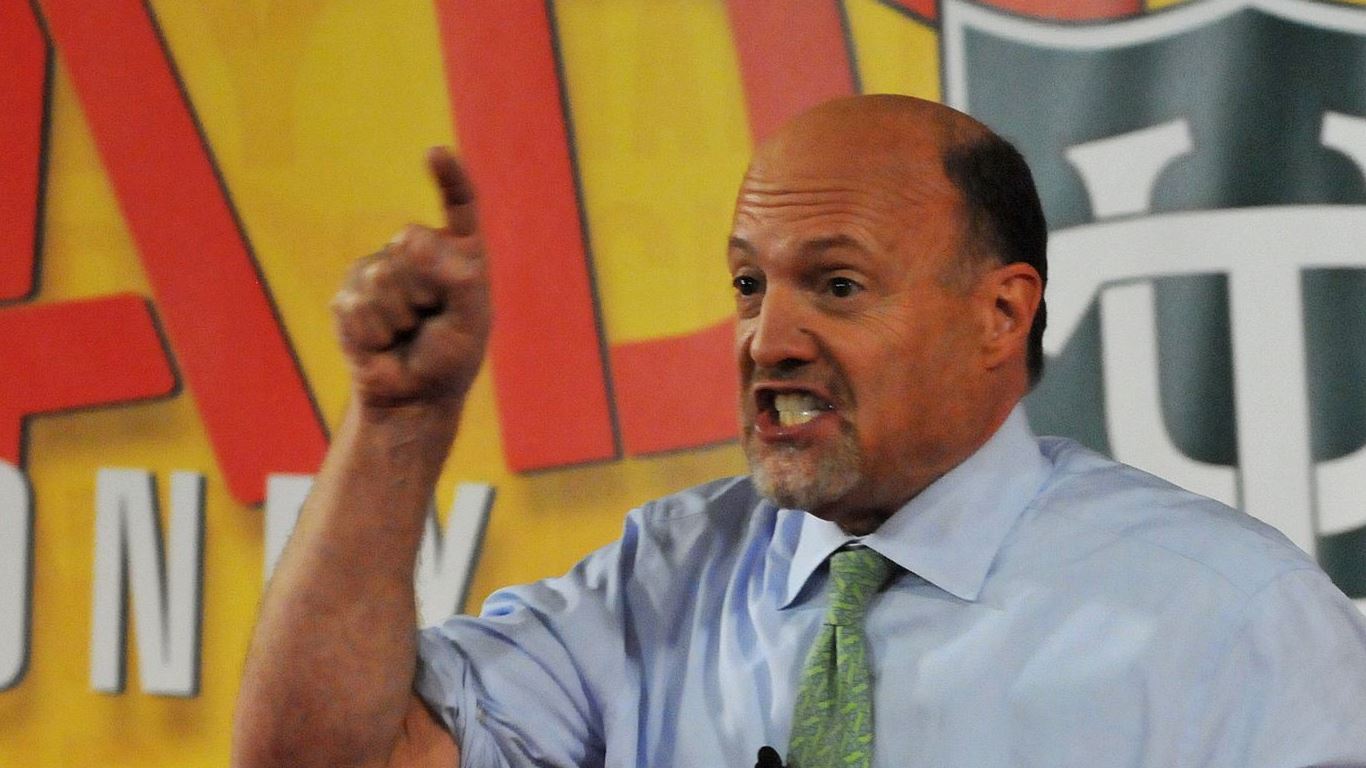
Jim Cramer is supporting the executive Jensen Huang reportedly belittled. The Wall Street Journal reported that Huang called Colette Kress “a deer in the headlights” during a meeting this summer. Cramer called the story a “hitjob” and wondered whether Kress had been willing to ask the questions other executives avoided. Kress became interim CEO of NVIDIA (NASDAQ:NVDA | NVDA Price Prediction) after Huang resigned on November 12. His argument matters as investors consider the leadership change. Nvidia closed at $162.85 on November 13, down 12.75% for the week and 26.41% over the past month.

Inside the Meeting Where Kress Questioned Nvidia’s Dealmaking
According to the Journal’s report, Huang called in his senior finance team to assess a growing problem: Nvidia was in talks to provide billions of dollars of guarantees to companies that couldn’t afford its chips. A person familiar with the comments told the paper that Huang interrupted Kress’s presentation to make the remark. Kress had raised concerns about Nvidia’s financing commitments to AI customers and reportedly helped halve a proposed OpenAI commitment.
Nvidia’s own disclosures show how large those commitments had become. Its fiscal second-quarter report capped guarantee obligations at $108.5 billion[1] for AI cloud and data center partners, while supply obligations rose to $279B[2], mostly for Vera Rubin memory. On the earnings call, Huang addressed the criticism directly: “We recognize the scale of this support, and we know some will call this circular financing. We see it differently.”[3] Management said that demand from AI labs where Nvidia expects to use its balance sheet could account for roughly a quarter of its business next year[3].
Cramer Sees Rigor in the Executive Huang Dismissed
Cramer has called Kress rigorous, tough, and deeply knowledgeable about Nvidia’s business. He said that toward the end of Huang’s tenure, he had more confidence in Kress than in Huang. After the resignation, he reiterated his confidence in interim CEO Colette Kress.
Her tenure spans Nvidia’s largest growth period. Kress became CFO in 2013, when Nvidia had $4.13 billion in annual revenue. Fiscal 2026 revenue reached $215.94B[4], and net income was $120.07B. She will stay on as CFO while she runs the company, and the board is looking at candidates inside and outside Nvidia for a permanent CEO.
Why Tighter Discipline Could Protect Shareholders Now
The core business is still growing fast. In the August quarter, revenue was $96.22B[2] against a $92.07B consensus, up 105.8% from a year earlier. Non-GAAP EPS was $2.22[2], ahead of the $2.09 estimate. Guidance for the current quarter calls for $108.0B +/- 2%[2]. The stock trades at about 33 times earnings.

The balance sheet is where the pressure shows. Days sales outstanding, a measure of how long customers take to pay, rose to 60 days from 45 days[1] because of extended payment terms. Inventory grew to $32 billion[3]. A CEO who checks every commitment against those numbers could reduce the risk of a bad outcome. Kress also sees the upside of these deals. Describing Nvidia’s revenue-sharing model for cloud partners, she said: “We get paid twice: once on the hardware sale and again through the share of rental revenue.”[3]
Replacing Huang will be hard. For 33 years, he was Nvidia’s public face to customers, suppliers, and governments. Two major investors have already pressed the board to consider a potential return of Jensen Huang.
What Investors Should Track in the Coming Months
Nvidia’s fiscal third-quarter report will give the first look at the company under interim leadership. Investors should watch whether guarantee obligations and supply commitments keep growing, whether payment terms stretch further, and whether gross margin falls to the projected low point of 71% to 72%[3] in the fourth quarter. The CEO search is the other key item. Cramer’s view is that the executive who was willing to challenge Huang’s deals may be especially useful now, as Nvidia works to rebuild investor confidence.

Contact [email protected] for any questions or corrections.
After two decades of patrolling the dark corners of suburbia as a police officer, Rich Duprey hung up his badge and gun to begin writing full time about stocks and investing. For the past 20 years, he’s been cruising the markets looking for companies to lock up as long-term holdings in a portfolio while writing extensively on the broad sectors of consumer goods, technology, and industrials. Because his experience isn’t from the typical financial analyst track, Rich is able to break down complex topics into understandable and useful action points for the average investor. His writings have appeared on The Motley Fool, InvestorPlace, Yahoo! Finance, Money Morning, and, of course, 24/7 Wall St. He has been featured in both U.S. and international publications, including MarketWatch, Financial Times, Forbes, Fast Company, and USA Today.