30 States Are Now Suing Dollar General Over Prices at the Register

This post may contain links from our sponsors and affiliates, and Flywheel Publishing may receive compensation for actions taken through them.
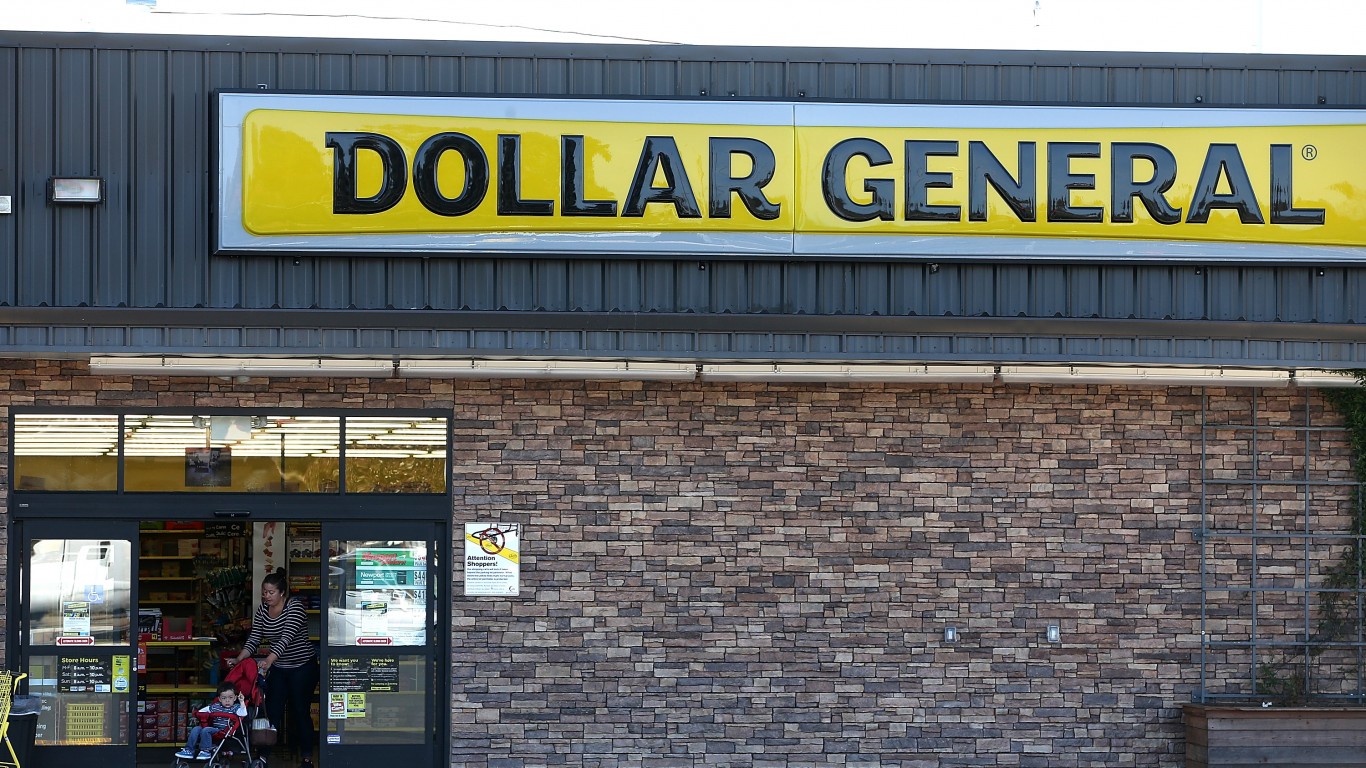
A dollar store sells one promise above all others: the number on the shelf tag is the number you pay at the register. On Friday, November 20, 2026, the Federal Trade Commission said ten more states joined its lawsuit accusing Dollar General (NYSE:DG | DG Price Prediction) of charging shoppers more at checkout than the prices on shelves, tags, and ads.
The number of state co-plaintiffs rose from 20 to 30, and the FTC is also a plaintiff. The new states are Delaware, Georgia, Kentucky, Maine, Minnesota, New Mexico, Oregon, Rhode Island, South Carolina and South Dakota.
The stock closed at $130.53, down 2.23%, on a day the S&P 500 fell 3.70%. After hours, it traded at $131.08. Nothing links Friday’s decline to the lawsuit, because the whole market sold off.

What the Amended Complaint Covers
The commission voted 2-0 to file the amended complaint in the U.S. District Court for the Middle District of Tennessee. The original complaint was filed on October 26, 2026.
The FTC alleges that Dollar General mislabeled prices for a long time, knew about the problem without fixing it, and lacked safeguards. It says this cost shoppers “millions of dollars”, in violation of the FTC Act, the Gramm-Leach-Bliley Act and state laws.
The FTC wants a permanent injunction (a court order that rules future conduct), a monetary judgment and civil penalties, yet both complaints leave the overcharges unquantified, and the amendment kept it that way.
When the original suit was filed in October, the agency said the company had received tens of thousands of consumer complaints. Christopher Mufarrige, who ran the FTC’s Bureau of Consumer Protection at the time, said Dollar General had failed the trust of millions of consumers.
Why Register Accuracy Is Dollar General’s Core Product
Todd Vasos spoke on the August 27, 2026[1] earnings call. The chief executive said, “Price is paramount for our customer.”[1] The $1 Value Valley section had grown to more than 600 items, and its same-store sales rose more than 16%. When the register charges more than the shelf tag, it undermines that pitch, and this business depends on shoppers coming back often.
An injunction could prove more costly than a penalty. Pricing accuracy depends on store staff and shelf-tag routines, and a court order could set how those routines work across more than 21,000[1] stores.
Reality Check on the Settlement Path
In October, Dollar General said it would fight the case. It said pricing errors happen occasionally, that staff is expected to fix them, that it had upgraded its price-accuracy processes, and that it had cooperated with the FTC since February. The company has not commented publicly on the amended complaint.
The FTC sent a draft complaint and a settlement offer in September, but Dollar General answered with a monetary counteroffer and said it was surprised the agency sued instead. That suggests both sides expect a payment but disagree on terms.
The size of the coalition is the growing risk. It went from 20 to 30 states in under a month, and each state brings its own consumer-protection claims and possible penalties.
Still, shares fell only about 4% after the October suit. The stock’s beta of 0.191 means it has historically moved much less than the overall market.
What Could Move Dollar General Stock Next
The underlying business keeps delivering. Second-quarter net sales rose 5.2% to $11.3 billion[1], and management raised its fiscal 2026 EPS outlook to $7.80 to $8.
The stock trades at a forward P/E of about 18x, and the consensus price target is $142. Analysts are cautious, with 17 Holds against 3 Strong Buys, 10 Buys and 1 Sell. That caution leaves room for upgrades if the case decides.
The most likely outcome is a payment plus court-supervised pricing rules. A company worth $28.80 billion would likely be able to absorb that kind of outcome without lasting damage to its finances.
The next test is the quarterly report expected before the market opens on Thursday, December 3. A legal reserve or a settlement disclosure in that report would support this view. More states joining, with no reserve set aside, would break it.

Contact [email protected] for any questions or corrections.
Omor Ibne Ehsan is a writer at 24/7 Wall St. He is a self-taught investor with a focus on growth, cyclical, and dividend equities that have strong fundamentals, value, and long-term potential. He also has an interest in high-risk, high-reward investments such as penny stocks.