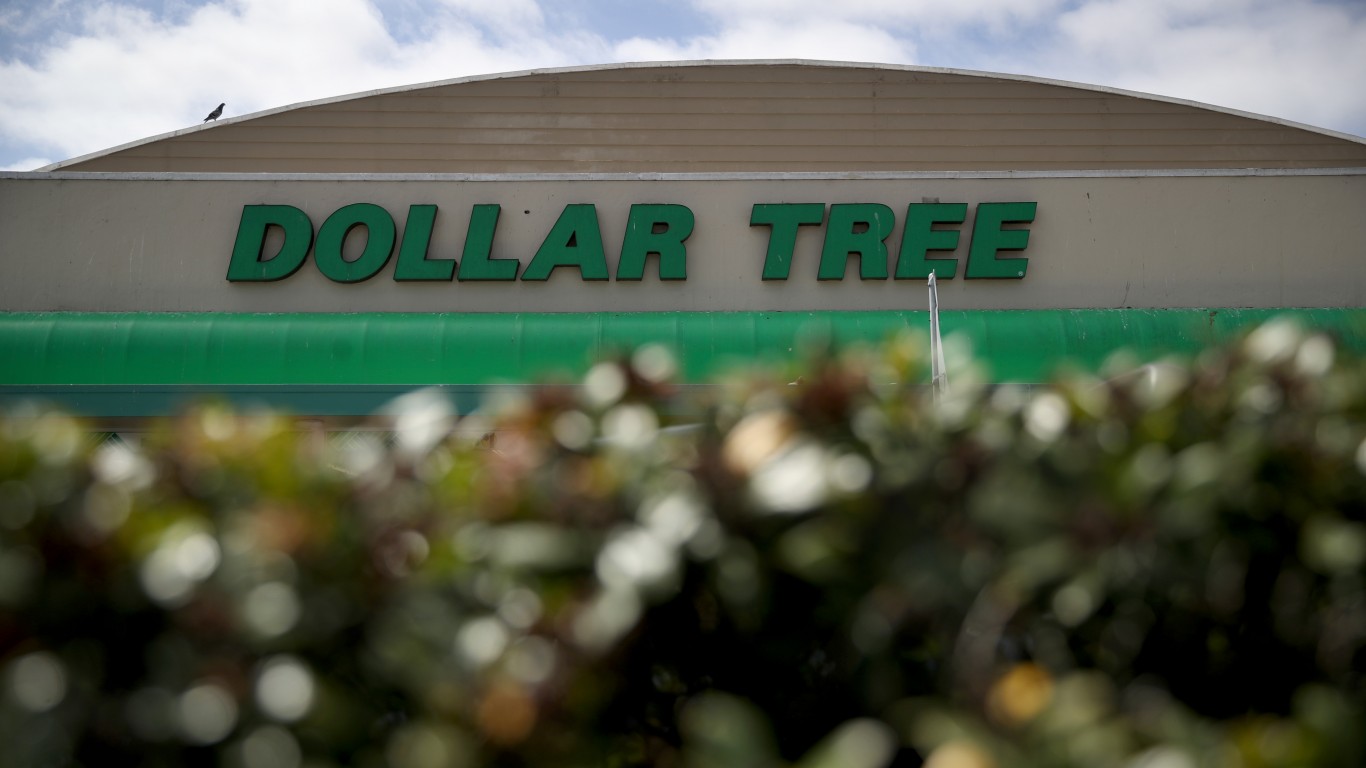
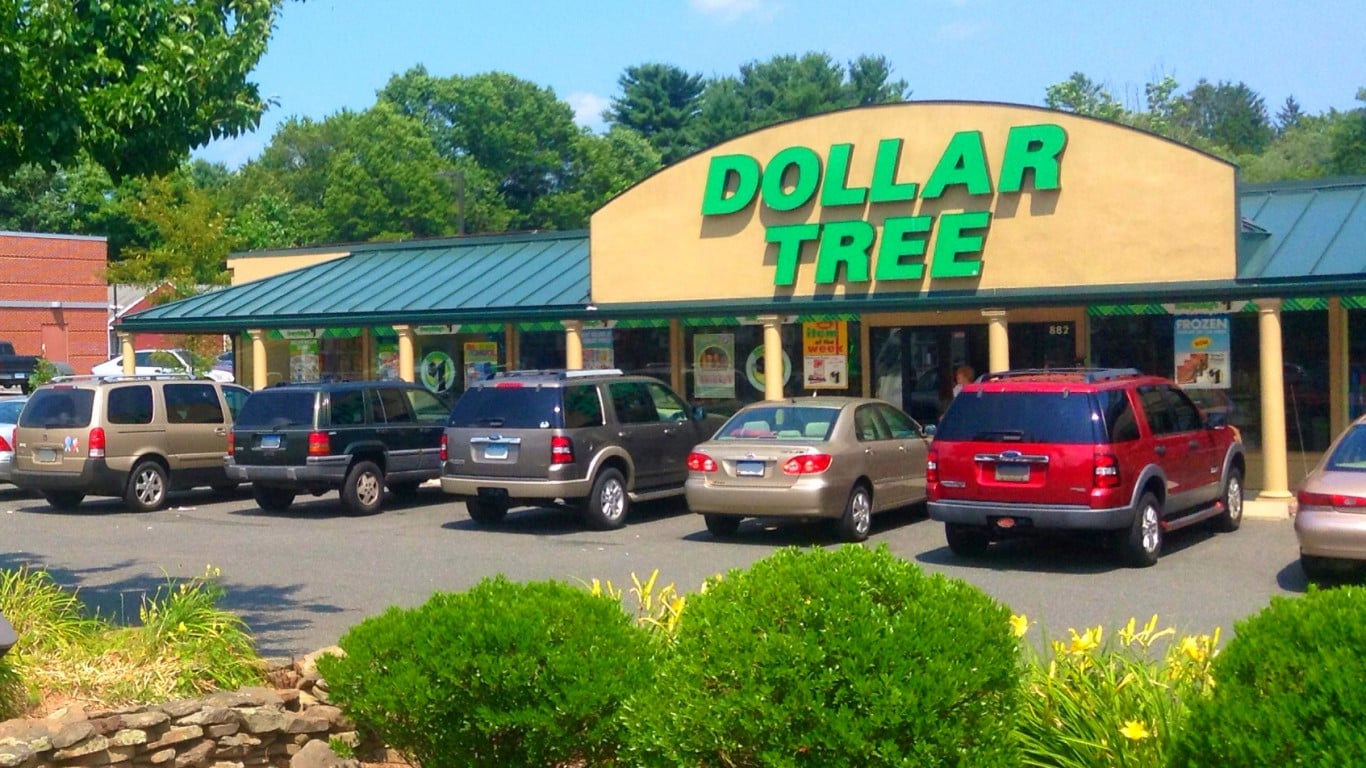
Dollar Tree Got Nearly $400 Million in Tariff Refunds After Shoppers Paid the Higher Prices
When courts ordered tariff refunds for importers, Dollar Tree collected a nine-figure check from Washington. Shoppers who funded those duties through higher shelf prices are wondering if any of it finds its way back to them.

On Tuesday the New York Federal Reserve put a number on what shoppers have suspected for a year. By February 2026, tariffs had added 2.9 percentage points to goods price inflation, and without them goods prices would have fallen slightly. Wall Street Journal economics correspondent Nick Timiraos circulated the research on October 6. It also found that roughly one quarter of every point of higher tariff rates reaches consumer prices within a year.
The person at the register paid, and some of that money is now coming back to someone else.
A $383 Million Check From Washington
In February 2026, the Supreme Court ruled that the International Emergency Economic Powers Act (IEEPA) could not authorize tariffs. On March 27, 2026, a Court of International Trade judge ordered U.S. Customs and Border Protection to reliquidate entries without the IEEPA duties. That cleared the way for importers to get back duties they had already paid.
Dollar Tree (NASDAQ:DLTR | DLTR Price Prediction) received $383 million in IEEPA refunds in its fiscal second quarter. Of that, $369 million ran through cost of sales and $14 million came as interest. The net benefit was $1.31 per share. The windfall lifted GAAP earnings to $2.70 against a $1.13 consensus, a 138.6% beat, and added 650 basis points to operating margin expansion.

In the same quarter, Dollar Tree bought back 5.6 million shares for $605 million. It still has $2.5 billion left under its authorization.
Where the Refund Money Is Going
Management did not announce a rebate or price cut. CEO Mike Creedon said funds would go toward “targeted pricing strategies, marketing, store operations, and store conditions.” The company plans $210 million of refund reinvestment for the full year, including a $40 million charitable contribution. It expects that spending to cut about $0.50 from third-quarter EPS.
CFO Stewart Glendinning argued shoppers benefit indirectly through lower ongoing tariff rates absorbing inflation “rather than passing those costs on to the customer.” The full-year adjusted EPS guide of $7.70 to $8.05 still includes roughly $0.60 of net refund benefit going to shareholders.
Dollar Tree did nothing improper. Importers paid the duties, so importers get the refunds. Shoppers who paid the higher shelf prices have no way to claim any of it.
A Price-Point Promise With an Asterisk
The irony cuts deeper at a chain built on a fixed price. Dollar Tree moved about 710 more stores to multi-price format, bringing the total to roughly 6,600 stores selling items above $1.25. Multi-price goods now make up 17% of total sales, while more than 85% of assortment stays priced at $2 or less. The average ticket rose 3.3% while traffic grew just 0.4%.
Why Third-Quarter Traffic Matters Most
Investors have looked past the one-time gain. Shares traded at $129.84 when results were filed on August 27 and stood at $116.19 on October 6. The New York Fed data supports concerns that dollar stores may no longer be bargains after inflation and tariffs.

Third-quarter results will be the test. If the reinvestment lifts traffic well above 0.4%, it supports Creedon’s argument that customers benefit indirectly. If traffic stalls while the average ticket keeps rising, the refund will look the way it does on the income statement: a windfall for shareholders, paid for by shoppers.
Data Sources
- Dollar Tree tariff refund irony: the New York Fed’s estimates of how much tariffs added to goods inflation and how much reached consumer prices, as circulated by Nick Timiraos.
Contact [email protected] for any questions or corrections.
Jake has been been working in financial media for almost 15 years. He focuses on all things personal finance for 24/7 Wall St. with high hopes to educate and entertain. Most recently, Jake spent 12 years working various roles at The Motley Fool. He started copy editing fool.com content, worked on premium and marketing campaigns, and helped launch The Ascent, a personal finance brand.
His work has been featured on platforms like MSN, Yahoo Finance, USA Today, and more. He's written about credit cards, social security, ETFs, savings accounts, and just about anything else you can imagine when thinking about money. Jake love to cook, play golf, and tell people he's never had a cavity. (It's true!)