Investors Put $45.7 Billion Into U.S. Stock Funds Right Before the Stock Market Tanked

This post may contain links from our sponsors and affiliates, and Flywheel Publishing may receive compensation for actions taken through them.

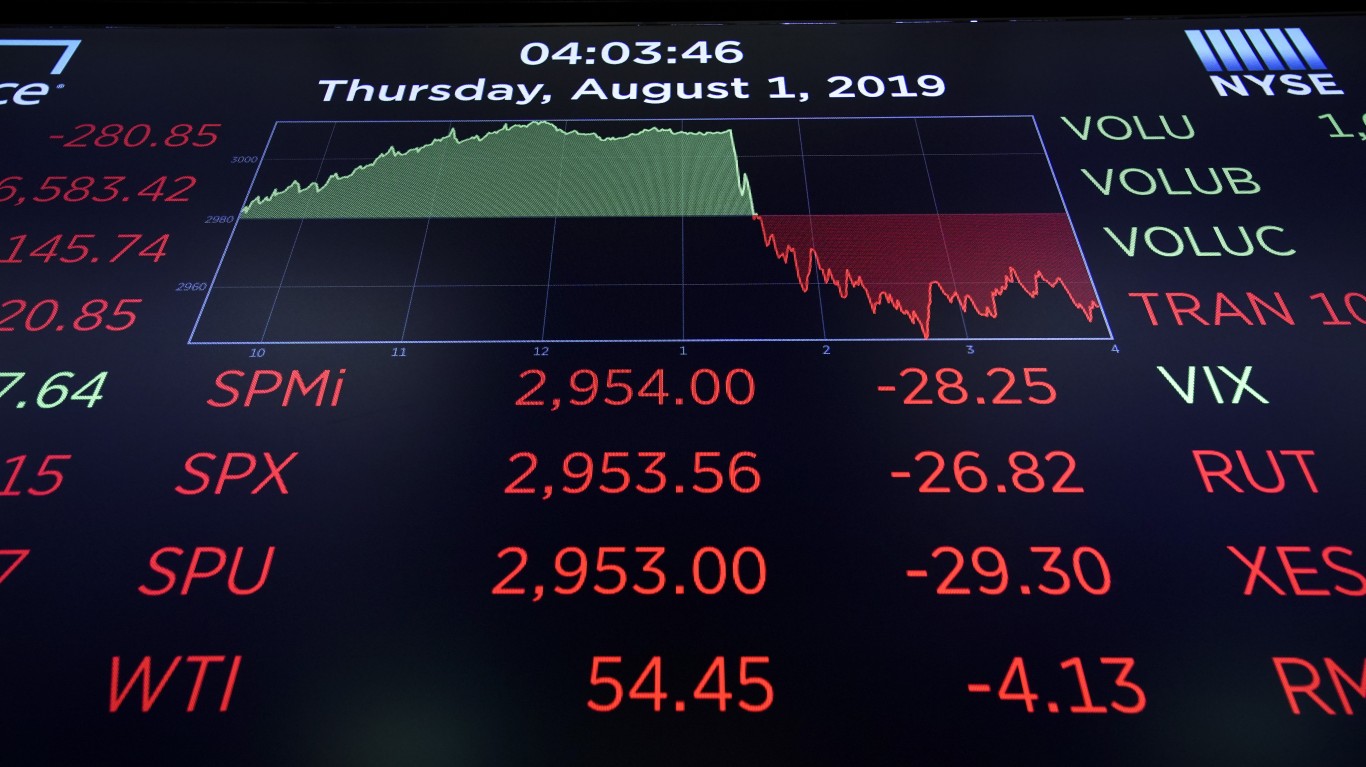
U.S. equity funds took in $45.7 billion in the week ended Wednesday, November 18, 2026, the biggest weekly inflow since the week ended September 23. The weekly fund-flow data came out Friday morning, November 20. By that afternoon, the S&P 500 had fallen 3.70% to 6,910.39, its seventh straight loss.
Friday’s drop came after a 2.02% decline on November 19. The index now sits 11.6% below its October 6 record close of 7,818.93, and it has lost 5.6% in two sessions from its November 18 close of 7,323.63.
The SPDR S&P 500 ETF Trust (NYSEARCA:SPY) closed at $689.81, down 5.53% from November 18. The Invesco QQQ Trust (NASDAQ:QQQ) lost 7.74% over the same stretch. The Vanguard S&P 500 ETF (NYSEARCA:VOO) fell 5.33%. For investors holding these funds near retirement, that buying offers a read on conviction heading into the selloff.
Buyers Stepped Into a Market That Was Already Falling
The flow week closed before the November 19 and November 20 drops, so the money came in right before the selloff. The index had already slipped from 7,619.38 on November 11 to its November 18 close, a decline of about 3.9%, which means investors were adding on weakness well short of the top.
The buying showed up worldwide as well. Global equity funds drew $59.23 billion, up from $50.99 billion a week earlier, and technology funds took in $12.3 billion. These flows cover ETFs and mutual funds held by institutions and individuals.
Earnings Gave Buyers a Reason to Add
Third-quarter profits at MSCI All Country World Index companies rose 31.6%, with about 91% of them reported, and oil prices eased.
Mark Haefele, chief investment officer at UBS Global Wealth Management, wrote that he sees the expansion, the earnings cycle and the AI investment story as intact.
Worries about AI spending and the Democrats’ midterm sweep still weighed on tech, which helps explain why QQQ, heavy in large chipmakers, fell more than the two S&P 500 funds.
Money market funds lost $13.89 billion and global bond funds lost $3.2 billion, far less than stocks lost. In a separate survey, U.S. money market fund assets slipped $3.58 billion to $7.98 trillion. That cash could support a rebound, though a 10-year Treasury yield of 4.92% makes savers pay to wait. The VIX, a measure of expected volatility, hit 28.44[1] on November 19.
Trading resumes Monday, November 23; markets close Thursday, November 26, for Thanksgiving, and the Fed meets December 8-9. The next weekly flow report will include the selloff days, so it will show whether dip buyers kept adding money or pulled it out.
What the Selloff Means for SPY Holders
SPY’s long-term earnings case looks intact. Even after the decline, it is up 1.16% year to date while profits are growing quickly, so the selloff has brought down the price without breaking the earnings case.
VOO tracks the same index at a lower cost. It charges 0.03% a year, compared with 0.0945% for SPY, and that difference compounds over a long holding period.
The view changes if the next flow report shows U.S. equity fund outflows and the S&P 500 closes below 6,910.39 before the December Fed meeting. For investors near retirement, the two-day drop is a reason to review how automatic contributions and a target allocation fit their timeline.
Contact [email protected] for any questions or corrections.
Omor Ibne Ehsan is a writer at 24/7 Wall St. He is a self-taught investor with a focus on growth, cyclical, and dividend equities that have strong fundamentals, value, and long-term potential. He also has an interest in high-risk, high-reward investments such as penny stocks.