Jim Cramer Says the Market “Sliced Right Through” His S&P 500 Target

This post may contain links from our sponsors and affiliates, and Flywheel Publishing may receive compensation for actions taken through them.
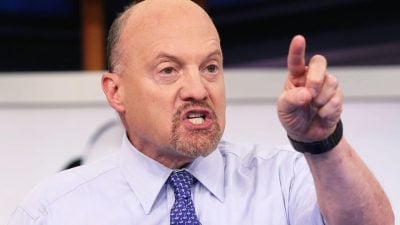
At 4:26 p.m. ET Friday, minutes after the closing bell, Jim Cramer posted on X: “Market sliced right through to my SPX 6900 target… Have to reconfigure this weekend.” The host of CNBC’s Mad Money posted it after a session in which the S&P 500 fell 3.70%, its seventh straight loss.
Market sliced right through to my SPX 6900 target… Have to reconfigure this weekend.
— Jim Cramer (@jimcramer) November 20, 2026
That drop ended a week in which the index lost 8.6% and closed at 6,910.39, its lowest close since April 13. The benchmark now sits 11.6% below its October 6 record close of 7,818.93.
If you own the State Street SPDR S&P 500 ETF Trust (NYSEARCA:SPY), the year-to-date figure probably matters more. Measured from the December 31, 2025 close of 6,845.50, the index is up only about 0.95% for 2026, so almost all of this year’s gain has been given back since early October.
A well-known stock picker’s target gave way during the session, but he is still buying.
A Target That Broke Intraday but Held at the Close
The S&P 500 opened at 7,150.39 and reached 7,198.67 before sellers took control. The low of 6,882.66 left it about 17 points under Cramer’s target.
By the close, the index had climbed back to finish about 10 points above 6,900. The break he described really happened, but on a closing basis the target held.
Traders judge support levels mostly on closing prices, because a close shows where buyers were willing to hold positions overnight. The April 13 close of 6,886.24 sits in the same narrow band, which gives the 6,900 area some history as a level where buyers have stepped in before.
Support Levels Gave Way Within Days
On his Tuesday, November 17 show, Cramer said he saw no meaningful support until about 7,000. Three sessions later, the index traded below 6,900.
Thursday’s 2.02% decline to 7,175.83 set up Friday’s slide. When an index breaks through two reference points in one week, the old levels stop helping much, which is why he wants the weekend to rethink his view.
Cramer has described a rolling bear market that moves through one sector after another, with AI and technology names leading. Earlier in the week, he noted that 184 S&P 500 stocks, or 37% of the index, had fallen 20% or more from their 52-week highs.
SPY weights its holdings by market value, so weakness in the largest names pulls on the whole fund. As of its March fact sheet, NVIDIA (NASDAQ:NVDA | NVDA Price Prediction) alone made up 7.58% of the fund, and the ten largest positions numbered 36.48%. The VIX, a gauge of expected volatility, closed at 28.44[1] on Thursday, up from 17.49 on November 11.
Cramer’s Words Versus His Trades
On November 18, he wrote, “Minus 5 on the oscillator, club members, time to start buying…” His Investing Club then made another small purchase as the selloff deepened.
At 7:43 a.m. Friday, he argued that “oil is embedded and really hurting the CPI. The Fed doesn’t need to do more than 25”. He is accepting that his plan needs work while still adding in small amounts, which is how a patient buyer handles a falling market.
Investors will watch for results from Hewlett Packard Enterprise (NYSE:HPE) and Dell Technologies (NYSE:DELL). Markets close Thursday, November 26, for Thanksgiving, and the Fed’s December meeting follows.
A close below Friday’s 6,882.66 low would mean 6,900 has failed. A close back above 7,000 would suggest Friday’s late recovery has buyers behind it.
How Long-Term SPY Holders Can Weigh This Selloff
The index is back near where 2026 began, and the fund charges 0.0945% a year to track it. A close below Friday’s low could bring further declines before the Fed meets, which is why many long-term investors spread purchases over several weeks rather than putting it all in at once (we wrote a free handbook on riding a mania and planning the exit, which you can grab here).
The Invesco S&P 500 Equal Weight ETF (NYSEARCA:RSP) takes a different approach to AI concentration. It holds the same companies at equal weights with a 0.20% expense ratio, so the largest technology names no longer drive most of the result during a tech-led selloff.
Contact [email protected] for any questions or corrections.
Omor Ibne Ehsan is a writer at 24/7 Wall St. He is a self-taught investor with a focus on growth, cyclical, and dividend equities that have strong fundamentals, value, and long-term potential. He also has an interest in high-risk, high-reward investments such as penny stocks.