Renaissance Technologies Grew Its SanDisk Stake More Than 55-Fold to $481 Million

This post may contain links from our sponsors and affiliates, and Flywheel Publishing may receive compensation for actions taken through them.

Renaissance Technologies raised its stake in SanDisk (NASDAQ:SNDK | SNDK Price Prediction) from 4,980 shares at the end of June to 276,460 shares as of September 30, 2026. The figures come from the quantitative firm’s 13F, filed November 12, 2026. The position grew to about 55.5 times its prior share count and was worth $481 million at quarter-end. The filing shows the portfolio only as of that date. It tells investors nothing about what Renaissance holds today.
A Quant Fund Rotates Into Memory
SanDisk made up about 0.66% of Renaissance’s disclosed portfolio. Renaissance’s $481 million stake was smaller than Millennium Management’s $731 million position and those of several major institutional investors. In the same filing, Renaissance added to other memory and storage companies, including Micron Technology (NASDAQ:MU), Western Digital (NASDAQ:WDC) and Seagate Technology (NASDAQ:STX). It also cut deeply into large-cap tech leaders such as NVIDIA (NASDAQ:NVDA) and other megacap platform names. Micron was its largest disclosed holding at $1.62 billion.
Renaissance trades on computer models, so its position changes come from statistical signs. The firm doesn’t publish its reasoning, so the trade reflects model output. The rotation shows where those signs pointed in the third quarter: toward companies selling memory and storage for the AI expansion.
Fundamentals Behind the Signal
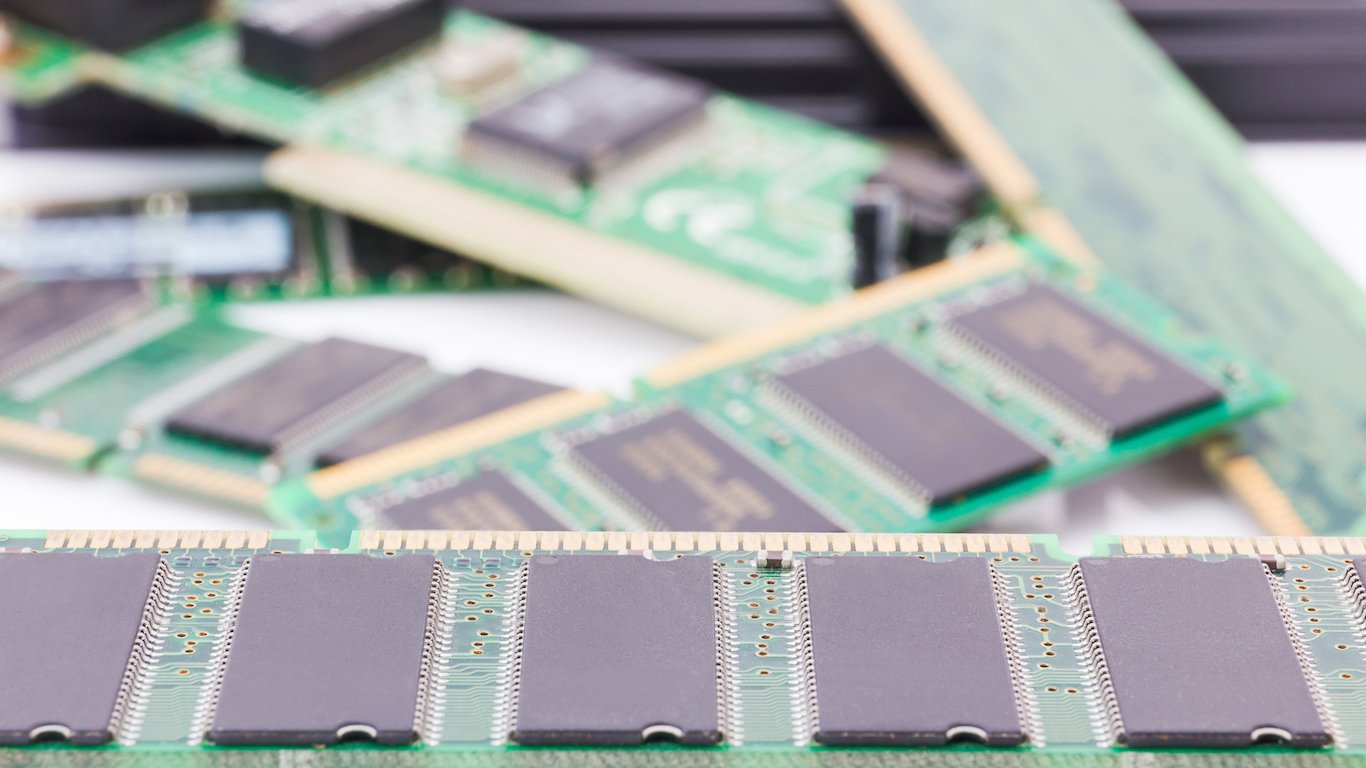
SanDisk designs and makes NAND flash memory, the chips that store data in phones, PCs, and the solid-state drives (SSDs) inside data center servers. AI systems use huge amounts of training data and produce large volumes of output, and enterprise SSDs keep that data close to the processors.
In fiscal Q1 2027, reported October 29, 2026[1], revenue reached $11.03 billion, up 377.9% year over year. Non-GAAP EPS of $49.51[1] beat the $46.27 consensus. Datacenter revenue rose 61%[1] from the prior quarter to $4.80 billion, GAAP gross margin reached 85.0%, and free cash flow totaled $6.31 billion. Management forecast fiscal Q2 revenue of $12.20 billion to $12.60 billion[1].
Consumer remains the weak segment, with revenue of $397 million[1], down 39% year over year. Management also lists swings in NAND pricing, reliance on partner Kioxia, and dependence on a few large customers as risks.
What Retail Investors Should Weigh Now
An 8-for-1 stock split took effect November 19, 2026, so Renaissance’s reported share counts are pre-split numbers. Shares closed at $79.24 on November 20. That followed a 16.05% drop in the session, a 28.37% decline over the past week and a 54% slide over the past month.
Despite those losses, the stock is still up 167.05% year to date. A MarketWatch report published the same day said analysts see Micron and SanDisk’s bargain-looking valuations as a red flag. Low earnings multiples often show up near the peak of a memory cycle, when profits are unusually high.


Worth Following as Research, With Limits
A 13F shows long stock positions as of quarter-end, and it is filed about 45 days later. It leaves out hedges, short positions, purchase prices, and any trades made after September 30. That delay matters for a quant fund, which trades often.
Renaissance’s shift suggests model-driven money moved toward memory stocks in the third quarter, and SanDisk’s reported results support the AI storage case. More useful signs for retirement-focused investors are SanDisk’s datacenter growth, gross margin, and NAND pricing. Copying a position whose current status is unknown tells them much less.
Contact [email protected] for any questions or corrections.
David Beren has been a Flywheel Publishing contributor since 2022. Writing for 24/7 Wall St. since 2023, David loves to write about topics of all shapes and sizes. As a technology expert, David focuses heavily on consumer electronics brands, automobiles, and general technology. He has previously written for LifeWire, formerly About.com. As a part-time freelance writer, David’s “day job” has been working on and leading social media for multiple Fortune 100 brands. David loves the flexibility of this field and its ability to reach customers exactly where they like to spend their time. Additionally, David previously published his own blog, TmoNews.com, which reached 3 million readers in its first year. In addition to freelance and social media work, David loves to spend time with his family and children and relive the glory days of video game consoles by playing any retro game console he can get his hands on.