Anthropic’s Record-Breaking IPO Comes With a $1 Trillion Financial Burden Wall Street Can’t Ignore

This post may contain links from our sponsors and affiliates, and Flywheel Publishing may receive compensation for actions taken through them.

Wall Street’s artificial intelligence boom has entered a new phase. Building smarter AI models is no longer enough. Companies must prove they can earn more money from those models than they spend powering them.
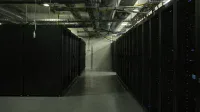
That’s becoming a trillion-dollar challenge as technology giants race to construct data centers, secure electricity, and purchase advanced chips. The investments promise to transform entire industries, but they also create enormous financial obligations years before the expected profits arrive.
Anthropic‘s (NASDAQ:ANT) historic initial public offering (IPO) has brought that contradiction into focus. Investors have rewarded its extraordinary growth, but the company’s financial commitments tell a more complicated story.
An $81 Billion IPO Meets a $1 Trillion Reality
Anthropic raised approximately $81.3 billion in its Nov. 19 IPO, surpassing the $75 billion raised by SpaceX (NASDAQ:SPCX | SPCX Price Prediction) in June. Shares priced at $83, opened at $111.50, and closed their first trading session at $97.17, giving the Claude AI developer a fully diluted valuation of approximately $1.77 trillion.
Yet buried in Anthropic’s final IPO prospectus is a number that deserves considerably more attention.
The filing revealed $900.9 billion in future computing and infrastructure commitments. There are another $150 billion to $175 billion in estimated payments under agreements without fixed dollar commitments that brings its combined potential spending exposure to approximately $1.05 trillion to $1.08 trillion.
That’s more than 12 times the record IPO proceeds.
Importantly, these aren’t $1 trillion in conventional debt due tomorrow. They include multiyear purchasing agreements, equipment leases, and arrangements extending as far as 2045. Some $186.2 billion of the fixed commitments also involve termination rights or conditions that could prevent them from proceeding.
Nevertheless, $70.7 billion comes due within 12 months of September 30, 2026, while $451.6 billion is expected before the end of 2030. The obligation to keep financing this expansion is what is concerning.
Anthropic’s Growth Must Outrun Its Spending
Anthropic has something many money-losing technology companies lack: rapidly expanding customer demand.
Its prospectus reported an annualized revenue run rate of $81 billion as of Oct. 31, up $10 billion in just one month. Enterprise customers generating at least $100,000 in annual revenue increased from more than 950 to more than 11,900 over the preceding year.
That’s remarkable growth, but an annualized run rate isn’t the same as $81 billion already collected in revenue. And quarterly computing and infrastructure expenses reached $9.9 billion in September, up from just $944 million in March 2025.
Anthropic’s earlier financial reports revealed how costly its expansion had become. Growing sales won’t necessarily translate into growing profits when delivering those sales requires more chips, electricity, and computing capacity.
Surprisingly, Anthropic’s biggest challenge may not be finding customers. It may be earning sufficient returns on the infrastructure needed to serve them.
Why the Risk Extends Beyond Anthropic
The financial exposure doesn’t stop with Anthropic shareholders. Amazon (NASDAQ:AMZN), Alphabet (NASDAQ:GOOGL), and Broadcom (NASDAQ:AVGO) are among the companies supplying the computing capacity needed to keep Claude running.
But Anthropic’s infrastructure commitments also create risks for those suppliers. Expensive data centers become less profitable if customers reduce spending or equipment becomes obsolete faster than expected.
CoreWeave (NASDAQ:CRWV) illustrates the danger. Its second-quarter financial results showed $72.05 billion in liabilities against $5.02 billion in shareholders’ equity, while quarterly interest expenses reached $640 million.
Conversely, Nvidia (NASDAQ:NVDA) generated $21.34 billion in quarterly free cash flow, offering investors a stronger financial foundation. The difference between profitable chip suppliers and debt-dependent infrastructure companies is becoming harder to overlook.
Key Takeaway
In short, Anthropic’s IPO proves investors will finance AI’s future. It doesn’t prove that the future will be profitable.
The stock’s 8.5% decline on Nov. 20, following its 17% first-day gain, suggests Wall Street is already reconsidering the price of that promise.
Anthropic’s revenue growth makes it worth watching, but its trillion-dollar spending exposure makes buying immediately difficult to justify. Investors should demand evidence of improving cash flow and sustainable infrastructure returns before paying a premium for ANT.
For now, financially stronger AI suppliers offer a more defensible way to participate in the expansion.
Contact [email protected] for any questions or corrections.
After two decades of patrolling the dark corners of suburbia as a police officer, Rich Duprey hung up his badge and gun to begin writing full time about stocks and investing. For the past 20 years, he’s been cruising the markets looking for companies to lock up as long-term holdings in a portfolio while writing extensively on the broad sectors of consumer goods, technology, and industrials. Because his experience isn’t from the typical financial analyst track, Rich is able to break down complex topics into understandable and useful action points for the average investor. His writings have appeared on The Motley Fool, InvestorPlace, Yahoo! Finance, Money Morning, and, of course, 24/7 Wall St. He has been featured in both U.S. and international publications, including MarketWatch, Financial Times, Forbes, Fast Company, and USA Today.