Nvidia Is Soaring on Jensen Huang’s Return. History Says the Biggest Rallies of the Dot-Com Crash Came on the Way Down, and Cisco Fell 79% After Its 24% Day

This post may contain links from our sponsors and affiliates, and Flywheel Publishing may receive compensation for actions taken through them.

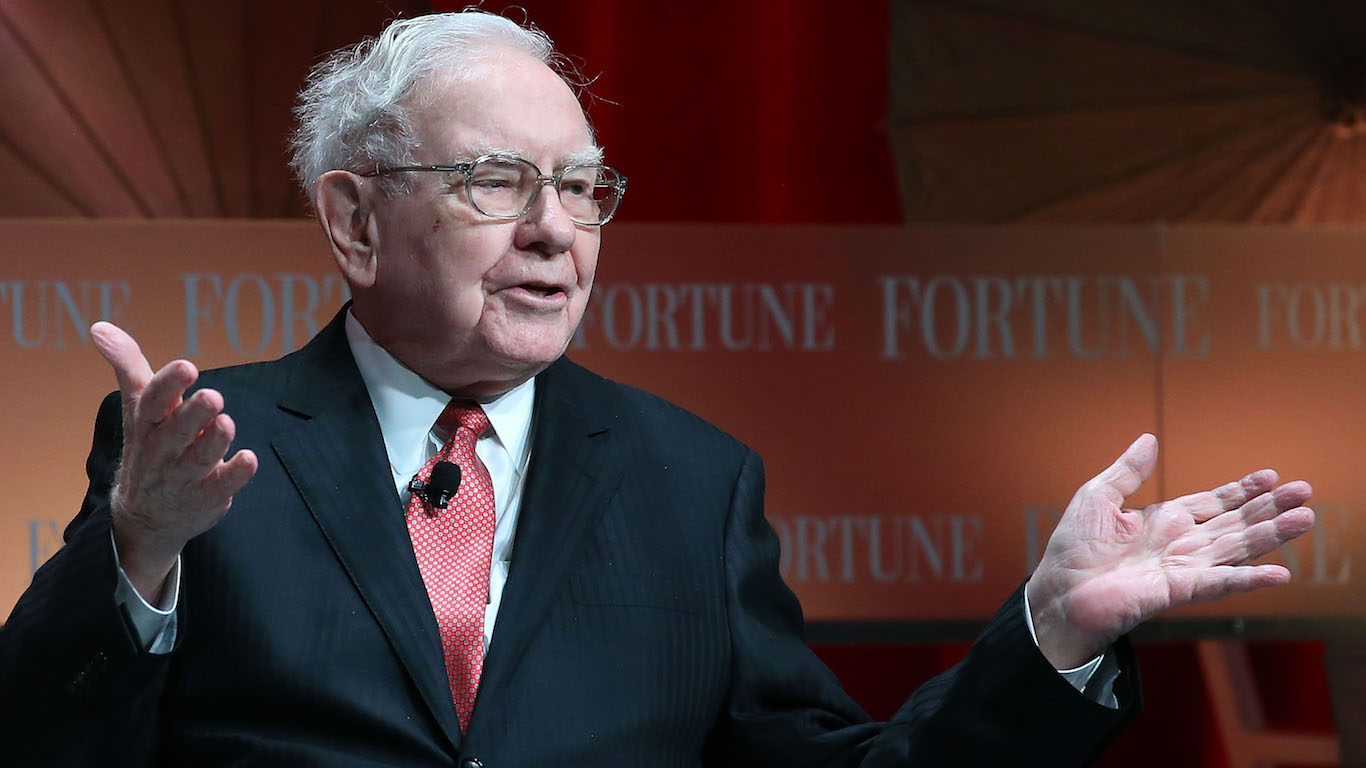
Nvidia (NASDAQ: NVDA) stock was up about 33% in morning trading on Monday after the board reinstated Jensen Huang as CEO. At about $167, against Friday’s close of $125.53, the gain would rank among the five biggest days for Nvidia shares since 1999 if it holds to the close.
Five of Nvidia’s eight biggest days before Monday came in 2000 and 2001, as the dot-com bubble peaked and burst. One was Jan. 3, 2001, when Nvidia rose 31% and Cisco rose 24% in a single session. Cisco then fell 79% from that day’s close to its low in October 2002.
Set against that record, a 33% day reads as a sign of how violent this sell-off has been, and in the last tech bust the biggest up days came while prices were still falling. That reading has a limit: Nvidia trades at about 20 times its adjusted earnings of the past year, Cisco traded at about 151 times at its 2000 high, and Nvidia itself more than tripled in the year after that 2001 rally.
Take a 67-year-old with a $2.4 million IRA who had 10% of it, $240,000, in Nvidia at Friday’s close. At Monday’s price that stake is worth about $319,000, a gain of about $79,000 in one morning. The 2000 bust is a record of what days like this one led to for two of that era’s biggest tech stocks.
2000 and 2026, side by side
The Wall Street Journal’s James Mackintosh on Sunday set this year’s AI sell-off next to the 2000 bust, measuring each stock from its high to the end of the year. Intel fell 60% in 2000 and was down 64% from this year’s high as of Friday. Cisco fell 52% then and was down 30% on Friday. Nvidia fell 62% then and was down 48%.
"Some are almost identical, some worse, some better," Mackintosh wrote. "But just from these it would be hard to say one was obviously a burst bubble and the other not." We recomputed those six figures from closing prices and they match.
Monday’s rally changes the 2026 column. Nvidia is now about 30% below its Oct. 6 record close of $239.24. Intel, up about 14% on Monday, is still about 58% below its June high.
The leaders stayed and the stocks kept falling
Nvidia was without its founder for 12 days. Intel and Cisco kept their leaders through the whole bust.
Andy Grove, who wrote "Only the Paranoid Survive" in 1996, was Intel’s chairman until 2005. Huang has his own version of that line: he told Joe Rogan last December that he has used the phrase "30 days from going out of business" for 33 years. At Cisco, CEO John Chambers compared the 2001 downturn to a "100-year flood," cut 8,500 jobs and wrote off $2.25 billion of inventory.
Both companies survived. Their shareholders had a much harder time. From its 2000 high to the low on Oct. 8, 2002, Intel fell 82% and Cisco fell 89%. After the end of 2000, the point where the Journal’s comparison stops, Intel lost another 56% and Cisco another 78%.
The biggest rallies came on the way down
On Jan. 3, 2001, the Federal Reserve surprised markets with a half-point rate cut. The Nasdaq-100 fund QQQ rose 17%, still its biggest one-day gain since 1999. Cisco’s jump left the stock 48% below its 2000 high. One year later it was down another 50%.
On April 18, 2001, the Fed made a second surprise cut and Intel rose 20%, its biggest one-day gain until 2025. Intel then fell 58% to its 2002 low.
The rally most like Monday’s came on company news. On May 8, 2002, the morning after Cisco reported a profit that beat forecasts, the stock rose 24%, its biggest one-day gain since 1999. Five months later it was 47% lower, at the low of the whole bust. All three of its biggest days since 1999 came between the 2000 high and that low.
Where Nvidia differs
Nvidia’s own record is the first difference. A year after its 31% day in January 2001, the stock was worth 3.5 times as much. Then it fell 90% in nine months.
Price is the second. At about $167, Nvidia trades at about 20 times its adjusted earnings per share for the last four reported quarters, $8.39. Cisco at its March 2000 high traded at about 151 times its fiscal 2000 pro forma earnings of $0.53 a share.
Mackintosh names a third. He wrote that "the dot-com bust led to a recession," and that "at least for now the economy appears robust."
One item is still open. Nvidia’s release says the board’s investigation of Huang will continue "to conclusion."
What the rally means for a large Nvidia position
For the 67-year-old, Monday lifted Nvidia from 10% of the IRA to about 12.9%, if the rest of the account is unchanged. Selling about $71,000 of Nvidia would bring it back to 10%, and a sale inside an IRA triggers no tax.
A day when the stock is up 33% is a good day to check the position against a limit set before the news. Intel holders who held through the April 2001 rally then lost more than half of what they had left. The other path is just as real: a holder who sold Nvidia after its 31% day in 2001 missed a year in which the stock more than tripled.
The record can’t say which of those two paths Nvidia is on, or whether to add, hold or trim at this price. Eric Bleeker runs a $1 million AI Investor Portfolio in The Daily Profit, our free weekday email, and an issue this week will say what he is doing with Nvidia now that Huang is back. Get it free here, along with our Top 10 Stocks to Buy Right Now report.
The bottom line
Nvidia has its founder back and one of its biggest days since 1999. In the last tech bust, that era’s leaders had their biggest days while the stocks were still falling, and the low arrived 21 months after the Fed-cut rally of January 2001. Nvidia starts from a much lower price to earnings than Cisco had, and its own 2001 rally ran for a year. A position limit works on either path.
Contact [email protected] for any questions or corrections.
I've been writing about stocks and personal finance for 20+ years. I believe all great companies are tech companies in the long run, and I invest accordingly.