SpaceX Could Hit Microsoft-Scale Revenue in 2027—Then the Math and Mechanics Get Murky

This post may contain links from our sponsors and affiliates, and Flywheel Publishing may receive compensation for actions taken through them.
SpaceX (NASDAQ:SPCX | SPCX Price Prediction) and Microsoft (NASDAQ:MSFT) reported earnings in October, and both now sell AI compute to enterprises. SpaceX posted $14.60 billion[1] in Q3 revenue and guided Q1 2027 to $33 billion to $37 billion[2]. Microsoft opened fiscal 2027 with $92.28 billion[3]. SpaceX is closing the revenue gap quickly, but the two businesses produce that revenue in very different ways.
Compute Rentals Carry SpaceX While Azure Carries Microsoft
SpaceX’s Super Intelligence segment drove the quarter with $7.6 billion[1] in revenue, up 830% from a year earlier. New cloud services agreements, the Cursor acquisition and Grok adoption fueled that growth. AI now brings in more revenue than Starlink’s $5.2 billion[1]. Starlink has 13.6M[1] consumer subscribers, and monthly ARPU rose to $69, which suggests SpaceX can raise prices even as the network gets.
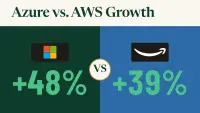
Microsoft’s growth looks firmer. Azure gets 48%[3], and management said customer demand continues to exceed available supply[4]. Satya Nadella described the pitch as “greater capability, choice, control, and cost efficiency for customers across our entire stack.”[3] Windows OEM and Devices revenue fell 22%.
Spot Pricing Meets a $677 Billion Backlog
Microsoft’s fiscal 2026 revenue of $331.8 billion sets the bar. If SpaceX hits its Q1 guidance, it would be running at about $132B to $148B a year. Elon Musk forecast end-2027 recurring revenue of $500 billion to $1 trillion[2], but SpaceX plans to rent compute at spot-market rates instead of locking in long-term contracts. Those rates can drop when compute gets less scarce.
| Lens | SpaceX | Microsoft |
|---|---|---|
| Latest quarterly capex | $19.6 billion[2] | $45.2 billion[4] |
| Next-quarter capex plan | $35 billion to $40 billion[2] | Over $50 billion[4] |
| Contracted work | $63 billion[2] backlog | $677B[3] commercial RPO |
Microsoft’s commitments cover years of revenue. SpaceX’s are thinner and depend more on renewals. Microsoft still produced $18.6 billion[4] of free cash flow after heavy spending. SpaceX also takes a large stock-compensation cost: $23 billion[2] of Cursor’s deal value went to employee retention and replacement awards. Those awards vest over about three years[2], which will weigh on profits for a long time.
Power and Starship Will Decide 2027
The big question for me is whether SpaceX can gets from 1.7 gigawatts[2] of compute to the 13 gigawatts Musk expects by the end of 2027. Musk said power and cooling, more than chips, now limit how fast SpaceX can add capacity, which is exactly the constraint that keeps surfacing in our free report on seven AI infrastructure suppliers behind the data-center expansion. Starship also needs to fly weekly in the first half of 2027 to put Starlink V3 satellites into service. For Microsoft, the key question is whether Azure growth hits its guided 49% to 50%[4] after some GPU contracts slipped to the second half.
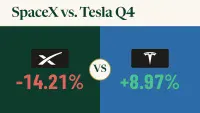
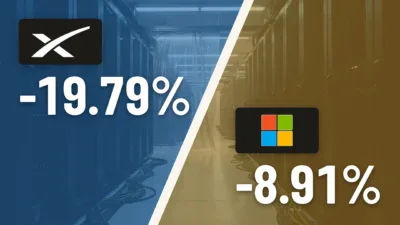
Investors have turned cautious on both stocks. Over the past month, SpaceX fell 19.79% and Microsoft fell 8.91%.
SpaceX Must Prove Its Cash Flow to Match Microsoft’s Backlog
SpaceX’s growth is remarkable, and Microsoft-scale revenue in 2027 looks plausible to me. Still, I trust contracted revenue more than spot pricing. CFO Bret Johnsen expects operating cash flow, debt and partners to fund the expansion, so I want to see that cash actually arrive. SpaceX offers faster growth matched with greater execution risk. I prefer Microsoft’s backlog and its positive free cash flow. Two quarters of SpaceX funding its own capex would get me to reconsider.
Contact [email protected] for any questions or corrections.
Alex Sirois is a financial writer with experience spanning both retail and institutional investing. He has written for InvestorPlace and held roles at BNY Mellon and Bernstein, giving him a perspective that bridges Main Street portfolios and Wall Street analysis.
Alex holds an MBA from George Washington University and has built his career across multiple industries, including e-commerce, education, and translation — a breadth of experience that informs how he breaks down complex financial topics for everyday investors. His writing is conversational, actionable, and grounded in long-term, buy-and-hold investing principles.
At 247 Wall St., Alex focuses on delivering analysis that is both accessible and useful, with a clear emphasis on helping readers make more informed decisions with their money.