Taiwan Semiconductor Rallies 17% as Jensen Huang’s Return to NVIDIA Lifts Chip Stocks; Intel Surges 15%, AMD Jumps 8%

This post may contain links from our sponsors and affiliates, and Flywheel Publishing may receive compensation for actions taken through them.
NVIDIA‘s (NASDAQ:NVDA | NVDA Price Prediction) leadership shake-up has gone from a weight on chip stocks to a boost, and NVIDIA’s main manufacturing partner is getting the biggest lift among its peers. Taiwan Semiconductor Manufacturing (NYSE:TSM) stock is up $371.62, trading 17% higher in early dealings. Because the foundry builds NVIDIA’s Blackwell and Vera Rubin chips, the market is reading stability at its biggest AI customer as good news for Taiwan Semiconductor’s order book.
Intel (NASDAQ:INTC) stock is at $58.94, up 15%. At the same time, AMD (NASDAQ:AMD) stock is at $460.27, up 8%. Clearly, the chip sector is turning around after last week’s brutal sell-off. Thus, traders are wondering: is this a signal that sentiment has shifted for TSM and its peers?
Huang’s Reinstatement Lifts NVIDIA and the Chip Complex
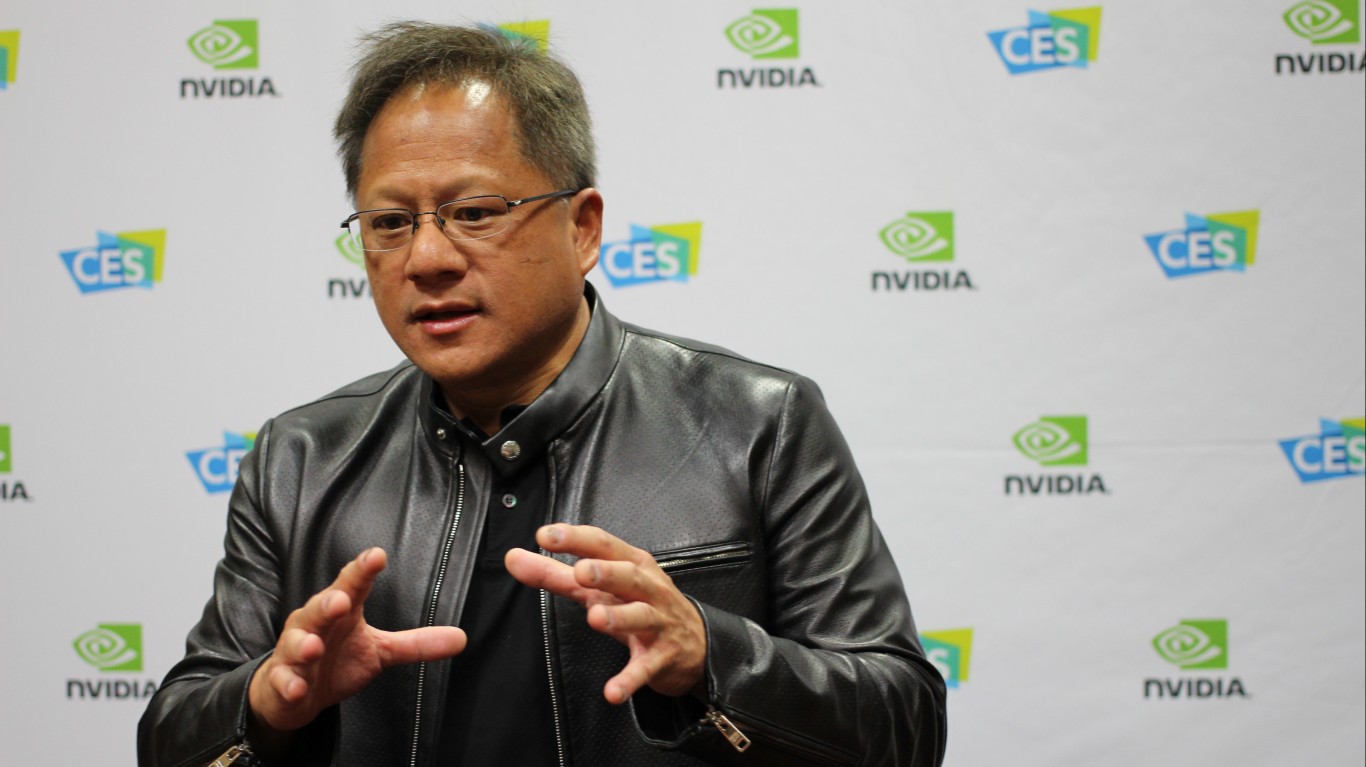
NVIDIA announced on November 23 that founder Jensen Huang reinstated as president and CEO, effective immediately, after a unanimous board vote. Huang stated, “I can’t wait to get back to work.” According to NVIDIA’s board, it consulted senior U.S. government officials and concluded his return poses no national security risk. Colette Kress, who had been running the company in the interim, returns to her role as chief financial officer.
Shares of NVIDIA are at $169.27, up 35%. The company’s latest quarterly release, which arrived while Kress led the company on an interim basis, cited the leadership transition and an ongoing independent board committee investigation[1] as risks. Those details had rattled investors and prompted some to rotate into rival chip names, an drag that Huang’s return now lifts.
What the Peer Group Says About Taiwan Semiconductor
Intel’s gain trails Taiwan Semiconductor’s only modestly, and the market appears to be treating the chipmaker as part of the broad semiconductor bid. As a rival to NVIDIA in data center processors, Intel posted Data Center and AI segment revenue of $7.32 billion[2] in Q3 2026, up 78% year over year (YoY). That growth ties Intel more closely to AI spending than its PC roots might suggest.
AMD’s smaller advance reflects its position as NVIDIA’s main rival in graphics processing units (GPUs). A steadier NVIDIA is read as confirmation that AI demand is durable, which helps the whole complex, but it also reinforces the leader that AMD’s Instinct MI450 accelerators are chasing. Data Center revenue at AMD rose 97%[3] YoY to $8.55 billion in Q3, keeping the company firmly tied to the same spending cycle.
Three Business Models Behind the Chip Rally
Taiwan Semiconductor is a pure-play foundry that doesn’t design its own chips, and it manufactures for NVIDIA, AMD and other fabless designers, tying Taiwan Semiconductor’s results to the overall volume of the AI expansion.
Intel is an integrated device manufacturer that designs and builds its own processors while also selling foundry services to outside customers. That model makes Intel a direct competitor to Taiwan Semiconductor in leading-edge manufacturing and, for certain products, a customer of the Taiwanese foundry.
AMD operates at the other end of the chain as a fabless designer that relies on third-party foundries, including Taiwan Semiconductor. The company vies with NVIDIA in GPUs and with Intel in central processing units (CPUs), giving AMD exposure to both sides of the data center expansion.
Huang’s Return Puts the Chip Recovery to the Test
The rebound hasn’t undone last month’s damage across the group. Taiwan Semiconductor stock is down 14% over the past month. Intel has given up 37% over that stretch, and AMD is down 17%.
For Taiwan Semiconductor and its peers, the rally follows last week’s AI-driven selloff in tech stocks. S&P Global’s latest PMI reading is due out November 23, the Personal Consumption Expenditures (PCE) inflation report arrives November 25, and U.S. markets close November 26 for Thanksgiving.
Taiwan Semiconductor’s next test is whether leadership clarity at NVIDIA can turn a relief rally into a lasting recovery for chip stocks. Optimists point to the foundry’s Q4 2026 revenue guidance of $52.30 billion to $54.30 billion[4] as evidence that AI demand remains strong. Skeptics, meanwhile, argue that last month’s slide was steep and that this week’s inflation data could still shift rate expectations. A cautious investment approach may be warranted until NVIDIA’s leadership reset resolves.
Contact [email protected] for any questions or corrections.
David Moadel is financial writer specializing in stocks, ETFs, options, precious metals, and Bitcoin. David has written well over 1,000 articles for leading online publications, helping investors understand markets, income strategies, and risk. His work has appeared in 24/7 Wall St., The Motley Fool, InvestorPlace, U.S. News & World Report, TipRanks, ValueWalk, Benzinga, Market Realist, MarketScreener, TalkMarkets, Finmasters, and others. With a master’s degree in education, David has taught at the elementary, high school, and college levels. That teaching background shapes his writing style: clear, educational, and practical. David has also built a loyal social-media audience by providing trustworthy financial content on YouTube, X/Twitter, and StockTwits.