Billionaire Charlie Munger’s Protege Li Lu: Himalaya Capital Has 45% of Its $3.78 Billion Portfolio in Alphabet

This post may contain links from our sponsors and affiliates, and Flywheel Publishing may receive compensation for actions taken through them.
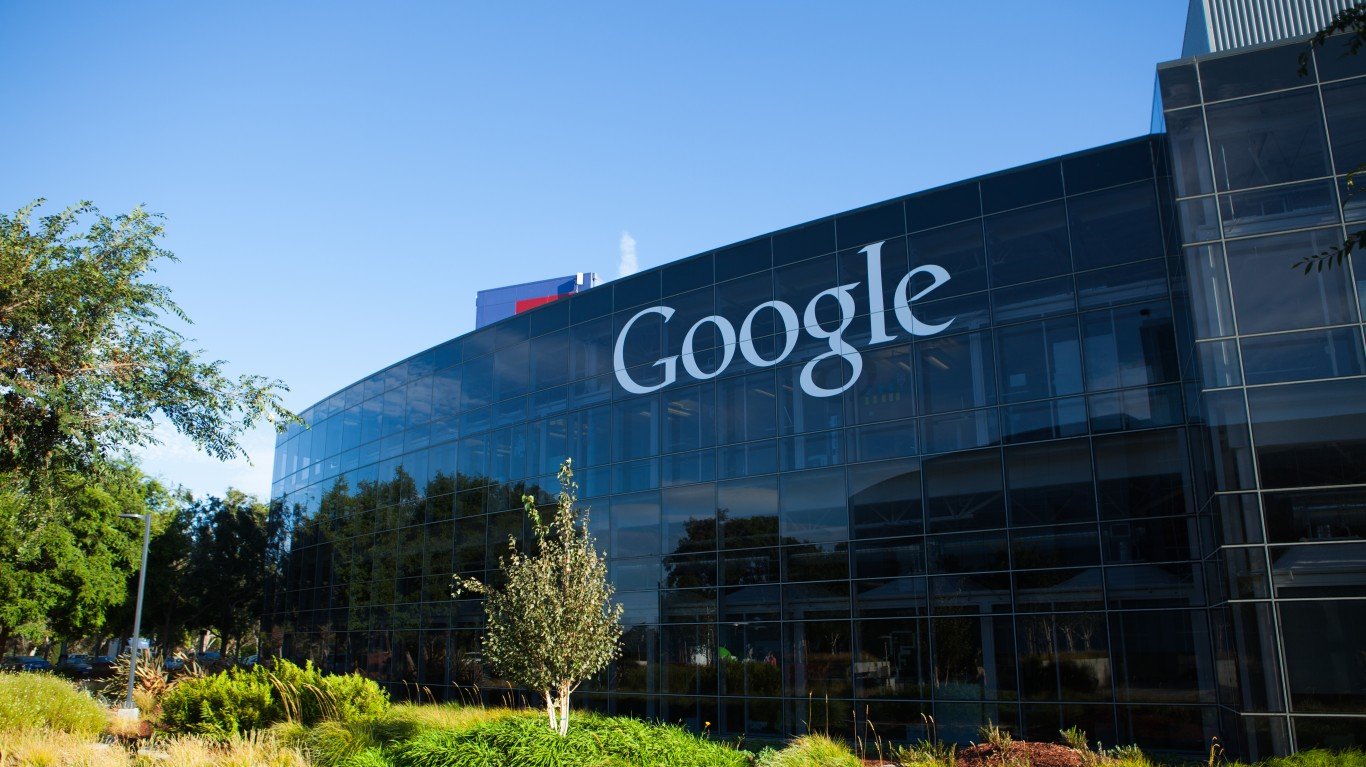
Himalaya Capital Management, the investment firm founded by Li Lu, who is widely described as a protégé of Charlie Munger, filed a 13F on November 16, 2026. It showed Alphabet (NASDAQ:GOOGL | GOOGL Price Prediction) at 45.2% of a $3.78 billion reported portfolio as of September 30, 2026, including both share classes.
Himalaya held 2,543,300 Class A shares and 2,451,300 Class C shares of Alphabet (NASDAQ:GOOG). Both share counts were unchanged during the quarter.
Alphabet has two listed share classes because of a 2014 restructuring, with Class A shares carrying one vote each and Class C shares carrying no vote. The structure let the company issue stock without reducing the founders’ control.
Both classes have the same claim on earnings, so owning both amounts to a single concentrated position in one business.
A 45.2% Alphabet Weighting Puts Conviction on Record
A 13F covers qualifying securities, including stocks and certain options, and must generally be filed within 45 days of quarter-end, meaning Himalaya’s current holdings may differ. Himalaya has public 13F filings dating back to the fourth quarter of 2016, providing nearly a decade of holdings history.
Alphabet’s Numbers Fit a Value Framework
Alphabet’s valuation appears attractive, although large investment gains inflate trailing earnings and make the stock look cheaper relative to operating profits. Class A shares trade at about 14.73 times trailing earnings and Class C shares at about 14.59 times. Return on invested capital is 29.60%, the operating margin is 32.03%, and debt-to-equity is 0.143. Third-quarter revenue rose 24.65%[1] year over year to $127.58 billion. Google Cloud revenue grew 103%[1] to $30.71 billion.

GAAP EPS of $2.12[1] missed expectations of $2.97, partly because an $8.7 billion loss on equity securities cut reduced EPS by $0.55. Capital spending rose 114%[1] to $51.36 billion, which left free cash flow at -$9.07 billion.
Alphabet funded that spending in part with new debt and stock sales. Class A shares closed at $282.10 on November 23, up 6.34% that day. They are still down 9.7% year to date, and Barron’s reported on November 20 that Google is cutting AI chip shipments (Barron’s).

PDD Holdings Became Himalaya’s Single Largest Line
PDD Holdings (NASDAQ:PDD), the parent of Temu and Pinduoduo, was the largest single position at 24.24%. Himalaya increased its share count by 9.3%, to 11,761,119 shares. PDD’s third-quarter revenue grew 0.06%[2] to $16.19 billion. Operating income rose 24.53%[2], and the company held $18.76 billion in cash. The shares are down 23.15% year to date.
Is Himalaya’s Concentrated Playbook Worth Following?
A Munger-style portfolio places a few high-quality businesses at large weights, buys them at reasonable prices, and holds them for years. Himalaya’s filing follows that pattern: Alphabet and PDD alone carry weights of 45.2% and 24.24%.
That works for a professional manager whose clients signed up for concentration. A retirement saver who needs regular withdrawals faces a different risk. One company’s capital spending cycle, an earnings miss, or China trade rules can move the whole account.
An earnings multiple below 15, returns on capital near 30%, and triple-digit Cloud growth make a strong case on the data. The open question is whether heavy AI spending will turn negative free cash flow positive again.
That capex also flows straight to the power, cooling, and networking suppliers behind the data centers, which we profiled in a free report on seven AI infrastructure names that are not chipmakers. For retirement-focused investors, the useful lesson from Himalaya is the reasoning behind the position.
The 45.2% weighting reflects a professional concentration mandate, while diversified retirement plans typically size any single stock so it does not decide retirement outcomes.
Contact [email protected] for any questions or corrections.
David Beren has been a Flywheel Publishing contributor since 2022. Writing for 24/7 Wall St. since 2023, David loves to write about topics of all shapes and sizes. As a technology expert, David focuses heavily on consumer electronics brands, automobiles, and general technology. He has previously written for LifeWire, formerly About.com. As a part-time freelance writer, David’s “day job” has been working on and leading social media for multiple Fortune 100 brands. David loves the flexibility of this field and its ability to reach customers exactly where they like to spend their time. Additionally, David previously published his own blog, TmoNews.com, which reached 3 million readers in its first year. In addition to freelance and social media work, David loves to spend time with his family and children and relive the glory days of video game consoles by playing any retro game console he can get his hands on.