Families Over 75 Have 15 Times the Wealth of Those Under 35. What Helping Costs

This post may contain links from our sponsors and affiliates, and Flywheel Publishing may receive compensation for actions taken through them.

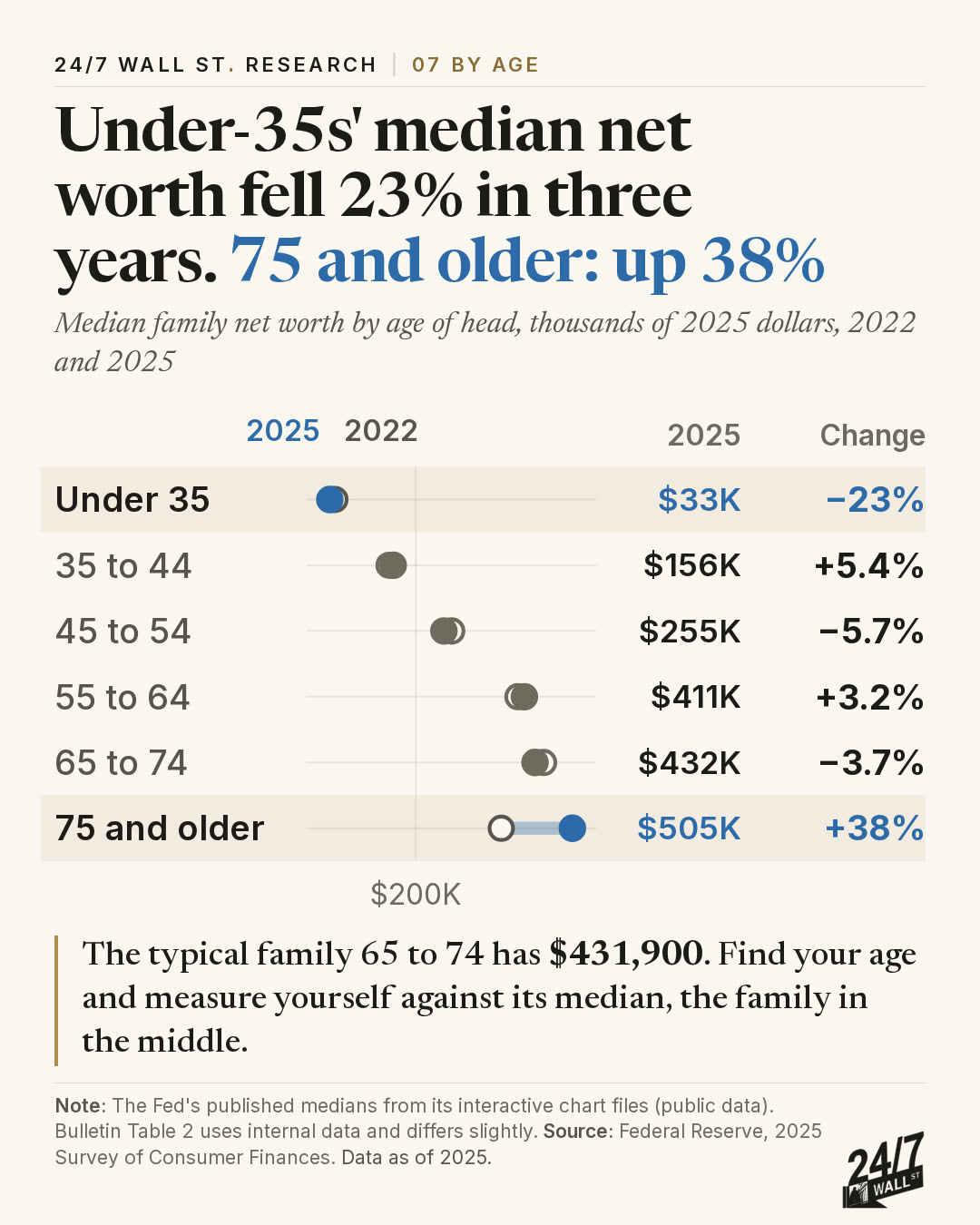
The typical family headed by someone 75 or older has a net worth of $504,600. The typical family headed by someone under 35 has $32,800. That’s a gap of 15 times, and three years ago it was 8.6 times.
Both numbers come from the Federal Reserve’s 2025 Survey of Consumer Finances. From 2022 to 2025, after inflation, the median for the oldest families rose 38%, a gain of $138,300. The median for the youngest fell 23%, a loss of $9,900. The figures are collected in 24/7 Wall St.’s new research report, “The State of the American Household.”
Many retired parents are asking the same question about it. Take Tom and Carol, both 70 and retired, with a net worth of $431,900, the median for families 65 to 74. Their daughter Megan is 32, rents an apartment and has started looking at houses. Tom and Carol are a scenario we built for this story, so put your own numbers in their place. They’re comfortable. They want to know whether they can help Megan buy a home without hurting themselves.
Here’s how each generation’s median compares with the under-35 figure:
- Under 35: $32,800
- 35 to 44: $156,000, 4.8 times as much
- 45 to 54: $254,700, 7.8 times
- 55 to 64: $411,300, 12.5 times
- 65 to 74: $431,900, 13.2 times
- 75 and older: $504,600, 15.4 times
What Megan is up against
Buying got much more expensive while young families were losing ground. The monthly principal and interest on a median-priced new home, with 20% down and a 30-year fixed loan, went from $1,178 in early 2021 to $2,026 by the third quarter of 2026, according to Census Bureau, HUD and Freddie Mac data. That’s up 72%, or $848 a month and $10,176 a year.
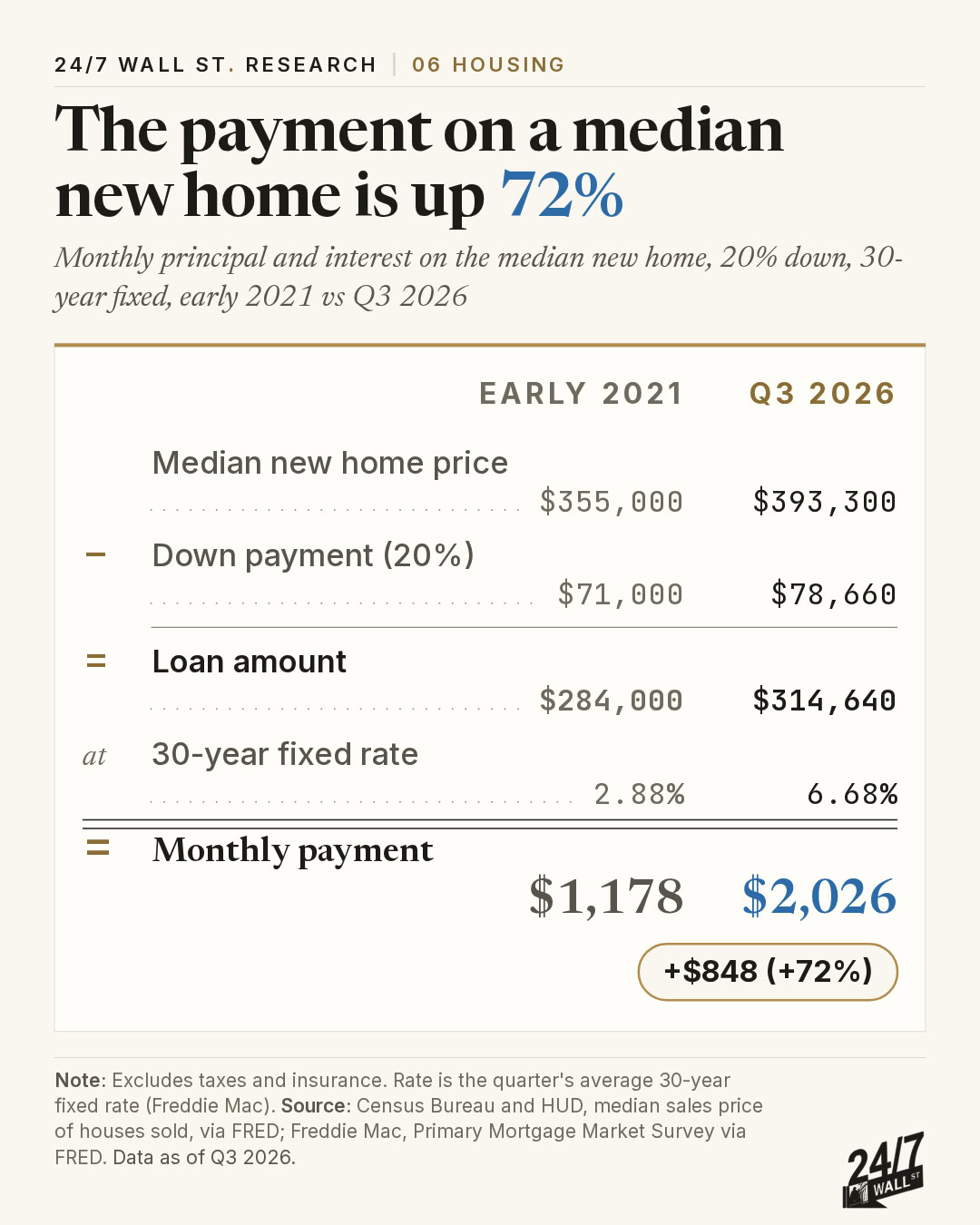
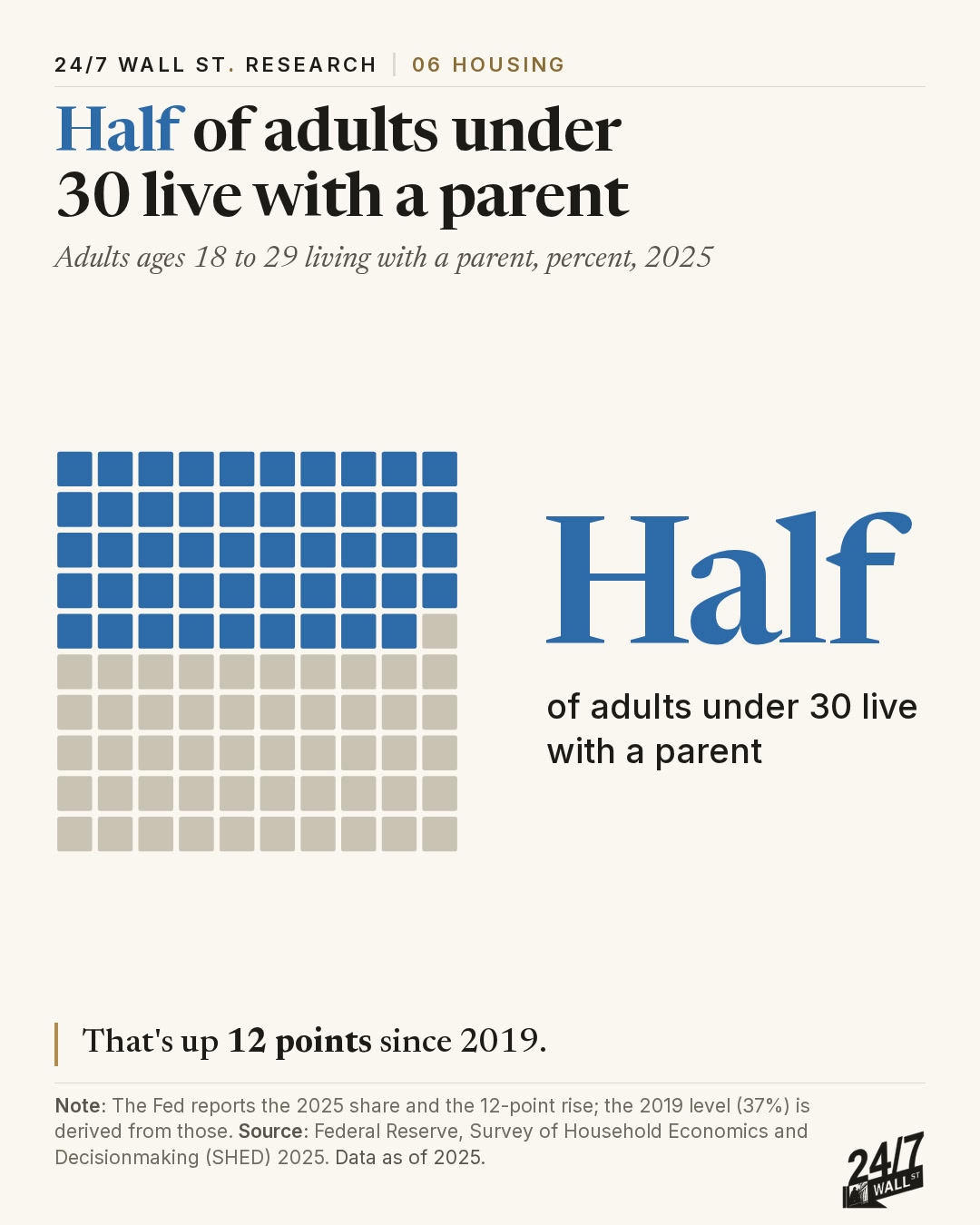
A single year of those payments comes to 74% of the median net worth for families under 35. The Fed also counts how many young adults still live at home. Its latest Survey of Household Economics and Decisionmaking puts it at 49% of adults under 30, up 12 points since 2019.
What a $40,000 gift costs Tom and Carol
Say Tom and Carol give Megan $40,000 toward the down payment. That’s 9.3% of their net worth, and it leaves them with $391,900.
The cost that matters most is income. If they follow the 4% rule and draw 4% a year from savings, $40,000 would have paid them $1,600 a year, or $133 a month. Before they write the check, they should run their monthly budget without that $133 and make sure it still works, with room for a roof, a car and higher medical bills in their 80s. If it doesn’t, the gift is too big, or it should be smaller and spread out.
For Megan, the same $40,000 is 1.2 times the median net worth for her generation. Added to a typical under-35 balance, it would more than double it.
Three practical steps keep the gift clean:
- Write a gift letter. Mortgage lenders usually ask for a signed letter saying the money is a gift and won’t be paid back, along with records showing where it came from.
- Check the IRS gift limits. Each parent can give each child a set amount a year without filing anything, and a married couple can give twice that amount. A larger gift needs a gift tax return, but tax is rarely owed because it counts against a lifetime exemption that most families never reach.
- Treat siblings fairly, or say why. If Megan has a brother, decide now whether he gets the same amount later or an equal share of the estate.
A gift now or an inheritance later
Helping early can be worth more to a child than an inheritance later, as long as the parents’ own income is protected first. If Tom and Carol live to 90, Megan inherits in 20 years, at 52. By then she’ll have paid rent for two more decades or bought later with a smaller down payment.
A loan is the middle path. Parents who want the money back can lend it with a written note and a set repayment schedule, which lenders treat differently from a gift. Tell the lender up front, since a loan payment counts against Megan’s debt-to-income limit and a gift doesn’t.
When we measured Kevin O’Leary’s “$5 million liquid” bar against these Fed figures in a recent story, almost no household came close. Most retired couples look more like Tom and Carol, with enough to help and a limit to respect. Start with your own budget, take out 4% a year of whatever you plan to give, and check that the rest still covers your bills. Then help with what’s left.
Want our ten favorite stocks right now? Get the free report and The Daily Profit every weekday morning.
Contact [email protected] for any questions or corrections.
I've spent more than 15 years inside enterprise software, working alongside the finance, sales operations, and HR leaders who run the revenue engines at some of the largest tech companies in the country.
My day job is helping enterprise executives make smarter decisions about retention, compensation, and growth. These are the same operational levers that show up in every earnings report investors actually read. That perspective shapes my writing for 24/7 Wall St.
The headline numbers are easy. The interesting stuff is underneath: how companies make money, what executives are worried about, and what any of it means for the person checking their 401(k) on a Sunday afternoon. I write about personal finance and business as someone who has spent her career inside the rooms where these decisions get made.