OpenAI and Meta Could Get 320 Million AMD Shares for a Penny Each

This post may contain links from our sponsors and affiliates, and Flywheel Publishing may receive compensation for actions taken through them.
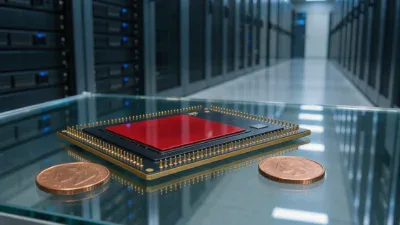
For $1.6 million each, OpenAI and Meta Platforms (NASDAQ:META | META Price Prediction) could one day hold AMD (NASDAQ:AMD) stock worth $72.6 billion apiece at the November 23, 2026 close. Those potential stakes are part of what AMD offered to secure its largest GPU deals.
After the close on November 23, 2026, AMD filed an automatic shelf registration with the SEC. It took effect the same day and covers the possible resale of up to 336,934,324 shares by selling stockholders. Because AMD is selling none of these shares itself, it will receive no proceeds from any resale.
Most of that total is 160,000,000 shares OpenAI may acquire under an October 5, 2025 warrant and 160,000,000 shares Meta may acquire under a February 23, 2026 warrant, both at $0.01 a share. A warrant is a contract that gives the holder the right to buy stock at a fixed price.
AMD closed at $453.46, up 6.85%, for a market value of $750.5 billion, then traded at $449.49, down 0.88%, at 7:38 p.m. ET. Meta closed at $597.60, up 6.55%, and the filing gives no reason for its timing.
Vesting Terms Hold Back Both Warrants
Neither warrant has fully vested. OpenAI’s first tranche vests after delivery of the first 1 gigawatt of Instinct MI450 GPUs, and full vesting requires purchases of 6 gigawatts. Meta’s warrant follows the same pattern, starting at 1 gigawatt equivalent and ending at 6 gigawatt equivalent.
Both also carry AMD stock price targets that rise to $600 a share for the final tranche. OpenAI can exercise until October 5, 2030, and Meta can exercise until February 23, 2031.
AMD says neither warrant is expected to become exercisable within 60 days of November 18, 2026. The shares are being registered under piggyback registration rights, which let a holder add its shares to a registration the company files.
The other shares are 14,978,322 issued to World Labs sellers and 1,956,002 issued or issuable to Taalas sellers. The fee table’s $150.5 billion figure values every registered share at $446.78 and raises no money for AMD.
Dilution AMD Holders Would Absorb
The 320 million warrant shares equal about 19.3% of the 1,656,317,509 shares outstanding on November 18, or about 16.2% of the count if all were issued. That would be significant dilution for existing AMD holders.
In return, AMD gets gigawatt-scale volume. When the OpenAI deal was announced, CFO Jean Hu said it was expected to bring tens of billions of dollars in revenue, and the third quarter already carried a $1.1 billion[1] noncash warrant charge.
The $600 threshold sits about 32% above the November 23 close. OpenAI and Meta collect the final shares only if every AMD holder has also gained.
Reality Check on Two Giant Customers
Paying customers in equity suggests AMD is using incentives to compete for large AI accounts against NVIDIA (NASDAQ:NVDA). It also ties a large share of AMD’s AI growth to two buyers (we reverse-engineered what the biggest chip winners looked like early in a free playbook here).
If either delays its deployments or buys less than the full commitment, the dilution shrinks, but so does the revenue that justified it. The filing names no date for the first gigawatt, and management said it would provide guidance in 2027[1] on when vesting conditions are met.
What AMD Investors Should Track Next
For investors with a long time horizon, the registration matters less than execution. The registration is paperwork, and dilution comes only alongside large purchases and a higher share price. At a trailing P/E of 94x, the stock leaves little room for delays, so Helios shipments have to stay on schedule.
The trigger to check is fourth-quarter revenue against guidance of about $17 billion[2], along with any disclosure that a first tranche has vested. A miss with no vesting news would mean the gigawatt timeline has delays.
Contact [email protected] for any questions or corrections.
Omor Ibne Ehsan is a writer at 24/7 Wall St. He is a self-taught investor with a focus on growth, cyclical, and dividend equities that have strong fundamentals, value, and long-term potential. He also has an interest in high-risk, high-reward investments such as penny stocks.