Dr. Oz Warns Medicare for All Will Create a Two-Tier Healthcare System With a $47 Trillion Price Tag

This post may contain links from our sponsors and affiliates, and Flywheel Publishing may receive compensation for actions taken through them.
Healthcare affordability is quickly becoming one of the biggest financial issues facing American families. According to KFF’s 2026 Employer Health Benefits Survey, the average annual cost of employer-sponsored family health insurance now stands at $28,303 — 55% higher than a decade ago. Workers themselves contribute $7,471 annually, up 9% from last year.
Following their victories in the midterm elections, Democrats are renewing their push for Medicare for All, promising universal healthcare coverage and relief from rising medical expenses.
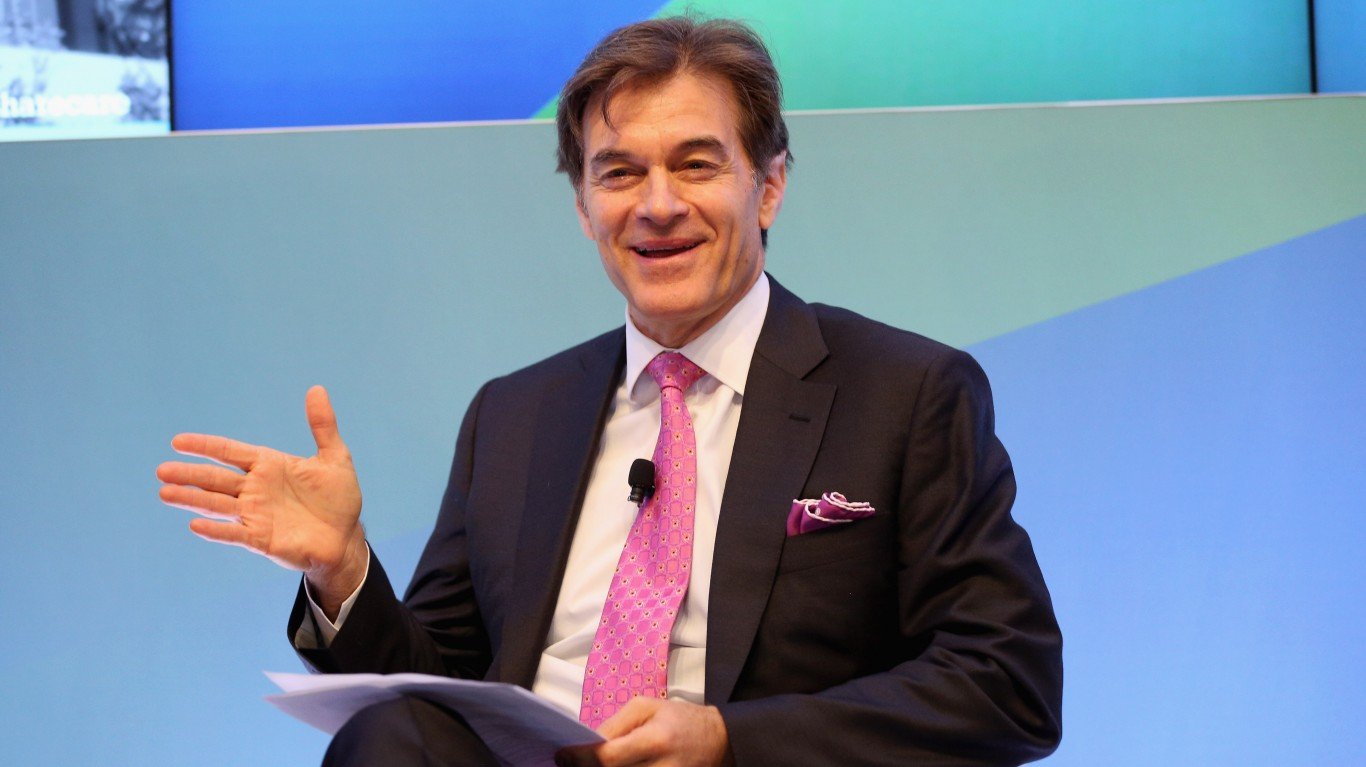
Yet Centers for Medicare & Medicaid Services (CMS) Administrator Dr. Mehmet Oz is warning the proposal could produce the opposite of its intended effect: a healthcare system divided by wealth that comes with a $47 trillion bill for taxpayers.
Medicare for All Comes With a $47 Trillion Price Tag
During a Nov. 19 appearance on Fox News, Oz warned that replacing private health insurance with government-funded coverage would create financial pressures that ultimately could restrict access to medical treatment.
The White House Council of Economic Advisers (CEA) estimated in October that Medicare for All would add $47.4 trillion to federal deficits between 2027 and 2036 before new taxes are introduced.
Even after accounting for $2.8 trillion in administrative savings and $4.3 trillion in federal Medicaid savings, the government would assume enormous financial obligations. Oz estimates that even aggressive tax increases proposed by Sen. Bernie Sanders (I-Vt.) would leave approximately $25 trillion unfunded.
The $47 trillion represents additional federal costs, not necessarily additional nationwide healthcare spending. Much of the money currently spent by employers, households, and state governments would instead flow through Washington.
Marc Goldwein, senior policy director at the Committee for a Responsible Federal Budget (CRFB), recently suggested financing universal healthcare could require an additional payroll tax in the high 20% range.
The CRFB previously calculated that financing a $30 trillion expansion entirely through payroll taxes would require a new 32% tax. Combined with existing Social Security and Medicare taxes, the total payroll tax rate on most wages would exceed 47%.
Universal Coverage Doesn’t Guarantee Universal Access
Oz’s bigger concern, though, is what happens when healthcare demand expands faster than the government’s ability to finance it.
When you socialize medicine, rich people buy the care they want,”Oz said, arguing that everyone else would compete for the remaining medical resources. “You get two tiers of healthcare, you get healthcare for rich people.”
Under Sanders’ proposed system, private insurance duplicating government-provided benefits would be prohibited. Wealthier households, however, could potentially pursue privately paid medical services outside the public system.
The CEA projects that medical productivity — essentially the health benefits generated for every dollar spent — would decline 22% by 2036 under its Medicare for All model.
Granted, today’s system already has financial barriers. Even seniors with Original Medicare could face hospital expenses exceeding $8,400 during an extended stay.
The Congressional Budget Office also estimated in 2022 that different single-payer systems could reduce annual nationwide healthcare spending by $700 billion or increase it by $300 billion in 2030, depending on their design.
The Risk Extends Beyond Healthcare
Nearly 157 million Americans under age 65 receive employer-sponsored health insurance, according to KFF. Replacing that coverage would reshape household finances, corporate compensation, and an entire insurance industry.
Insurers such as UnitedHealth Group (NYSE:UNH | UNH Price Prediction), CVS Health (NYSE:CVS), and Humana (NYSE:HUM) could see major portions of their businesses disrupted.
Washington’s recent decision to withdraw billions of dollars in Medicare prescription drug subsidies illustrates how dependent insurers already are on federal policy.
For employers, eliminating insurance expenses could provide financial relief, but higher payroll taxes could consume those savings. Workers might likewise exchange insurance premiums and deductibles for smaller paychecks.
How Congress finances universal healthcare could ultimately matter as much to investors and families as the coverage itself.
Key Takeaway
Medicare for All remains a proposal, not law, and faces considerable legislative obstacles. Families shouldn’t abandon their existing healthcare or retirement planning in anticipation of universal coverage. Investors, meanwhile, should review their exposure to health insurers and companies heavily dependent on government reimbursement.
At $47.4 trillion in projected federal costs, the debate over Medicare for All is no longer simply about healthcare affordability. It’s about who pays, how much they pay, and whether their money ultimately buys better access to medical care.
Contact [email protected] for any questions or corrections.
After two decades of patrolling the dark corners of suburbia as a police officer, Rich Duprey hung up his badge and gun to begin writing full time about stocks and investing. For the past 20 years, he’s been cruising the markets looking for companies to lock up as long-term holdings in a portfolio while writing extensively on the broad sectors of consumer goods, technology, and industrials. Because his experience isn’t from the typical financial analyst track, Rich is able to break down complex topics into understandable and useful action points for the average investor. His writings have appeared on The Motley Fool, InvestorPlace, Yahoo! Finance, Money Morning, and, of course, 24/7 Wall St. He has been featured in both U.S. and international publications, including MarketWatch, Financial Times, Forbes, Fast Company, and USA Today.