Jim Cramer Calls Anthropic “the Silent Killer of This Market”

This post may contain links from our sponsors and affiliates, and Flywheel Publishing may receive compensation for actions taken through them.

By 10:32 a.m. ET on Tuesday, November 24, Jim Cramer had already posted several times about Anthropic (NASDAQ:ANT) on X. His 10:32 a.m. post called the Claude developer “the silent killer of this market” and added that the stock had no large buyers.
The session gave him plenty to point at. Anthropic opened at $83.40, fell as low as $75.61, and closed at $81.91, down $5.73 or 6.54%. It was the stock’s first close below the $83 offering price.
That close sits 28.8% below the $115.10 high from debut day. On that day, the largest IPO on record raised $81.3 billion, and the stock opened at $111.50.
Tuesday’s selling raises the question of whether buyers are scarce for the long draw or whether a crowded offering simply released a temporary flood of supply. Cramer’s posts moved between both explanations within one day, and two index dates in the coming weeks should help settle the question.
Cramer’s View Changed Several Times in a Day
At 6:19 a.m. ET, he wrote that the market needs an Anthropic rally to recover. Without one, he said, there would be no OpenAI listing, the deal he expects to bring in enough money to steady the AI build-out (we covered seven of the power, cooling, and networking suppliers riding that build-out in a free report).
At 6:36 a.m. ET, he said a steady stream of small overnight sell orders broke the IPO price. Seven minutes later he wrote that bears saw a new target and asked whether Anthropic’s last private fundraise was priced too high.
At 6:53 a.m. ET, he said buyers were coming in to steady the stock, and his 10:32 post turned that read. On Mad Money that night, he moderated. He said he does not read SpaceX and Anthropic trading below their IPO prices as a sign of broad market weakness, and he blamed Anthropic’s slide on allocations that went to investors who sold quickly.
Overnight Trading Explains Only Part of the Drop
Overnight sessions have few participants, so a small string of sell orders can move the price more than it would at noon. However, the stock fell below $83 only briefly before the bell. It was down about 5% premarket and traded just above $83 at 8 a.m. ET, after Monday’s close at $87.64.
Most of the damage came during regular hours on volume of about 322 million shares, when liquidity was thickest. Those sellers acted when they had the most buyers to trade against.
Index Funds Could Supply the Missing Buyers
New IPOs usually rely on long-only funds that hold for years and on index funds that have to buy once a stock enters their benchmarks. Index funds cannot buy Anthropic yet.
That changes soon because MSCI (NYSE:MSCI | MSCI Price Prediction) plans to add the stock to its global standard indexes at the close on Monday, November 30, and Anthropic is set to join the NASDAQ-100 on Monday, December 21.
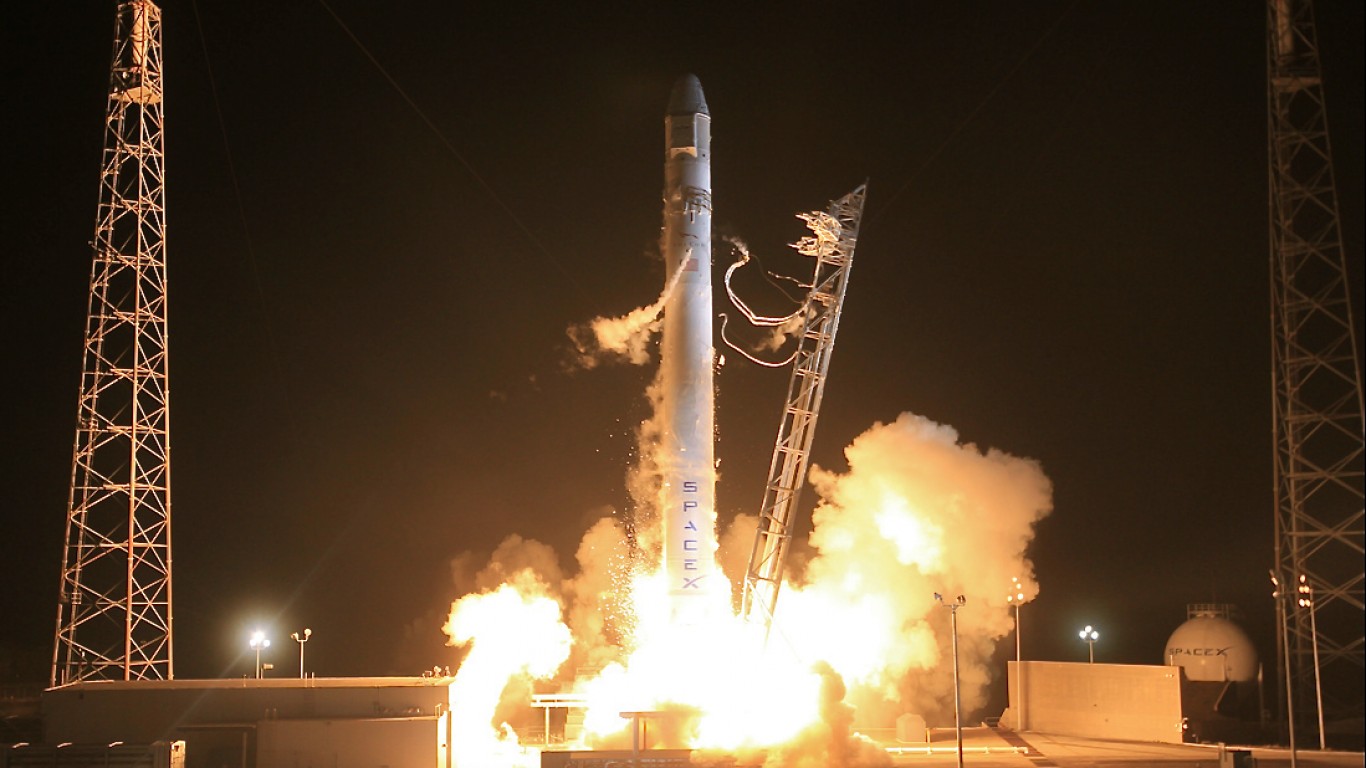
Those dates will test Cramer’s claim that large buyers are absent. Anthropic fell below its offering price in four trading days, compared with 21 for SpaceX (NASDAQ:SPCX), which supports his point that the shares went to quick sellers.
Options Traders Are Split on the Next Move
Options volume passed 500,000 contracts by noon ET. The largest trade was a roughly $7.5 million purchase of mid-December 75-strike puts, which gain value if the stock keeps falling.
Other traders sold puts or bought calls. The full-chain put/call ratio is 1.34, showing a bearish lean, though well short of a one-sided market.
What Could Decide ANT Stock’s Next Move
Valuation gives investors one reference point for research. At $81.91, Anthropic trades below its offering price and below all three analyst targets of $120, $135, and $150.
The bigger long-term risk is in the S-1. It describes revenue that is primarily consumption-based and set against compute commitments that run for years, and the company plans to keep investing heavily.
Tuesday’s selling looks like flipped allocations hitting the market, and that kind of supply usually runs out. After hours, the stock traded at $80.09, down another 2.22%, so it could keep falling before November 30. Trading around the two index dates should show whether passive buying shows up in size.
Contact [email protected] for any questions or corrections.
Omor Ibne Ehsan is a writer at 24/7 Wall St. He is a self-taught investor with a focus on growth, cyclical, and dividend equities that have strong fundamentals, value, and long-term potential. He also has an interest in high-risk, high-reward investments such as penny stocks.