Dollar Tree Just Crushed Earnings Expectations. 3 Reasons DLTR Stock Could Keep Climbing in 2027

This post may contain links from our sponsors and affiliates, and Flywheel Publishing may receive compensation for actions taken through them.
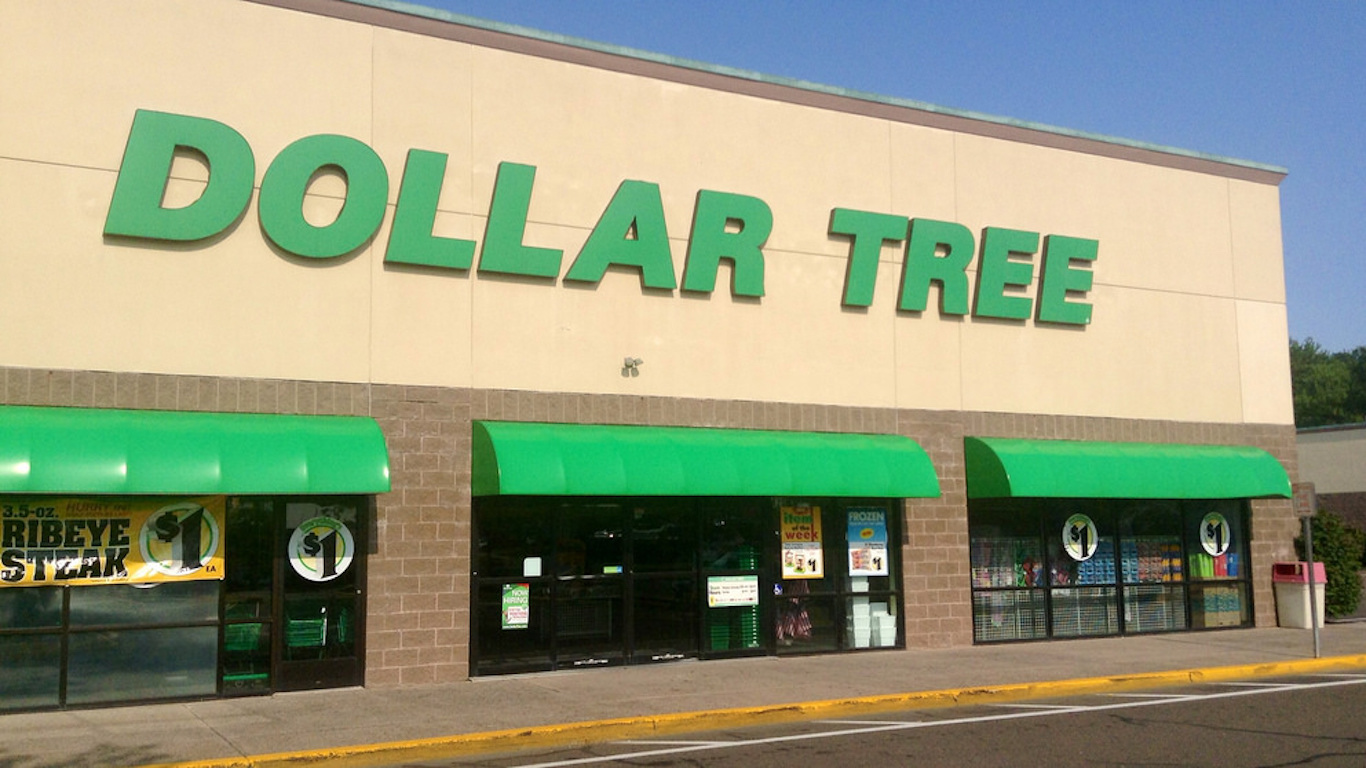
Dollar Tree (NASDAQ:DLTR | DLTR Price Prediction) turns 40 this year with a thinner business than it has had in a long time. Since it sold Family Dollar in July 2025, it has run a single banner across 9,511 stores. CEO Mike Creedon points to two strengths. He says a wider variety and better stores give shoppers “more reasons to choose Dollar Tree and come back more often.”[1] Investors have noticed. Shares are up 23.74% year to date and 44.06% over the past year. The latest leg was an 11.18% jump on earnings day after the sixth straight earnings beat. Below, I lay out what Dollar Tree needs to reach $180 in 2027.
Wall Street Is Still Catching Up to Dollar Tree
The consensus price target of $151.07 is already below the $152.21 share price, and analysts lean conservative, with 14 Hold ratings. Third-quarter adjusted EPS of $1.16[1] beat the $0.92 consensus. Revenue rose 6.9% to $5.08 billion[1]. Management raised its fiscal 2026 adjusted EPS guidance to $8.05 to $8.25[1], which is above the current consensus of $7.9292. That consensus was just $7.0010 90 days ago and has risen since.


Here’s What It Takes for Dollar Tree to Reach $180
For fiscal 2027, analysts expect EPS of $7.8869 and revenue growth of about 6%. At today’s price, DLTR trades at 19x that estimate. At $180, which is an 18% gain, the multiple would be 23x. EPS looks flat only because a about $0.65 tariff refund benefit falls away. Without that benefit, this year’s guidance works out to $7.40 to $7.60, so the fiscal 2027 estimate still reflects real underlying growth.
Three reasons DLTR could keep rose:
- More shoppers are coming in. Comparable sales rose 4.6%[1], above the 3% to 4% guidance. Traffic growth sped up from 0.4% in Q2 to 3.8%[1] in Q3.
- Multi-price items are making baskets bigger. About 7,400 stores[1] now carry items above the traditional price point. Those higher-priced items made up 18% of sales, compared with 15% a year ago. Baskets that mix both kinds of items are more than 2.5 times larger than baskets with only entry-level items.
- Buybacks remain a steady force. They keep reducing the share count. Dollar Tree has bought back $1.4 billion of stock this year and has $2.3 billion left under its authorization. Diluted shares fell to 187.6 million[1] from 203.8 million.

After six straight beats, there’s a good chance the fiscal 2027 estimates turn out too low.
Dollar Tree’s History Says $180 Is Possible
Since 2010, DLTR has gained more than 18% in a calendar year seven times: 74% in 2010, 48% in 2011, 39% in 2013, 25% in 2014, 39% in 2017, 30% in 2021 and 64% in 2025. The stock can swing hard either way, though. It fell 47% in 2024.
$180 Is a Stretch, But Here’s Why It’s Possible
A move to $180 would take an 18% gain and a multiple of about 23x forward earnings. Several things could get it there: traffic is accelerating, multi-price stores are building bigger baskets, buybacks keep cutting the share count, and analysts are still catching up. There are hurdles. Higher freight and fuel costs, product inflation, and the end of transition-services income from Family Dollar could pressure profitability in 2027. Returns like this shouldn’t be expected every year, but this is the blueprint for how Dollar Tree could deliver outsized returns in 2027.

Contact [email protected] for any questions or corrections.
After two decades of patrolling the dark corners of suburbia as a police officer, Rich Duprey hung up his badge and gun to begin writing full time about stocks and investing. For the past 20 years, he’s been cruising the markets looking for companies to lock up as long-term holdings in a portfolio while writing extensively on the broad sectors of consumer goods, technology, and industrials. Because his experience isn’t from the typical financial analyst track, Rich is able to break down complex topics into understandable and useful action points for the average investor. His writings have appeared on The Motley Fool, InvestorPlace, Yahoo! Finance, Money Morning, and, of course, 24/7 Wall St. He has been featured in both U.S. and international publications, including MarketWatch, Financial Times, Forbes, Fast Company, and USA Today.