Warren Buffett’s Thanksgiving Message Names a Teacher Most Investors Have Never Heard Of. At 63 He Bought 300 Berkshire Shares That Would Be Worth $260 Million Today

This post may contain links from our sponsors and affiliates, and Flywheel Publishing may receive compensation for actions taken through them.
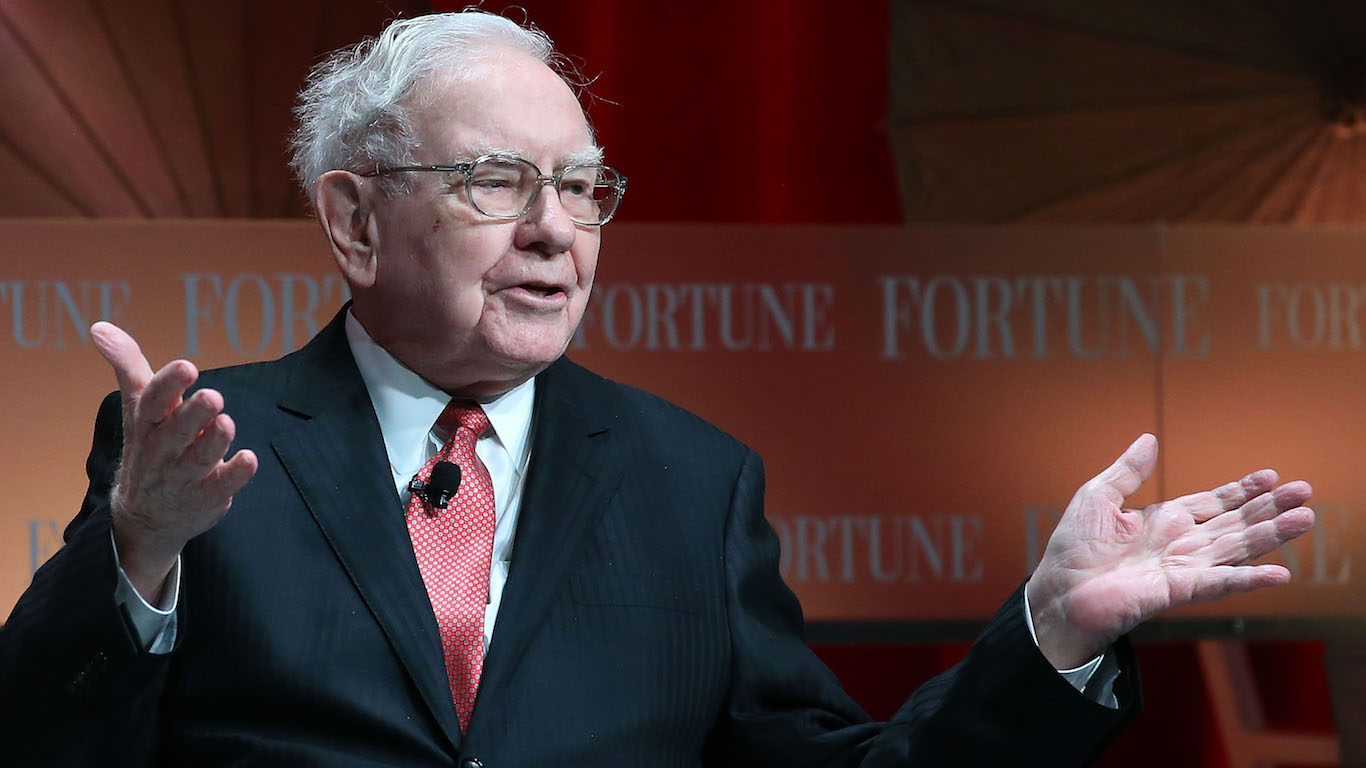
Warren Buffett’s Thanksgiving message this year thanks three teachers by name, and one of them is a man most investors have never heard of: Joe Rosenfield, a Des Moines businessman who was 63 when he bought 300 shares of Berkshire Hathaway for $5,252. At this week’s price those shares would be worth about $260 million.
Rosenfield bought them for Grinnell College, the small Iowa school he graduated from in 1925, and the college no longer owns them. He sold the stake between 1989 and 1993 for $3.7 million. The account comes from Jason Zweig’s June 2000 profile of Rosenfield in Money magazine.
That sale reads as a warning about letting go of a great business too early, since the shares would now be worth about 70 times what Grinnell got for them; it is also hindsight, and Rosenfield’s other choices still took the college’s endowment from $11 million to more than $1 billion. Zweig reported that neither Rosenfield, Buffett nor anyone at Grinnell could recall the reason for the sale.
What Buffett wrote this Thanksgiving
Berkshire released the message on Nov. 16, along with news that Buffett, who is 96 and now chairman emeritus, had given 9,225,000 Class B shares to four family foundations.
“Last Thanksgiving I wrote that kindness is costless but also priceless,” Buffett wrote. “A year later, I would only add that it compounds, and at a better rate than anything Charlie and I ever bought.”
Charlie is Charlie Munger, his longtime partner, who died in 2023. Then Buffett named names. “Both of us received beyond measurement costless benefits from a few teachers such as Ben Graham, Joe Rosenfield and Tom Murphy,” he wrote. Graham was his professor at Columbia and later his employer. Murphy built Capital Cities/ABC and later sat on Berkshire’s board. Rosenfield is the name readers are least likely to know.
Buffett closed with a request: “This Thanksgiving, thank one of those selfless people in your own life. Better yet, be a benefactor for someone else.”
The man from Des Moines
Rosenfield was a lawyer who became chairman of Younkers, the Iowa department store chain. He joined Grinnell’s board in 1941. In 1967 friends introduced him to a young money manager from Omaha, and the two bonded, Zweig wrote, at a speech the Rev. Martin Luther King Jr. gave at Grinnell that October. Buffett was 37.
“We hit it off immediately,” Buffett told Zweig. Rosenfield soon bought the 300 shares for the college, and Buffett joined Grinnell’s board the next year.
The friendship went well past business. Buffett told Zweig that “if after my dad’s death I could have adopted Joe as my father, I would have.”
Rosenfield’s method fit in one sentence. “If you like a stock,” he told Zweig, “you’ve got to be prepared to hold it and do nothing.”
What the 300 shares became
The purchase works out to $17.51 a share. One Class A share of Berkshire now trades for about $865,000.
The same $5,252 placed in the S&P 500 at the start of 1968, with every dividend reinvested, would be about $2 million today, going by the annual returns printed in Berkshire’s own shareholder letter. Berkshire did about 130 times better than the index.
Grinnell’s two other big wins came the same way. On a tip from Buffett, Rosenfield bought a Dayton television station for the college in 1976 for $12.9 million and sold it five years later for $49 million. From 1978 through 1981, at Buffett’s suggestion, he put $10 million into the Sequoia Fund. By 2000 that holding had grown to more than $600 million.
Berkshire was the second great holding the college sold early. In 1968 Grinnell backed a start-up co-founded by one of its trustees, Robert Noyce. The company became Intel, and the college sold its stake by 1980 for $14 million. “That was the biggest mistake we ever made,” Rosenfield told Zweig.
What a 63-year-old can take from it
Rosenfield was 63 on the day of King’s speech and 96 when he died in June 2000. His purchases had 33 years to work. Buffett made the same point about time in his 2024 Thanksgiving letter: “But the real action from compounding takes place in the final twenty years of a lifetime.”
Finding the next Berkshire late in life takes luck. Time is easier to arrange. Money set aside at that age for a grandchild, a college or a charity can stay invested for 33 years, whether or not its owner lives to see the end of them.
We ran every 33-year stretch of the S&P 500 that began in 1968 or later, using the returns in Berkshire’s letter. There are 26 of them. In the weakest, 1990 through 2022, money grew more than 21 times with dividends reinvested, before taxes and fees.
So $5,252 left alone in a plain index fund became at least about $113,000. Rosenfield’s check equals about $53,000 in today’s dollars, by the Consumer Price Index, and that sum became at least about $1.1 million. To reach $1 million by 96, a 63-year-old needed about $46,000 in the weakest stretch and about $30,000 in the typical one.
Two limits apply. Past returns promise nothing about the next three decades. And $1 million will buy less by then: prices rose about 2.4 times over that weakest stretch.
Rosenfield made fewer than a half-dozen major investments in 30 years, by Zweig’s count, and this story can name only his. The 10 stocks our analysts would buy right now are in a free report, Top 10 Stocks to Buy Right Now, that comes with The Daily Profit, our free weekday email. Get both free here.
The bottom line
Buffett’s Thanksgiving message asks readers to thank a benefactor or become one. Joe Rosenfield became one with a small check, a friend’s company and the patience to leave most of his holdings alone. “I just wanted to do some good with the money,” he told Zweig.
He was still at it in the last year of his life. “I just bought some Berkshire Hathaway B,” he said, “but I know I have to keep it a while for it to perform.”
Contact [email protected] for any questions or corrections.
I've been writing about stocks and personal finance for 20+ years. I believe all great companies are tech companies in the long run, and I invest accordingly.