Dave Ramsey Told a 53-Year-Old Retiring After 30 Years in Education to Take the $2,900 Pension Over the $2,670 One That Covers His Wife. At a 12% Return, She Comes Out Even Only if He Lives to 73

This post may contain links from our sponsors and affiliates, and Flywheel Publishing may receive compensation for actions taken through them.
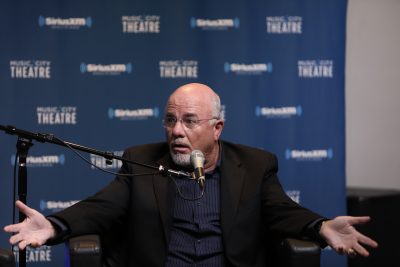
Dave Ramsey told a Florida caller named Brett, who is 53 and retiring after 30 years in education, to take the pension that pays $2,900 a month and stops when he dies. The other option pays $2,670 a month for as long as Brett or his wife, who is 54, is alive. Ramsey’s plan was to invest the difference at 12% a year, and at that return she comes out even only if Brett lives to 73.
The call aired on The Ramsey Show on Nov. 25. Before Ramsey, 66, gave his answer, the hosts asked for the couple’s ages and their other savings. Brett said they have IRAs worth “a little over a million” and term life insurance that runs through 2031. “I would take the 2,900,” Ramsey said.
His answer reads as a bet that Brett lives into his 70s and that stocks pay 12% a year along the way. That reading has a limit, and Ramsey gave it on the air: with a million dollars in IRAs, “she doesn’t need this to survive at all,” so this couple can afford to lose the bet.
What $230 a month buys
The two checks are $230 a month apart, or $2,760 a year. That is the price of keeping the pension alive for a widow. Ramsey put the gap at $330 on the air, and the math below uses Brett’s own figures.
Ramsey called the choice “a math riddle” that can’t be solved without knowing who dies first and when. It can be solved one year at a time. Say Brett takes the bigger check and invests the difference every month in the growth stock mutual funds Ramsey favors. If he dies, his widow turns that side fund into a level monthly check that lasts until she is 90, with the rest still invested at the same return. The 8% columns are our more cautious case.
| Brett dies at | Side fund at 12% | Her monthly check | Side fund at 8% | Her monthly check |
|---|---|---|---|---|
| 58 | $18,784 | $193 | $16,900 | $123 |
| 63 | $52,909 | $554 | $42,078 | $321 |
| 68 | $114,903 | $1,251 | $79,589 | $653 |
| 73 | $227,529 | $2,671 | $135,475 | $1,253 |
| 78 | $432,135 | $5,911 | $218,736 | $2,497 |
| 83 | $803,842 | $15,715 | $342,783 | $6,010 |
At Ramsey’s return, the side fund matches the check she gave up only if Brett makes 20 years of deposits and reaches 73. At 8%, he has to live past 78.
The early years are the exposed ones. If Brett dies at 63, the fund holds $52,909 at Ramsey’s rate and pays his widow $554 a month. The survivor option would have paid her $32,040 a year for the 26 years until she is 90, or $833,040 in all.
The odds of losing the bet
Social Security’s latest life table, built on 2023 death rates, shows that about 1 in 4 men alive at 53 die before 73.
The bet pays in two ways the table leaves out. If his wife dies first, Brett keeps the full $2,900 for life, and under the joint option he would have paid for coverage nobody used. If both are alive when he is 83, he has collected $82,800 in extra checks, and the side fund at Ramsey’s rate is $803,842.
The table also ignores taxes and cost-of-living raises, and it assumes the same return every year, which no market delivers.
Why Brett can take the bet
Ramsey’s answer rests on the IRAs. The check Brett’s wife would lose comes to about 3% a year of a $1 million balance.
Most couples near retirement don’t have that cushion. The Federal Reserve’s Survey of Consumer Finances puts the typical family headed by someone 65 to 74 at $81,800 in financial assets, which counts bank accounts, retirement accounts, stocks, bonds and funds. Brett’s IRAs are about 12 times that. A widow replacing the same check from $81,800 would run through the money in under three years. For that couple, the survivor option is the life insurance.
Brett’s own insurance has a date on it. His term policy ends in 2031, when he is 58. Replacing his wife’s check from that point until she is 90 would take about $367,000 invested at the cautious return, and the side fund would hold $16,900. After the policy ends, the IRAs carry the risk.
Those are Brett’s numbers. The break-even age moves with the size of the two checks, the gap between your ages and the return you assume. The Daily Profit, our free weekday email, will show how to find the break-even age for your own pension’s single-life and survivor options in a Wealth note in December. Sign up free here and you also get our Top 10 Stocks to Buy Right Now report.
A choice that can’t be changed
Brett didn’t name his plan. The Florida Retirement System covers the state’s public school employees, and its pension plan offers four payout options. The two he described line up with Option 1, the largest check with nothing continuing to a survivor, and Option 3, a reduced check that keeps going in the same amount to a surviving spouse. The plan’s rules say the choice can’t be changed once a retirement payment has been cashed or deposited.
Ramsey also told Brett to check again for a lump sum, which he said is the better choice “99% of the time” because the money is still there when the retiree dies. Brett said his plan doesn’t offer one. The reason is the same one that makes the survivor choice matter: a pension stops when the retiree dies unless he picks a survivor option, while a lump sum stays in the account.
Three numbers to find before signing
Anyone facing a pension option form can run Brett’s math with three numbers: the monthly gap between the single-life and survivor checks, the check the survivor would lose, and the savings and insurance the survivor would have instead. Then the question is how long the retiree has to live for the invested gap to replace that check, at a cautious return as well as at Ramsey’s.
Brett’s break-even is 20 years away at Ramsey’s return and more than 25 at 8%, with the IRAs behind his wife either way. A couple without that cushion is choosing between $230 a month now and a check that lasts as long as either of them does.
Contact [email protected] for any questions or corrections.
I've spent more than 15 years inside enterprise software, working alongside the finance, sales operations, and HR leaders who run the revenue engines at some of the largest tech companies in the country.
My day job is helping enterprise executives make smarter decisions about retention, compensation, and growth. These are the same operational levers that show up in every earnings report investors actually read. That perspective shapes my writing for 24/7 Wall St.
The headline numbers are easy. The interesting stuff is underneath: how companies make money, what executives are worried about, and what any of it means for the person checking their 401(k) on a Sunday afternoon. I write about personal finance and business as someone who has spent her career inside the rooms where these decisions get made.