One Day Left: The S&P 500 Needs a Huge Monday to Avoid Its Worst November Since 2008

This post may contain links from our sponsors and affiliates, and Flywheel Publishing may receive compensation for actions taken through them.
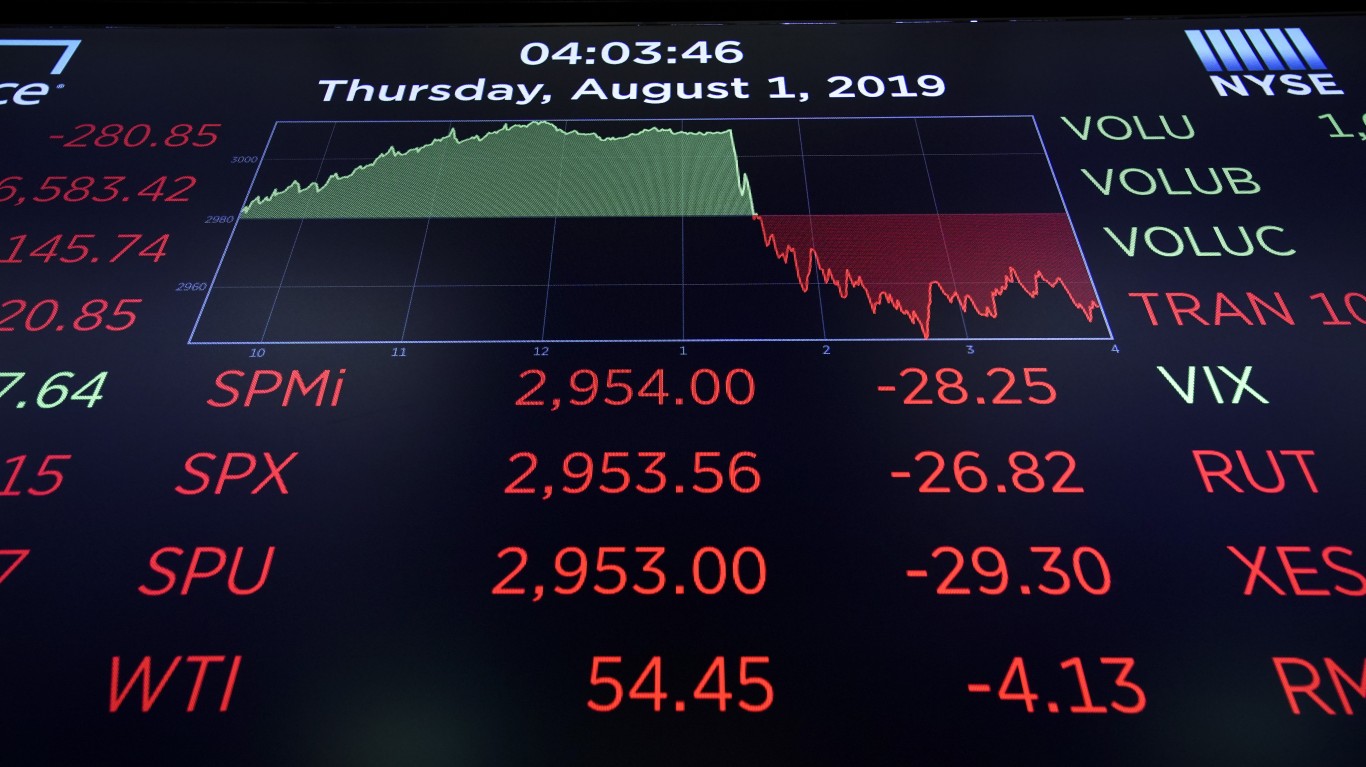
The S&P 500 closed at 7,297.49 on Friday, November 27, 2026. It gained 114.71 points, or 1.6%, in a half-day session that ended at 1 p.m. ET. That finished off a 5.6% weekly gain, the index’s biggest since April 2025.
The month looks very different. The index is down 3.73% from its October 30 close of 7,580.07, and only Monday, November 30, is left to trade. If November ended now, it would be the S&P 500’s worst November since 2008.
The State Street SPDR S&P 500 ETF Trust (NYSEARCA:SPY) is the fund many investors use to own the index. It closed Friday at $728.68, up 1.67%, and is 3.63% below its October 30 close of $755.72.
A strong week has left the index requiring the kind of session it has rarely produced. For SPY holders, the month-end label means less than what comes after it.
How This November Compares With 2008
In November 2008, the S&P 500 fell 7.48%, from 968.75 to 896.24. Every November from 2009 through 2025 did better than November 2021, when the index lost 0.83%, slipping from 4,605.38 to 4,567.00.
The other weak Novembers were small. November 2011 lost 0.51%, November 2010 lost 0.23%, and November 2025 gained 0.13%.
To beat November 2021, the S&P 500 needs to close Monday near 7,517. That takes a one-day gain of about 3.0% (3.01%), and a flat month would take about 3.9% (3.87%).
These figures cover price only and are not final until the 4 p.m. ET close. Stock futures reopen Sunday at 6 p.m. ET, and Monday is also Cyber Monday.
Why a 3% Day Is So Rare
Since the start of 2023, the S&P 500 has closed up 3% or more only three times. It rose 9.52% on April 9, 2025, 3.26% on May 12, 2025, and 4.73% on November 23, 2026, which was the second-biggest point gain in the index’s history.
The VIX measures how much volatility traders expect, based on S&P 500 options. It closed at 26.80[1] on November 26 after peaking at 35.89 on November 20. That level makes big swings possible in either direction, but it does not make a second 3% day in one week likely.
Where the Rest of the Market Stands
On Friday’s numbers, November is already the S&P 500’s worst month since March 2026, when it fell 5.09%. It would also be a second straight monthly loss after October’s 0.93% decline.
The Nasdaq Composite is down 5.14%, from 25,437.00 to 24,129.50. To beat its November 2011 loss of 2.39% and avoid its worst November since 2008, when it fell 10.77%, it needs to close Monday near 24,830. That is a gain of about 2.9%, and a flat month would take about 5.4%.
The Dow is down 1.92%, a smaller drop than its 3.73% loss in November 2021. The Russell 2000 is down 2.19%.
What SPY Holders Should Track After November
SPY’s case rests on long holding periods and regular contributions. Even after this month, it is up 6.8% for the year, and the month-end label changes nothing inside the fund.
A one-day rebound would say little about the fund’s longer-term direction. The next real tests come after the month closes: the November jobs report on Friday, December 4, at 8:30 a.m. ET, and the Federal Reserve’s December 8-9 meeting.
The first thing to check is Monday’s close against about 7,517. A close below that level would make this the worst November since 2008, but it would be one data point among several for long-term holders. If the index closes below 7,297.49 and the jobs report also comes in weak, that would point to a weaker economic background heading into the Federal Reserve meeting.
Contact [email protected] for any questions or corrections.
Omor Ibne Ehsan is a writer at 24/7 Wall St. He is a self-taught investor with a focus on growth, cyclical, and dividend equities that have strong fundamentals, value, and long-term potential. He also has an interest in high-risk, high-reward investments such as penny stocks.