A 69-Year-Old Widow Signed Her House Over to Her Son to Skip Probate. When He Sold It for $500,000 Five Years Later, the IRS Taxed Him on the $120,000 She Paid in 1991

This post may contain links from our sponsors and affiliates, and Flywheel Publishing may receive compensation for actions taken through them.

She signed her house over to her son in 2021, at 69, so that it would never pass through probate. This fall she moved into assisted living and he sold it for $500,000. The IRS will tax him as if he had paid the $120,000 she paid in 1991, and his federal bill comes to about $63,000.
She is a scenario built to show the math, and the tax rules and the home prices are real. Widowed young, she bought the three-bedroom ranch on her own in June 1991, at 39, for about what the median new house sold for that year in Census Bureau data. Thirty years later a friend warned her that probate could tie the house up for months after she died. One signature on a deed at the county recorder’s office seemed to solve that.
The deed reads as the costliest signature of her life, because a gift hands the new owner the giver’s old purchase price along with the keys. That reading has a limit: the deed did keep the house out of probate, and the size of the bill depends on the sale price, her son’s income and the fact that the house was sold while she was alive.
What the deed did to the tax bill
The rule is in IRS Publication 551. For a gift that has gone up in value, "your basis is the donor’s adjusted basis at the time you received the gift." Basis is the cost a seller subtracts from the sale price to find the taxable gain. Her son took over hers.
After $30,000 of selling costs, 6% of the price, he cleared $470,000. Take away what she paid and his gain is $350,000. She made no major improvements, which would have raised the basis.
A homeowner can keep up to $250,000 of gain on a sale untaxed, the IRS says, after owning the home and living in it for two of the last five years. He owned it and did not live there. She lived there for 35 years and no longer owned it. Nobody could use the exclusion.
He and his wife earn $180,000. Their whole gain falls in the 15% long-term rate, which comes to $52,500. The sale also lifts their income $280,000 past the line where the 3.8% net investment income tax begins, which adds $10,640. The total, $63,140, is about 13% of the sale price before any state tax. It is due with their 2026 return in April.
| Who sells the house | Taxable gain | Federal tax |
|---|---|---|
| Her son, after the 2021 deed | $350,000 | $63,140 |
| She does, as the owner, in 2026 | $100,000 | $12,793 |
| Her son, after inheriting it | $0 | $0 |
Two routes that cost less
Had the house stayed in her name, she could have sold it herself this fall. Her exclusion would have left $100,000 of the gain taxable. On her income, $2,200 a month from Social Security and $18,000 a year from an IRA, that adds $12,793 of federal tax. It would also raise her 2028 Medicare premiums by about $2,900 at 2026 rates, because Medicare sets a year’s premium from the income on the tax return for two years earlier. All in, her own sale costs about $16,000. The deed made the same sale cost about $47,000 more.
Had she kept the house until she died and left it to him in her will, the same IRS publication sets his basis at the home’s value on the date of her death. A sale soon after, at that value, leaves no gain to tax. That route runs through probate, the thing she wanted to avoid.
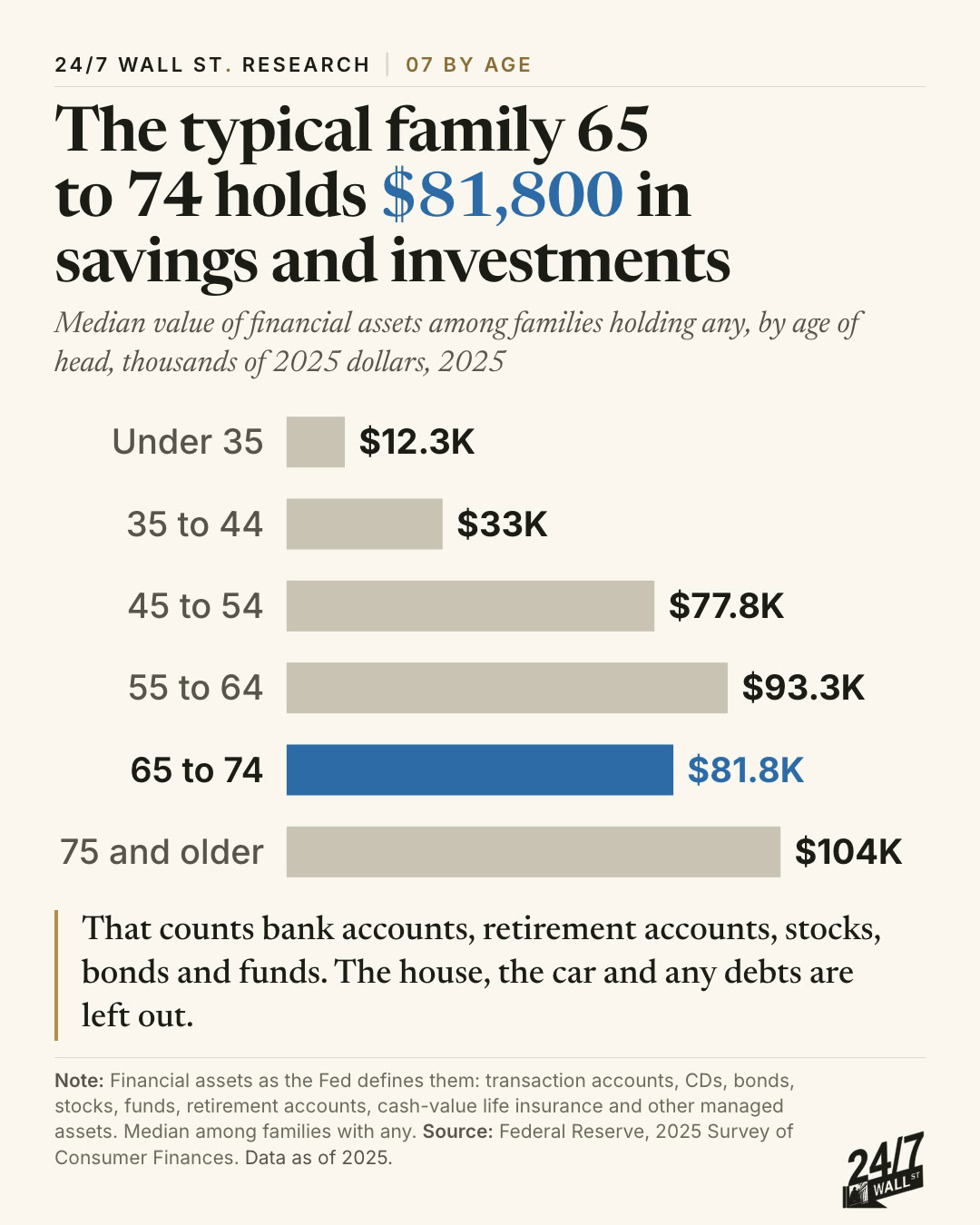
For most retirees, the house is the inheritance. The typical family 65 to 74 holds $81,800 in savings and investments, a Federal Reserve survey figure from our Nov. 24 story, "The Typical Couple 65 to 74 Can Draw Just $273 a Month From Savings by the 4% Rule." With the home counted, that family is worth $431,900.
Her gain was ordinary too. The S&P Cotality Case-Shiller national index puts home prices at 4.4 times their June 1991 level, which would make a $120,000 house worth about $528,000 today. Anyone who bought in the 1980s or 1990s holds a gap like hers.
How to skip probate and keep the tax break
Three tools do both, and each leaves you in the house.
A transfer-on-death deed names who gets the house when you die. You stay the owner, you can revoke it, and more than 30 states and the District of Columbia allow one. A revocable living trust does the same job in every state. A life estate deed passes the house to your child at your death and keeps your right to live there until then.
In each case the house still counts as yours when you die, so your heir gets the date-of-death basis. Which of the three fits depends on your state, your other assets and whether Medicaid may one day pay for a nursing home. The Daily Profit, our free weekday email, will set the three side by side in a Wealth note before Dec. 31: what each costs to set up, what each does to your heir’s tax bill, and which of them start Medicaid’s five-year clock. Sign up free here and you also get our Top 10 Stocks to Buy Right Now report.
If the deed is already signed
A deed like hers can be undone while you’re alive, because your child can deed the house back. Publication 551 has one catch. If you die within a year of getting it back and it returns to the same child, the old basis stays.
Her gift also started a clock. Medicaid looks back 60 months for anything given away before an application for nursing home coverage, the Centers for Medicare and Medicaid Services says. Hers had just run out when she moved. A gift that size also called for a gift tax return for 2021, with no tax due.
If your family’s sale has already closed this year, two dates matter. Investment losses taken by Dec. 31 offset the gain dollar for dollar. The fourth estimated tax payment for 2026 is due Jan. 15, and paying in at least 110% of last year’s tax by then generally heads off an underpayment penalty for a couple at her son’s income.
Where this is weak
Her purchase price, the sale price, the 6% selling costs and both households’ incomes are assumptions. The tax math is federal only and uses 2026 law. A house that stays in a child’s name until the parent dies raises a harder question, whether the IRS counts it in her estate, and that one belongs with an estate lawyer. So does any deed, before you sign it.
The bottom line
A deed can keep a house out of probate and hand your child a tax bill that a will would have erased. She spared her son a probate case, and it cost him $63,140. If your house has gained more than you would hand over in cash without a second thought, ask what basis your heir will get before you sign.
Contact [email protected] for any questions or corrections.
I've spent more than 15 years inside enterprise software, working alongside the finance, sales operations, and HR leaders who run the revenue engines at some of the largest tech companies in the country.
My day job is helping enterprise executives make smarter decisions about retention, compensation, and growth. These are the same operational levers that show up in every earnings report investors actually read. That perspective shapes my writing for 24/7 Wall St.
The headline numbers are easy. The interesting stuff is underneath: how companies make money, what executives are worried about, and what any of it means for the person checking their 401(k) on a Sunday afternoon. I write about personal finance and business as someone who has spent her career inside the rooms where these decisions get made.