In 1976, Steve Jobs’s Partner Walked Away From 10% of Apple Because He Feared Losing His House. He Got an $800 Check. Ronald Wayne Is Now 92 and Says the Only Sale He Regrets Was for $500

This post may contain links from our sponsors and affiliates, and Flywheel Publishing may receive compensation for actions taken through them.

In April 1976, Ronald Wayne typed the contract that created Apple, signed it beside Steve Jobs and Steve Wozniak, and took 10% of the company. On Apple’s 12th day he walked away, afraid of losing his house. An $800 check from Jobs followed. The only sale he has said he regrets came years later, when he sold his signed copy of that contract for $500.
Apple closed Friday at a record high, about $359 a share, a price that values the company at $5.2 trillion. Wayne is 92. He lives in Pahrump, Nevada, mostly on Social Security, and sells a rare stamp or coin now and then, Fortune reported in April.
Walking away reads today as the most expensive act of caution in American business: a tenth of Apple is $521 billion on paper. The reading has limits. No founder’s stake comes through 50 years of new investors whole, and in 1976 Wayne was personally liable for every dollar the partnership borrowed, with a house to lose.
The adult in the room
Wayne was 41 and an engineer at Atari, where Jobs, 21, also worked. Wozniak, 25, had a job at Hewlett-Packard and had designed the computer Jobs wanted to sell. The two friends disagreed over who would own that design. Wayne had them over to his home and talked it through. By his account, Jobs ended the evening by proposing a company.
The split was 45% for Jobs, 45% for Wozniak and 10% for Wayne, who would break the tie when the younger men disagreed. Wayne typed the three-page agreement himself. He also drew the company’s first logo, a picture of Isaac Newton under an apple tree, and wrote the manual for its first computer.
Why he left on day 12
Then came the first big order. The Byte Shop, a local computer store, wanted 50 machines. Jobs borrowed $15,000 for parts, about $90,000 in today’s dollars. The Byte Shop had a reputation for paying its suppliers slowly.
Apple was a partnership, and in a partnership each partner is personally liable for all of the business’s debts. Jobs and Wozniak owned almost nothing a creditor could take. Wayne had a house, a car and other assets. He had also been through this before. A slot machine company he started had failed five years earlier, and he spent a year paying back what it owed.
“I didn’t feel I could stand the risk. I could’ve lost everything,” he said in March at the Computer History Museum’s celebration of Apple’s 50th year.
On April 12, 1976, he filed papers withdrawing from the partnership. Jobs sent the $800. The next year, when Apple became a corporation, Wayne accepted $1,500 more to give up any future claim. That is $2,300 in all.
This year Wayne added a twist. He now says he never sold the stake. By his account the check came in the mail with nothing attached. “No letter, no note, no explanation, and a check for $800,” he told the interviewer Adam Mendler in March. “I thought it was a gratuity.” AppleInsider, which looked into the claim, pointed to the withdrawal he signed and to the $1,500 he took the next year.
What 10% of Apple is today
Friday’s close puts Apple’s 14.5 billion shares at $5.2 trillion. Ten percent of that is $521 billion, about 651 million times the $800 check.
No one should take that number literally. A founder’s stake shrinks every time a company sells new shares to investors or grants them to employees. Jobs’s own 45% was about 15% by the time Apple went public in December 1980. Shrink Wayne’s 10% by the same two-thirds and it is about 3.3%, or $174 billion today, before decades more of shares issued and bought back.
A smaller number makes the point better. Apple went public at $22 a share, and the $800 check would have bought 36 shares. After five stock splits those would be 8,064 shares, worth about $2.9 million at Friday’s close and paying about $8,700 a year in dividends. As a shareholder, the most Wayne could ever have lost was the $792 he paid.
Caution was the official view of Apple back then. Massachusetts regulators barred residents from buying the offering, judging it too risky, The Wall Street Journal reported at the time.
What Wayne’s story can’t supply is the name of a stock worth a small stake today. Our free report, Top 10 Stocks to Buy Right Now, names 10, and it comes with The Daily Profit, our free weekday email. Get both free here.
The sale he does regret
Wayne has said for years that he does not regret leaving. “My success has never been defined by money,” he told Fortune in April. He has also said that if he had stayed, he “probably would have wound up the richest man in the cemetery.”
One sale does bother him. He kept his signed copy of the 1976 contract for years, then sold it to a dealer for $500. “That’s the one thing in this whole experience I really do regret,” he told the site NextShark in 2013.
In 2011 that document brought $1.6 million at Sotheby’s. This January it sold again, at Christie’s, for $2.5 million. That is 5,000 times what Wayne got for it and more than 1,000 times everything Apple ever paid him.
Where the same risk reaches retirees
The rule that scared Wayne still applies, and it reaches people with savings in ordinary ways. The Small Business Administration says partners carry “unlimited personal liability unless structured as a limited partnership.” A parent who goes into business with a grown child on a handshake, with no company formed, is a partner in the sense Wayne was. A limited liability company, the agency says, keeps an owner’s house, vehicle and savings out of reach in most cases.
Co-signing a loan works the same way. The Federal Trade Commission’s notice to co-signers reads: “You may have to pay up to the full amount of the debt if the borrower does not pay.” The lender can come to the co-signer without first trying to collect from the borrower.
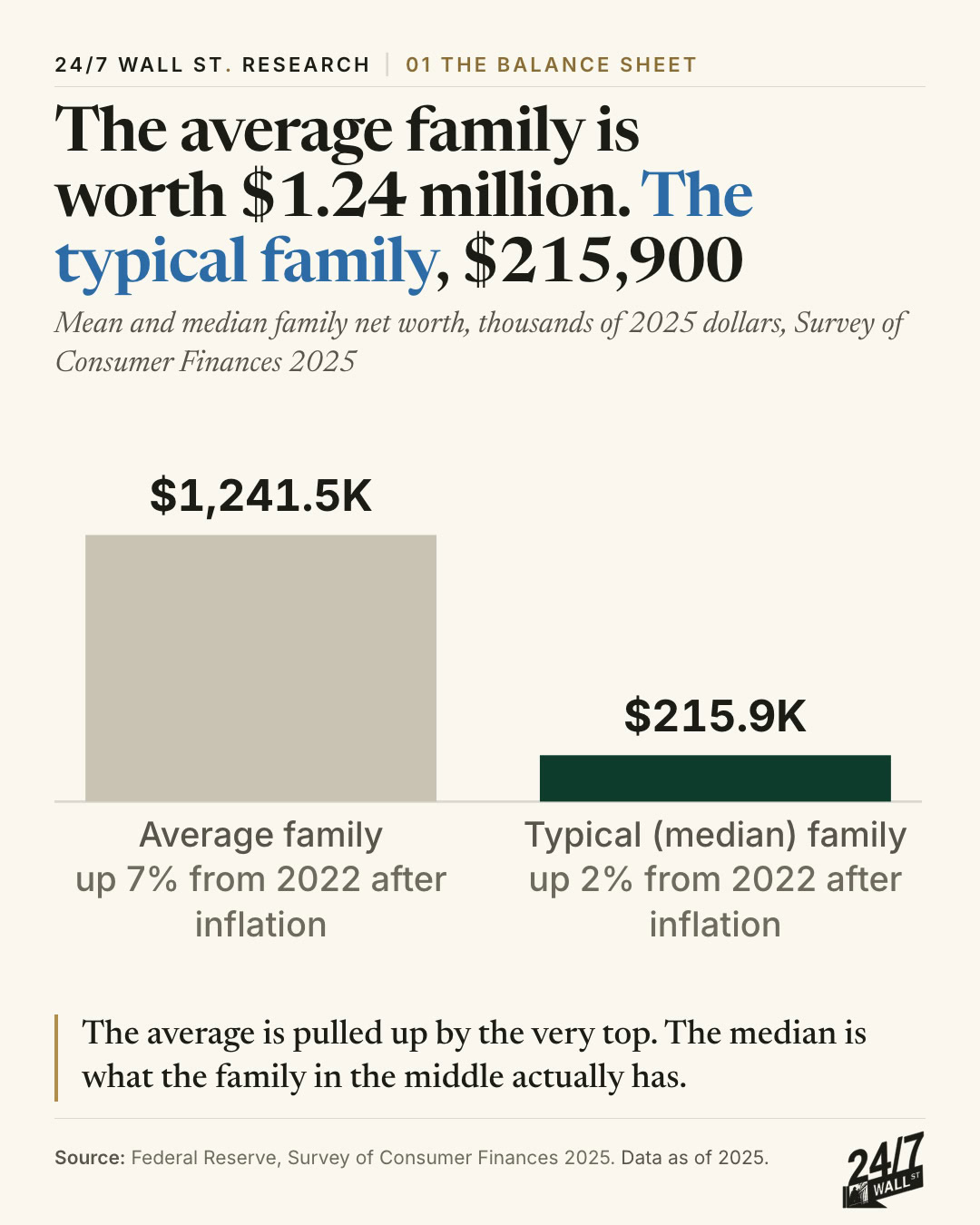
The typical American family is worth $215,900, the Federal Reserve’s latest survey of family finances found. The average, pulled up by the richest households, is $1.24 million. One open-ended debt can be larger than everything a typical family has.
Federal law keeps some money out of a creditor’s reach. A 401(k) is protected from most creditors with no dollar limit. IRAs are protected in bankruptcy up to $1,711,975, a cap that holds through March 2028, and money rolled over from an employer plan doesn’t count against it. Private creditors can’t garnish Social Security, though the government can for federal taxes, child support and federal student loans.
Social Security is most of what Wayne lives on. The average retired worker’s check will be $2,170 a month in January, after the 3.6% cost-of-living raise, or $26,040 a year.
The bottom line
Wayne gave up a paper fortune to protect a house, and he has said he made the best decision he could with what he knew. The lesson for anyone with savings is to know which risks are capped. A share of stock can cost what was paid for it. A signature on someone else’s debt can cost everything the signer owns.
Wayne put it this way to Fortune in April: “Understand exactly what you are agreeing to, particularly in a general partnership.” He added: “And never assume your exposure ends at your percentage, because it doesn’t.”
Contact [email protected] for any questions or corrections.
I've spent more than 15 years inside enterprise software, working alongside the finance, sales operations, and HR leaders who run the revenue engines at some of the largest tech companies in the country.
My day job is helping enterprise executives make smarter decisions about retention, compensation, and growth. These are the same operational levers that show up in every earnings report investors actually read. That perspective shapes my writing for 24/7 Wall St.
The headline numbers are easy. The interesting stuff is underneath: how companies make money, what executives are worried about, and what any of it means for the person checking their 401(k) on a Sunday afternoon. I write about personal finance and business as someone who has spent her career inside the rooms where these decisions get made.