Albuquerque, New Mexico, Has the Sandia Mountains at Its Edge and a Balloon Fiesta Every October. What It Takes to Retire There at 65 on $850,000

This post may contain links from our sponsors and affiliates, and Flywheel Publishing may receive compensation for actions taken through them.
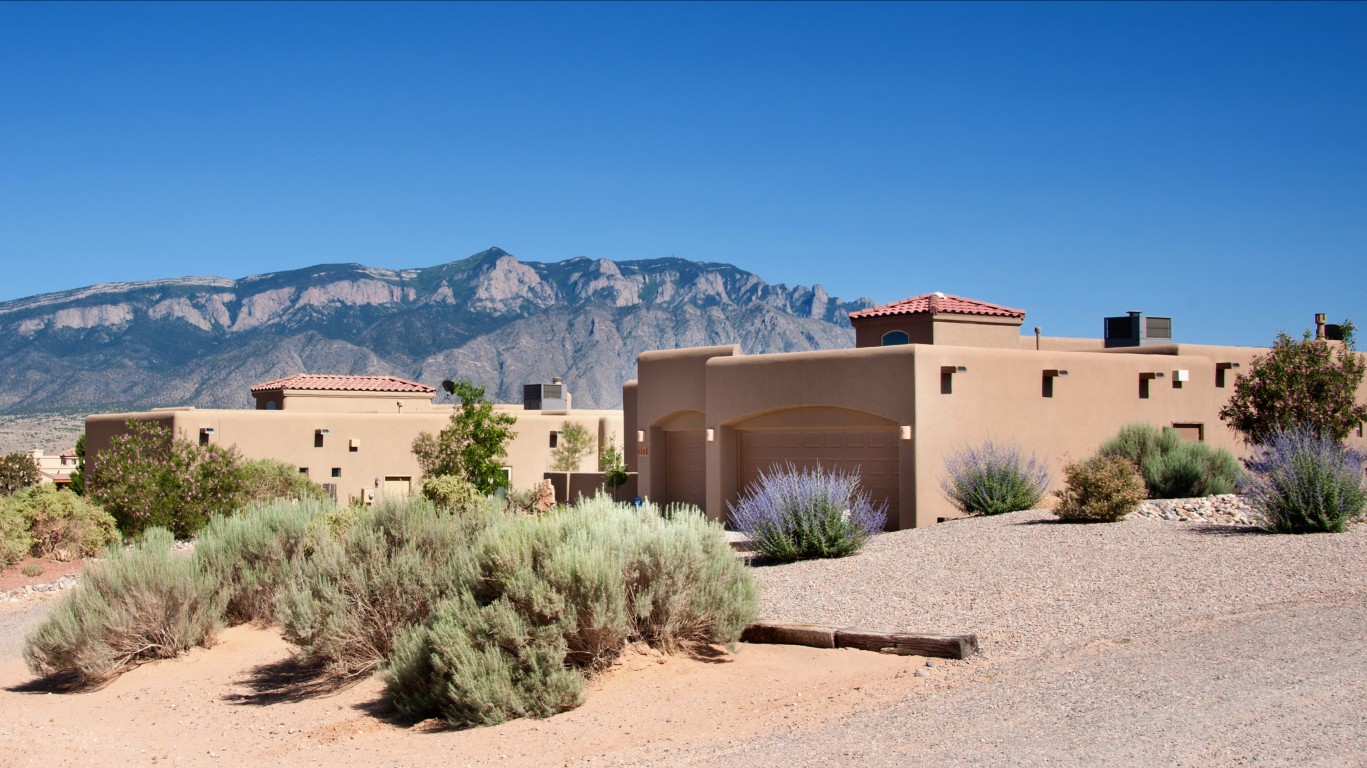
Many people near 65 ask whether $850,000 and Social Security can pay for a good life in Albuquerque, New Mexico’s high-desert city. The numbers suggest it can, though the margin is smaller than Albuquerque’s cheap reputation suggests, and one quirk of New Mexico property tax takes up most of it.
What a Year in Albuquerque Costs a Retired Couple
New Mexico’s cost of living scores 92.212 on the federal index, where 100 marks the typical level nationwide. Applying that to the BLS average household spending figure of $81,905 yields a working budget of about $75,500 a year. That budget covers food, utilities, cars, and the occasional trip.
Housing is where Albuquerque makes its reputation. The city’s median sale price was recently $375,000. Up the road in Santa Fe, the federal price index climbed 34.89%[1] over five years. Homeowners insurance in New Mexico averages about $2,800 per year.
The other big line is health care. Medicare Part B runs $209.40[2] a month in 2027, which comes to about $5,026 a year for two, and that’s before Medigap or drug plan premiums. Access matters more at 80 than at 65, and UNM Hospital is the state’s only Level I Trauma Center and its only academic medical center.
A Worked Example on $850,000
The example assumes a married couple, both 65, who bought their house with proceeds from a previous home, so they invested the full $850,000 in traditional IRAs. Their Social Security matches the SSA’s average for an aged couple, $3,208[3] a month, or $38,496 a year.
Take that out of the $75,500 budget and the portfolio has to cover $37,030. Federal taxes stay small. About $16,400 of their Social Security becomes taxable. Against that come the $32,200 joint standard deduction, an extra $1,650 each for being 65, and the new $6,000 senior deduction each. That leaves taxable income near $6,000, which keeps federal tax low.
The state is gentle too. New Mexico exempts Social Security for joint filers with income under $150,000, and its rates run from 1.5% to 5.9%. Before income taxes, the couple would withdraw about 4.4% of the portfolio in year one, with taxes pushing the required withdrawal slightly higher. A 4% draw yields $34,000, leaving a shortfall of about $3,600.
Tax Lightning Is the Line Item Buyers Miss
New Mexico’s cap on annual increases in a home’s taxable value resets to full market value when a home sells, and locals call that reset “tax lightning.” Neighbors who’ve owned for 20 years pay on capped values. A new buyer pays on today’s price.
Across Bernalillo County, the median owner pays an effective rate of about 0.95%. Inside Albuquerque, the full effective rate is 1.58%. On a $375,000 home, that’s $5,925 a year instead of about $3,563. The difference of roughly $2,360 accounts for most of the shortfall. The upside is that once a buyer owns, the cap starts working in their favor, so the bill rises more slowly than home values.
Keep an eye on inflation, too. The retiree-weighted CPI is just 368.804; it’s high for the past year. That index leans heavily on housing and medical costs, which are the same lines that grow fastest in this budget.
What It Takes to Make $850,000 Work
The plan holds up with a few adjustments. It requires $850,000 committed, Social Security near the couple’s average, and a starting withdrawal around 4.4%. Whether that rate holds up over a 30-year horizon depends on portfolio mix and market returns, particularly in the early years of withdrawals (a bad market in year one hurts far more than one in year fifteen, which is the whole subject of our free guide on defending the first five years of retirement: here).
Three variables would move the withdrawal rate closer to 4%: a budget about $3,600 lower, a less expensive house with a smaller tax-lightning bill, or a later Social Security claiming age for the higher earner, which raises the monthly check and the survivor benefit.
In Albuquerque, a house can cost more to own than its price suggests. For a new buyer, property taxes reflect the updated assessed market value and applicable local tax rates rather than the seller’s current bill.
Contact [email protected] for any questions or corrections.
David Beren has been a Flywheel Publishing contributor since 2022. Writing for 24/7 Wall St. since 2023, David loves to write about topics of all shapes and sizes. As a technology expert, David focuses heavily on consumer electronics brands, automobiles, and general technology. He has previously written for LifeWire, formerly About.com. As a part-time freelance writer, David’s “day job” has been working on and leading social media for multiple Fortune 100 brands. David loves the flexibility of this field and its ability to reach customers exactly where they like to spend their time. Additionally, David previously published his own blog, TmoNews.com, which reached 3 million readers in its first year. In addition to freelance and social media work, David loves to spend time with his family and children and relive the glory days of video game consoles by playing any retro game console he can get his hands on.