





Ripple owns a business that clears more than $3 trillion in trades every year, and it has committed, in writing, to moving that business onto the ledger behind XRP (CRYPTO:XRP).
A move that size sounds like it should transform the XRP price, but the business can succeed on the ledger without XRP going anywhere. It all depends on how the money reaches the token. With XRP trading around $1.08, what would moving $3 trillion onto the XRP Ledger actually do to the price? Let’s find out.
Ripple Bought a $3 Trillion Business and Promised It to the XRP Ledger
In April 2025, Ripple paid $1.25 billion for Hidden Road, a prime broker—the behind-the-scenes firm that gives hedge funds one account for clearing, financing, and settlement across markets. The deal closed in October, was partly paid in XRP, and the business now operates as Ripple Prime, making Ripple the first crypto company to own a global, multi-asset prime broker.
Ripple Prime clears more than $3 trillion in trades a year for over 300 institutional clients—hedge funds and trading firms that would never touch a crypto exchange directly. The business has also roughly tripled in size since the acquisition was announced, per the company.
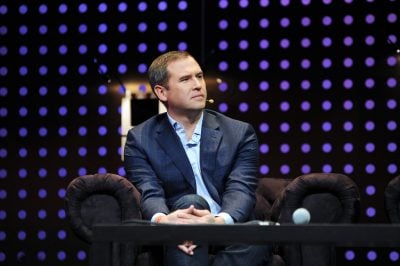
Ripple’s own announcement committed to moving Hidden Road’s post-trade activity—the record-keeping and settlement work that happens after every trade—onto the XRP Ledger to streamline operations and lower costs. Ripple Prime CEO Mike Higgins has been open about where he thinks it all goes. “Bitcoin, Ethereum, XRP, and Solana tokenizing anything of value as collateral for margin and settlement is the next step,” he said in May. The question is how far along that move actually is.
Ripple Prime Is Already Wired Into Wall Street’s Clearing System
Quite a lot has happened since Hidden Road was rebranded as Ripple Prime. On March 2, Ripple Prime went live in the participant directory of the NSCC—the clearinghouse that processes essentially every stock trade in the United States. Higgins called the listing an important milestone and described Ripple Prime as the largest global non-bank prime broker.
In May, the NSCC’s parent company, DTCC, named Ripple Prime to its tokenization working group—the group of roughly 50 firms, including Goldman Sachs and JPMorgan, that will help write the rules for how tokenized stocks and bonds trade and settle. And in late June, DTCC switched on a new service that keeps stock clearing running nearly round the clock on weekdays, with Ripple Prime already plugged in.
However, none of those integrations means XRP is settling anything. DTCC’s clearing systems don’t run on the XRP Ledger, and analysts publicly corrected that exact confusion when the NSCC listing was announced. The directory entries show Ripple Prime working as a normal Wall Street broker inside the existing machinery—progress, and still a long way from trillions flowing across the ledger.
So Ripple’s broker keeps moving deeper into Wall Street. The XRP price hasn’t felt any of it yet, and the next question is whether it ever will.
Does Any of These Reach the XRP Price?
Say the migration of Ripple Prime to the XRP Ledger completes and trillions in post-trade activity run across the XRPL every year, the money still has to find a route to the token—and there are only three ways.
The first route is transaction fees, and they are too small to matter. Every transaction on the XRP Ledger costs a fraction of a cent, and that fee gets burned—destroyed permanently—when paid. That sounds bullish until you count it. All the transactions on the ledger since 2013 have burned about 14.3 million XRP combined, worth roughly $15 million at today’s price. Trillions in settlement volume would barely dent the supply, because the ledger was deliberately built to be nearly free.
The second is collateral, and this is the one that could actually move the price. Higgins describes institutions handing over XRP as security for loans and trades without selling it—the same way funds pledge stocks or gold today. XRP already serves as collateral inside Ripple Prime alongside Bitcoin, Ethereum, and stablecoins, and a $200 million credit line from Neuberger Specialty Finance backs the lending.
Collateral is actual demand, since tokens have to be bought, held, and locked to be pledged. However, no public figure exists for how much XRP is pledged, so nobody outside Ripple knows how big this really is yet.
The third is the uncomfortable one. Even inside Ripple’s own business, the asset doing the money work is mostly RLUSD—its dollar stablecoin. Traders post RLUSD as margin on OKX, use it to back Bitcoin options on Bullish, and move it as cash across Ripple Prime’s products. So, the migration can succeed completely with the stablecoin carrying the money while XRP gets none of the flow.
Wall Street Hasn’t Agreed to Use the XRP Ledger

Everything promising about this plan needs the banks and clearing firms to say yes, and so far, none of them have.
The same firms sitting at that DTCC table run their own blockchain systems for this exact job—JPMorgan’s Kinexys is the biggest—and the working group exists to write rules every member can live with. Rules that let each dealer plug in its own ledger would make the XRP Ledger one candidate among several others.
Moreover, XRP as collateral currently operates inside Ripple’s own brokerage, which means Ripple accepting its own asset. No outside bank has said it will accept XRP as collateral, no major clearing firm takes it as margin, and no date has been set for either—so the market has nothing to price in yet.
The market has already made its feelings clear as well. Ripple Prime has roughly tripled since the deal was announced, while the XRP price nearly halved over the same stretch. That means investors have seen the plan, and they’re waiting for someone other than Ripple to say yes.
What Can Ripple Prime Really Do for the XRP Price?
Right now, Ripple Prime can do almost nothing for the XRP price, and the reason runs through everything above. The only route that turns this business into demand for the token is collateral, and the only firm accepting XRP as collateral is Ripple itself. A company vouching for its own asset doesn’t move a market. So until someone else does the vouching, the migration keeps paying Ripple the company while XRP waits.
That said, the first outside bank that takes XRP as collateral, or the first clearing firm that accepts it as margin, would turn this plan into demand for the token overnight, because the hardest yes is always the first one. Until that first yes arrives, the answer stays what it is today—a booming business for Ripple, and a promise for XRP.
Contact [email protected] for any questions or corrections.












 Top Gaining Stocks
 Top Losing Stocks