Bitwise’s Matt Hougan Backs HYPE and Robinhood for the Next Cycle: Where Does That Leave XRP?
Bitwise's CIO just named his picks to lead the next crypto bull cycle, and XRP is not among them despite Bitwise running the largest XRP ETF in the country. The reason why cuts to the heart of what XRP holders…

This post may contain links from our sponsors and affiliates, and Flywheel Publishing may receive compensation for actions taken through them.
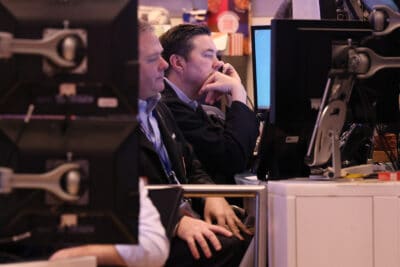
Matt Hougan is the Chief Investment Officer at Bitwise, one of America’s biggest crypto asset firms, and his research shapes where a lot of advisor money ends up.
In a market memo on Tuesday, Hougan set out his view of the next crypto bull market and pointed to two names. One is Hyperliquid, a trading platform whose token has traded for less than two years. The other is Robinhood (NASDAQ:HOOD | HOOD Price Prediction), the brokerage that now runs a blockchain of its own.
XRP (CRYPTO:XRP) wasn’t on the list, which is awkward, because Bitwise runs the largest U.S. spot XRP ETF. The XRP Ledger is also attracting exactly the institutional business XRP holders have been waiting for since 2012. So where does that leave XRP?
Hougan Backs HYPE and Robinhood To Lead the Next Crypto Cycle
For most of crypto’s history, tokens rose because enough people believed the network behind them would matter one day. Hougan expects the next cycle to reward something narrower, where the money a platform earns finds its way back to the people holding its token. He splits that into two categories, the Hyperliquid Lane and the Robinhood Lane, and he thinks the cycle could be the biggest yet because it runs on revenue rather than hype and targets global finance rather than just crypto.
Hyperliquid earns its place in the first category through its buyback. The trading platform passed $1 billion in cumulative revenue in June, and 99% of what it earns goes straight into buying HYPE on the open market, so every trade on the platform turns into buying pressure for the token.
That connection is what Hougan says most crypto apps never built, since plenty of them attracted users and collected fees while their token holders saw none of it. HYPE has gained about 146% this year through a broad market downturn, and Hougan thinks its value could double and still be fairly valued.
The second category covers established companies building financial services on a blockchain rather than running pilots, and Robinhood is his example. Its chain holds around $300 million in deposits and processes about 3.6 million transactions a day, and Hougan argues Robinhood is learning far more by running it live across 120 countries than it ever would from a limited trial.
Hougan also named Bitcoin, Ethereum and Solana as the broad base for any rally, but XRP didn’t come up.
Why XRP Didn’t Make the List
The XRP Ledger is winning the institutional business XRP holders have waited years for. Tokenized real-world assets on the ledger have climbed 388% this year, from around $900 million to $4.4 billion, although a single energy-backed token accounts for roughly half of that. DBS and Franklin Templeton have plugged a tokenized money-market fund into it. Ripple also announced work with Mastercard and JPMorgan on July 20 covering trade settlement and collateral services.
However, almost none of that business settles in XRP. Ripple’s biggest deals this year, including a Convera partnership covering $190 billion in annual payment flows, the Deutsche Bank integration and the Société Générale relationship, all settled in RLUSD, Ripple’s stablecoin. Institutions get the ledger’s speed without holding an asset whose price swings 40% in a year.
That leaves the burn as the only route back to XRP holders, and it is far too small. The ledger destroys a fraction of a cent in XRP on every transaction, which has removed about 14 million XRP since 2012, worth roughly $16 million today. Hyperliquid buys back that much HYPE every week. It is the same reason tokenized Treasuries on the ledger haven’t lifted the XRP price and the same reason S&P’s new crypto index left XRP out this week.
Hougan’s second category is stranger for XRP, because the company doing exactly what he describes is Ripple. It holds a conditionally approved national trust bank charter from the OCC, runs the stablecoin those institutions settle with, and has spent years wiring itself into bank payment flows. However, Ripple is private, so there is no stock for ordinary investors to buy. XRP holders own the token instead, and the token has no claim on what Ripple earns.
That is how the ledger’s tokenized assets grew nearly fivefold this year while the XRP price fell by 38%. The XRP Ledger keeps winning the business, but the token just doesn’t get a cut of it.
Bitwise Still Runs the Biggest XRP ETF
Bitwise’s XRP fund has pulled in more than $500 million since launch and holds about $328 million in assets today. That is roughly a third of all the money in U.S. spot XRP ETFs, where total assets across the five funds stand at $1.04 billion. The advisors and allocators buying XRP through a fund are mostly buying Bitwise’s, and they kept buying while the XRP price fell for most of the year.
However, the money going into XRP funds has slowed. Around $666 million flowed in during November 2025, against roughly $12 million so far this month. The launch rush is over and the market has spent most of the year in a bear phase, so the pace was always going to cool, but the funds have still taken in money in most months this year.
Bitwise also launched one of the first U.S. spot Hyperliquid ETFs in May, so it holds client money in both assets. And Hougan has been clear that he isn’t writing XRP off. Back in June, discussing Bitcoin, Ethereum, Solana and XRP, he said he suspected prices would be much higher in a year, while admitting he had no idea where the bottom was. So he expects XRP to rise without expecting it to lead, and those are two very different claims.
What XRP Is Betting On Instead
XRP isn’t shut out of the next cycle, and it has genuine catalysts coming. The CLARITY Act would write XRP’s commodity status into federal law, which is the permanent footing institutions have been waiting for. President Trump agreed to the ethics rules that stalled the bill for months, although Democrats have rejected the current proposal to let the Justice Department enforce them alone, and the Senate has until the August 7 recess to settle that and hold a vote.
Beyond the crypto bill, exchange traded funds keep putting XRP in front of advisors who would never hold the token directly, and Ripple keeps building on the ledger, with a package of upgrades aimed at institutional users heading toward a validator vote in the coming weeks.
However, none of that works the way Hyperliquid’s buyback works. XRP’s bet is that the token itself becomes necessary to move money, so demand comes from use rather than from a share of revenue. That route is slower, and it only pays off if the business the ledger wins starts running through XRP rather than around it.
Hougan is backing protocols that pay their token holders and companies building finance on-chain, and XRP is doing neither. For holders, the question is no longer whether institutions will use the XRP Ledger, because they already are. It is whether any of that business will ever need XRP.
Contact [email protected] for any questions or corrections.
Sam Daodu is a crypto analyst who's spent nearly a decade making blockchain understandable—no easy task when most whitepapers read like fever dreams. He writes for 24/7 Wall St., covering Bitcoin, altcoins, and crypto market analysis for investors. Before crypto, he was a tech writer (back when explaining "the cloud" was peak innovation). Since 2018, he's written for CoinTelegraph, Yahoo Finance, The Block, Cryptonews, Zypto, Rain, and more—basically anywhere people want crypto news without the headache. Sam runs MacLabs Marketing, a content agency for crypto brands tired of sounding like AI wrote their website. He also publishes free crypto education on his site for Web3 enthusiasts who think "gas fees" is a typo. When he's not writing or staring at charts, Sam's either: - Watching anime (currently convinced One Piece has better tokenomics than most altcoins) - At the gym sculpting himself into a Greek god - Listening to the music your mum warned you only bad boys listen to Connect: LinkedIn | Email | MacLabs Marketing