The CLARITY Act Is Now One Clause Away From Passing: Should XRP Holders Celebrate?
The White House just handed Democrats the ethics rules they demanded, and XRP surged past $1.13 in response. But a single enforcement clause now stands between crypto holders and the biggest regulatory win in years, and the Senate clock is…

This post may contain links from our sponsors and affiliates, and Flywheel Publishing may receive compensation for actions taken through them.

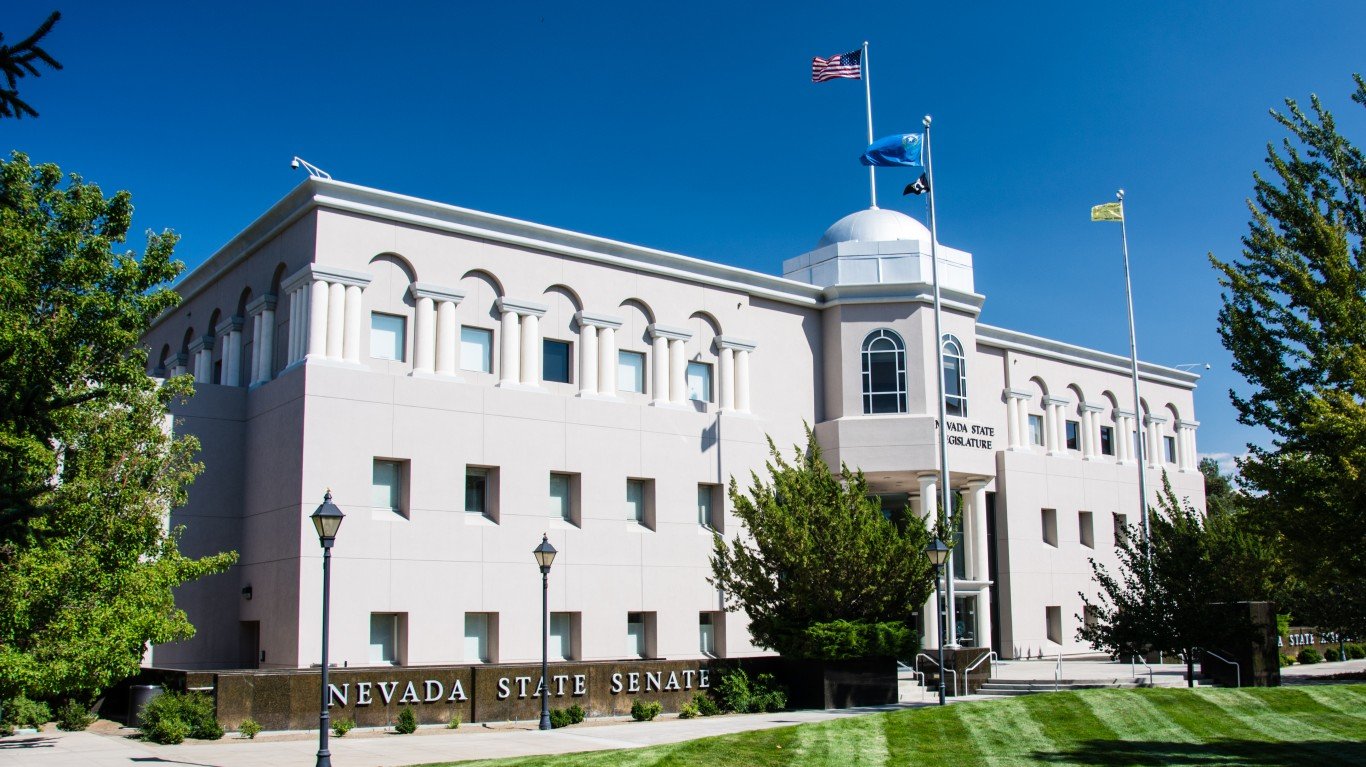
After months of deadlock, the CLARITY Act just cleared the biggest obstacle that had been holding it up all summer. President Trump agreed to the ethics rules Democrats demanded. What remains in dispute is who gets to enforce them, and how long they last.
XRP (CRYPTO:XRP) climbed past $1.13 on the news—a level it had struggled to hold for weeks. The rest of the market also rallied, with Bitcoin breaking above $66,000 and major altcoins climbing higher. On Polymarket, traders lifted the odds of the bill becoming law this year from about 32% to the mid-40s. Both moves have since faded.
So with the CLARITY Act this close to a Senate floor vote, should XRP holders start celebrating?
What Just Changed for the CLARITY Act
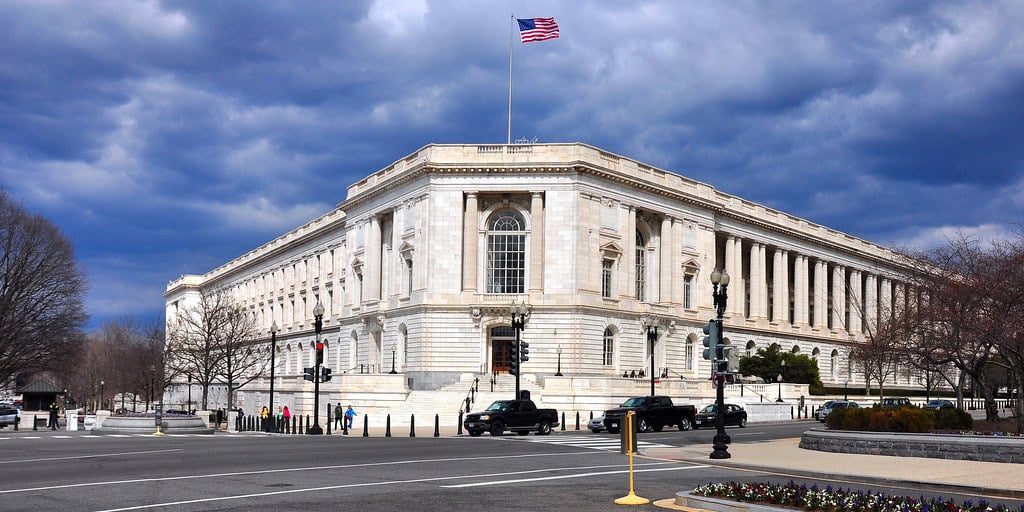
The CLARITY Act has been stuck for months on a single dispute. Democrats refused to supply the votes it needs without ethics rules restricting the president’s own crypto business, and Republican negotiators could not agree to those rules without Trump’s approval. Neither side moved, and the deadlock lasted long enough that investors were recently asking whether XRP would fall below $1 while the bill went nowhere.
That changed this week. Trump met in the Oval Office on July 16 with Senator Cynthia Lummis, Senator Bernie Moreno, chief of staff Susie Wiles, and acting Attorney General Todd Blanche. The White House settled on ethics language and circulated it to Senate Republicans on Monday afternoon, with Trump signing off on rules written to restrict his own crypto business. A White House official described it as “the most comprehensive and wide-ranging ethics provision in history.”
Under the draft released Wednesday, the language would bar the president, vice president, members of Congress, federal judges and other covered officials, along with their spouses, from issuing or sponsoring digital assets for compensation while in office. It addresses the conflict Democrats had demanded be fixed, but with two caveats they seized on immediately: the provision sunsets in 2029, and regulators get a full year after enactment to implement it. The market responded to the initial news, with the total crypto market gaining roughly $70 billion in a day and XRP finishing as the third-best performer among the top 50 coins, behind only Ondo and Cardano.
Senate Republicans released an updated draft on Wednesday, but no floor vote has been scheduled, and Democrats had not reviewed the text when the first objections landed. Traders were already pricing what passage would be worth.
However, that optimism has already cooled. Polymarket’s odds peaked near 48% on Tuesday and had fallen to 38% by Thursday morning, because the ethics agreement settled one argument and immediately started another.
The Enforcement Fight Holding Up the CLARITY Act
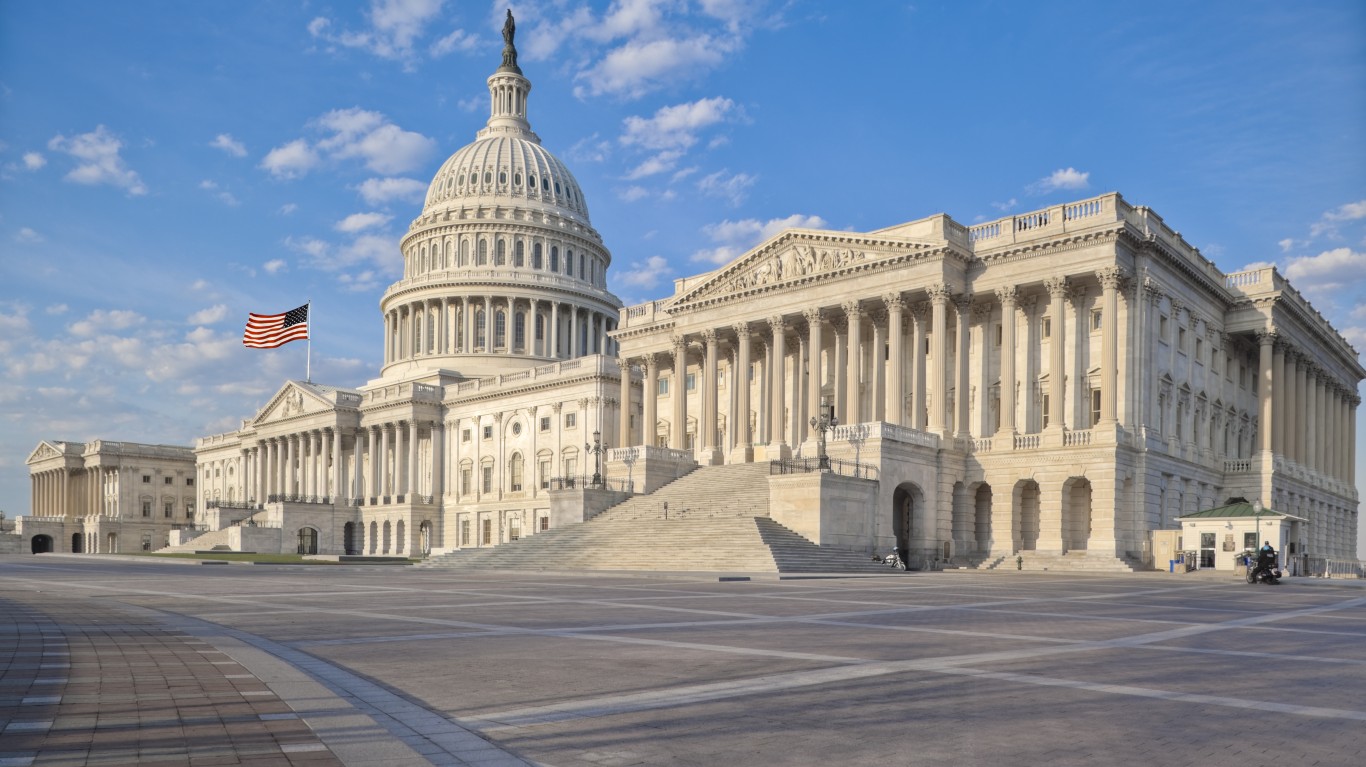
The argument is no longer about whether the ethics rules exist, since Trump has already agreed to those. What lawmakers are fighting over now is who gets to enforce them, and for how long. An ethics rule only works if someone is willing to act on it, and the two sides want very different people holding that power.
The agreed language hands that job to the Department of Justice (DOJ) alone and leaves state attorneys general out of it. Democrats object because the DOJ answers to the president those rules are written to restrict, and Trump’s former personal lawyer, Todd Blanche, has been running the department as acting attorney general since April while he awaits a Senate vote on his nomination to the permanent job. State attorneys general would stand outside that chain of command, and many of them are Democrats, which is precisely why Republicans want them kept out.
Senator Angela Alsobrooks, one of only two Democrats who voted the bill out of the Senate Banking Committee in May, has rejected the offer outright, calling it “unserious” and saying she cannot support the bill in that form. She added that she will “keep working from that floor to reach an agreement that holds us all accountable,” meaning she sees the current offer as a base to negotiate up from, not a reason to quit.
Both sides also know what failure would cost, because this same argument collapsed the deal in June, when Republicans stripped out a mechanism that would have let state attorneys general challenge the DOJ for refusing to enforce the rules.
Nobody at the table wants to lose the bill twice over the same clause. The CLARITY Act needs 60 votes to clear the Senate. Seven Democrats would do it if every Republican votes yes, though negotiators are reportedly working on the assumption that at least 10 will be needed. Two Democrats voted the bill out of committee, but both warned at the time that a committee vote was not a commitment on the floor. The provision exists for a reason, too, since Trump’s 2025 financial disclosure showed more than $1 billion in crypto income.
Can the CLARITY Act Pass Before the August Recess?

The bill can still pass in time, though the window is narrower. Roughly a dozen working days remain before the Senate leaves on August 7, and missing that date would not simply delay things. The chamber does not return until September 11, by which point midterm campaigning takes over the calendar and major bipartisan legislation stops moving. That is why Senator Cynthia Lummis warned that a failed push this year likely shoves the next realistic window out to 2030.
Before any vote can happen, Majority Leader John Thune has to give the bill floor time and file a cloture motion to start the process, and he has done neither. His office said Wednesday that he intends to move to floor action in the coming days. The CLARITY Act has been waiting on the Senate calendar since June 1, eligible for a vote the moment he schedules one.
Thune says he sees a good chance of reaching a bipartisan agreement, but he wants that agreement in hand before he spends floor time on it. That makes the enforcement clause more than one obstacle among several, because until Democrats sign on, the vote never gets scheduled in the first place.
The people closest to the negotiation have turned noticeably more positive over the past few days. Senator Kevin Cramer says the Senate is “almost there,” describing what is left as small details, while Treasury Secretary Scott Bessent puts the bill on the “1-yard line.” Galaxy CEO Mike Novogratz, who has been pushing publicly for passage, says talks are down to “word-smithing” around the ethics language.
Negotiators are also working through DeFi provisions and illicit-finance safeguards, though both sides still describe ethics as the main hurdle. Galaxy Research is more cautious and puts passage at 50-50, but the people at the table are no longer fighting over what the bill does. The risk now is that the clock runs out before one clause gets its final wording.
What CLARITY Act Passage Would Mean for XRP
XRP already won its commodity classification in March, when the SEC and CFTC issued joint interpretive guidance naming it a digital commodity rather than a security. The problem is that the guidance came from the agencies themselves rather than from Congress, which means a future administration could reverse it. That is the reason large institutions have stayed on the sidelines despite the guidance, and it is exactly what the CLARITY Act would fix by writing the classification into federal law.
Once that footing moves from agency guidance into statute, the capital that has been waiting can commit. Our own projections put the figure at up to $8 billion in fresh ETF inflows which would push the XRP price significantly higher. That assumes passage reverses the current trend: XRP ETFs drew $1.3 billion at launch, but inflows have nearly stopped this year, and Standard Chartered recently cut its XRP target from $8 to $2.80 citing exactly that slowdown.
Moreover, XRP holders got a preview of that this week. XRP outperformed nearly every large cap in the market on nothing more than a news report about an ethics clause, before any bill text was released or any vote scheduled. That is what anticipation alone is worth, which says something about what confirmation would be worth.
But the odds slipping from 48% to 38% in three days is the honest picture. One clause still has to be settled, several more Democrats still have to vote yes, and Thune still has to find floor time before August 7. The CLARITY Act is closer than it has ever been, which is worth something, but it is not law yet.
Editor’s Note, July 23, 2026: This article has been updated following the release of an updated CLARITY Act draft. The changes note that the ethics provision as drafted sunsets in 2029 and gives regulators a year to implement it, correct the Senate vote arithmetic, update the Polymarket odds and the status of the bill text, and clarify that the SEC and CFTC’s March action was joint interpretive guidance rather than a ruling.
Contact [email protected] for any questions or corrections.
Sam Daodu is a crypto analyst who's spent nearly a decade making blockchain understandable—no easy task when most whitepapers read like fever dreams. He writes for 24/7 Wall St., covering Bitcoin, altcoins, and crypto market analysis for investors. Before crypto, he was a tech writer (back when explaining "the cloud" was peak innovation). Since 2018, he's written for CoinTelegraph, Yahoo Finance, The Block, Cryptonews, Zypto, Rain, and more—basically anywhere people want crypto news without the headache. Sam runs MacLabs Marketing, a content agency for crypto brands tired of sounding like AI wrote their website. He also publishes free crypto education on his site for Web3 enthusiasts who think "gas fees" is a typo. When he's not writing or staring at charts, Sam's either: - Watching anime (currently convinced One Piece has better tokenomics than most altcoins) - At the gym sculpting himself into a Greek god - Listening to the music your mum warned you only bad boys listen to Connect: LinkedIn | Email | MacLabs Marketing