Is Solana the Biggest Winner From the SEC’s Tokenized Stock Rule? $465 Million of Stocks Already Trade There
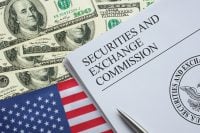
The SEC just opened a legal lane for tokenized stocks, and Solana already holds nearly half the market. But a closer look at the fine print reveals why its head start may count for less than it appears.

This post may contain links from our sponsors and affiliates, and Flywheel Publishing may receive compensation for actions taken through them.

The SEC issued its Innovation Exemption on September 17, 2026, just two days after the Senate narrowly rejected the CLARITY Act by a vote of 49 to 50. This move demonstrates the regulator’s capability to act independently of Congress.
The order temporarily establishes a process for trading tokenized stocks outside traditional exchanges, coinciding with Solana‘s (CRYPTO:SOL) two-year effort to build the largest portfolio of tokenized equities on any blockchain. So does holding this volume position Solana to dominate the market created by the new regulation, or was the regulation intended for a different context?
What the SEC Just Allowed

For years, tokenized equities operated in a legal gray area. Major blockchain networks claimed tokenized equities as a use case, yet no regulator clarified whether US securities laws permitted them. As a result, issuers and US brokers avoided this area, and existing trades occurred on venues without regulatory approval.
The new exemption rectifies this within a defined timeframe. Qualifying platforms, referred to as Tokenized Securities Venues by the SEC, can now trade tokenized National Market System stocks, meaning shares of publicly listed companies converted into tokens, without registering as a national securities exchange.
Certain liquidity providers on these venues can bypass registration as dealers. This relief is effective for five years, allowing sufficient time for a market to form while remaining short enough for the SEC to withdraw if it disapproves of the developments.
Chairman Paul Atkins presented the order as an exercise of the Commission’s existing statutory authority, linking it to the failed Senate bill. Jamie Selway, head of the Division of Trading and Markets, characterized the approval as a significant milestone, indicating that the SEC does not require new legislation to establish this trade lane. However, the lane created is narrower than what the industry anticipated.
What the Rule Leaves Out

The SEC distinguishes between owning a share and merely tracking its price, and only the former qualifies for the exemption. Many discussing tokenized stocks are not aware of this crucial difference. A synthetic token that reflects a stock’s price through derivatives without giving the holder rights to the underlying share falls outside the exemption’s protection.
Each tokenized stock must be backed one-for-one by an actual share, and the token must convey the full set of shareholder rights, such as voting and dividends. Any tokenization that retains rights while only offering price exposure does not benefit from the exemption.
Tokenized Securities Venues face a longer list still. To qualify, a venue must:
- Incorporate in the United States, which rules out the offshore structures most tokenized-stock platforms use today.
- Permission every participant, meaning identity checks on each trading wallet before it can trade.
- Notify the listed company 30 days before adding its stock, where an objection halts the listing and silence permits it to proceed.
- Stay within caps on the number of stocks a venue can list and the volume it can handle.
Solana entered the market before the rule was established, and the regulation was designed for different participants.
Most of This Market Falls Outside the Rule

Solana currently holds approximately $465 million in tokenized stocks, making up nearly half of the market, which crossed the $1 billion mark in the latter half of 2025. Its minimal transaction fees make odd-lot equity settlement feasible on-chain.
Much of this volume was generated through synthetic exposure, as that was the only legal product available while fully backed tokenized stocks were not yet legitimized. These products will require restructuring, and their associated venues must establish US incorporation, introduce permissioning for pools originally designed to be permissionless, and start communicating with issuers before listing.
Robinhood (NASDAQ:HOOD | HOOD Price Prediction) faces a similar challenge on a larger scale. Its Stock Tokens are available in over 120 countries and cater to a network of 28 million customers, yet they are structured as tokenized debt instruments redeemable for cash rather than actual equity, resulting in no shareholder rights for holders.
Its earlier European tokens are derivatives linked to more than 2,000 stocks, raising questions about their legal status and prompting the Bank of Lithuania to seek clarity. Coinbase (NASDAQ:COIN) stands out as an exception, having introduced tokenized US stocks that are backed one-for-one by the underlying equities, complete with automatic on-chain dividend payments, aligning with the SEC’s regulatory framework.
Two more competitors emerged in the same two weeks. Circle Internet Group (NYSE:CRCL) launched its Arc mainnet on September 16, with a consortium including BlackRock, DTCC, Galaxy, ICE, Mastercard, Visa, Standard Chartered, and Worldpay as founding validators, integrating the NYSE parent into a public blockchain. Galaxy Digital (NASDAQ:GLXY) is also validating Arc and has launched SWEEP, a tokenized private liquidity fund, in collaboration with State Street.
Is Solana the Biggest Winner?
Yes, in terms of numbers. Solana holds $465 million in assets, about half of the tokenized stock market, and its fees are well-suited for equity settlements. If this activity continues after regulatory changes, Solana will have the largest inventory and fastest transaction speeds.
However, a head start does not guarantee success. Solana’s platforms need to restructure as US entities that approve every wallet and ensure shareholder rights, similar to Coinbase’s efforts.
Additionally, S&P 500 issuers must agree when approached by a platform, because silence counts as consent and any objection will halt a listing. Ultimately, the winning blockchain may be the one these issuers choose, giving Solana five years to comply with the SEC’s guidelines.
Contact [email protected] for any questions or corrections.
Sam Daodu is a crypto analyst who's spent nearly a decade making blockchain understandable—no easy task when most whitepapers read like fever dreams. He writes for 24/7 Wall St., covering Bitcoin, altcoins, and crypto market analysis for investors. Before crypto, he was a tech writer (back when explaining "the cloud" was peak innovation). Since 2018, he's written for CoinTelegraph, Yahoo Finance, The Block, Cryptonews, Zypto, Rain, and more—basically anywhere people want crypto news without the headache. Sam runs MacLabs Marketing, a content agency for crypto brands tired of sounding like AI wrote their website. He also publishes free crypto education on his site for Web3 enthusiasts who think "gas fees" is a typo. When he's not writing or staring at charts, Sam's either: - Watching anime (currently convinced One Piece has better tokenomics than most altcoins) - At the gym sculpting himself into a Greek god - Listening to the music your mum warned you only bad boys listen to Connect: LinkedIn | Email | MacLabs Marketing