The ECB Just Launched a Way to Settle Tokenized Assets Without Stablecoins. What It Means for RLUSD and XRP in Europe.
The ECB just quietly shut a door that Ripple was counting on, and European banks now have a central bank alternative to stablecoins for settling tokenized trades. The question is how much of Ripple's European ambitions survive what comes next.

This post may contain links from our sponsors and affiliates, and Flywheel Publishing may receive compensation for actions taken through them.
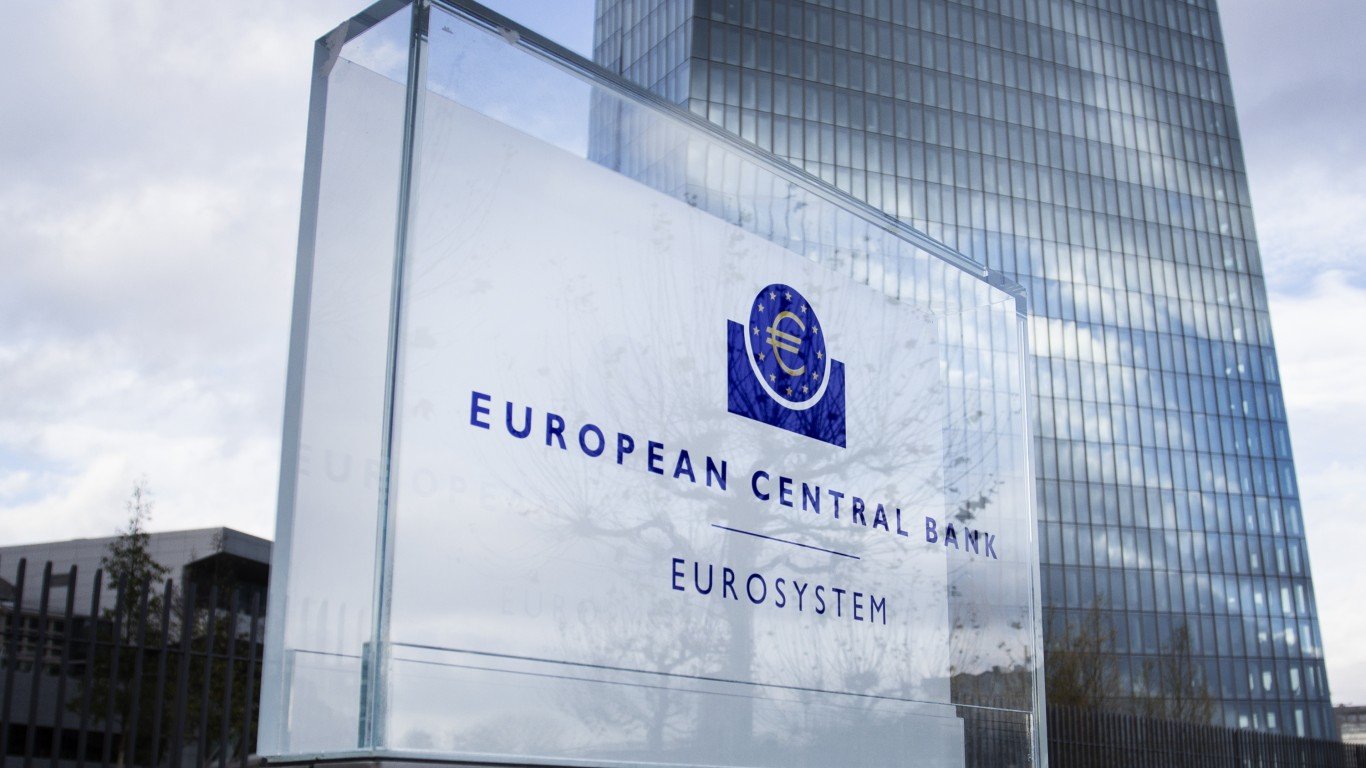
The European Central Bank (ECB) has launched a new settlement system called Pontes. The system lets eurozone banks settle trades involving tokenized assets using central bank money instead of stablecoins. Christine Lagarde announced the launch at a Eurogroup meeting on September 18, and Piero Cipollone, an executive board member overseeing the project, attended the kickoff event in Frankfurt.
Pontes is the ECB’s first live service for tokenized markets, designed to do what Ripple’s RLUSD (CRYPTO:RLUSD) was meant to do for institutions. So, what changes with the ECB’s new system for RLUSD and XRP (CRYPTO:XRP) in Europe, and how does it affect Ripple’s business?
Pontes Settles Tokenized Trades with Central Bank Money, Unlike Stablecoins

A tokenized bond is a bond represented as a digital token on a shared ledger, where a trade involves both the bond and the cash leg of the transaction. Until now, the cash leg required a private token, stablecoin, or tokenized bank deposit. With Pontes, these ledgers are now connected to TARGET Services, the Eurosystem’s payment infrastructure, allowing cash to settle as a claim on the ECB.
The key difference is who holds responsibility for the money transferred. A stablecoin is a promise from a private company that can later be redeemed for bank deposits and is backed by reserves. In contrast, central bank money is a direct liability of the ECB, and regulators view it as the safest settlement asset. This distinction is why Pontes was created.
Pontes’s launch is intentionally limited in scope. Initially, thirteen eurozone banks and four ledger operators, including Deutsche Bank, Santander, Société Générale, and the European Investment Bank, are connected. The system runs from 8 AM to 4 PM Central European Time, with plans for continuous operation by mid-2028. During its testing phase from May to November 2024, the ECB successfully settled more than €1.5 billion in trades.
The Euro Wholesale Lane Now Belongs to the ECB, While 37 Banks Develop Their Own Solutions

In 2026, Ripple has been promoting RLUSD, its dollar stablecoin, as a settlement asset for institutions, and it has secured a preliminary MiCA license to operate in the EU. Currently, RLUSD has about $2.4 billion in circulation across both the XRP Ledger and Ethereum. However, the trades that Pontes settles are what RLUSD was designed to facilitate. Now, for euro transactions between banks, the ECB has stepped in before any private token could establish a foothold.
Meanwhile, Qivalis, a consortium of 37 European banks, including ING and BNP Paribas, is working on a MiCA-compliant euro stablecoin for launch in the second half of 2026, pending authorization from the Dutch central bank. Their announcement highlights that euro tokens currently make up only 0.2% of the global stablecoin market, which they aim to capture. With Pontes handling bank-to-bank trades, the ECB has already taken part of that market.
The landscape for euro tokenized settlement is thus being shaped from the top down: the ECB is managing bank-to-bank trades while a consortium tackles other euro transactions. This leaves a dollar stablecoin issuer like Ripple with limited opportunities in that market segment. It hasn’t lost any established lanes, but it has missed the chance to enter them.
Ripple’s Business Operates Outside the Scope of Pontes

Pontes is deliberately narrow in focus, which is where Ripple can still thrive. Transactions involving dollar flows fall outside its remit, as do cross-border trades that exit the Eurosystem. Non-bank entities, such as payment companies and asset managers, cannot connect to it because access is restricted to licensed banks. Retail transactions and trades occurring outside working hours are also excluded until continuous operation becomes available in 2028.
These are the very areas XRP was designed to serve. Ripple utilizes XRP as a bridge asset, enabling quick currency exchanges needed for international payments. For example, a European bank looking to pay a supplier in Mexico or the Philippines has no central bank token to facilitate that transaction. Pontes deals exclusively with euro-to-euro settlements within the Eurosystem.
Furthermore, the timing is also a crucial factor. A bank wishing to settle a tokenized trade at 9 PM on a Friday in 2026 cannot do so using Pontes, which has a two-year wait for continuous service. In contrast, a stablecoin on a public ledger can facilitate that trade promptly. Until 2028, the only operational option outside of the ECB’s platform for euro transactions will be a private token.
What Pontes Means for RLUSD and XRP in Europe
For RLUSD, the euro bank-to-bank lane is effectively closed before it even launched. When a eurozone bank wants to transfer a tokenized euro bond to another eurozone bank during business hours, it can now settle with the ECB’s own money. This choice will always be preferred over a private dollar token, regardless of licensing. As a result, the market for any stablecoin aiming to be Europe’s main transaction method takes a hit, and Qivalis is preparing to dominate the private euro market.
For XRP, Pontes’ impact is minimal. The coin’s role starts where Pontes ends: at the border, dealing in dollars, with non-banks, and mainly after 4 PM. The challenge is that the future relies on keeping these channels open, and according to the ECB, that vision extends to 2028. If Pontes expands beyond 13 banks and the ECB begins to settle its bond trades through it, the euro situation will become clear. Once Qivalis gets off the ground, XRP’s potential in Europe will hinge on cross-border transactions and timing.
Contact [email protected] for any questions or corrections.
Sam Daodu is a crypto analyst who's spent nearly a decade making blockchain understandable—no easy task when most whitepapers read like fever dreams. He writes for 24/7 Wall St., covering Bitcoin, altcoins, and crypto market analysis for investors. Before crypto, he was a tech writer (back when explaining "the cloud" was peak innovation). Since 2018, he's written for CoinTelegraph, Yahoo Finance, The Block, Cryptonews, Zypto, Rain, and more—basically anywhere people want crypto news without the headache. Sam runs MacLabs Marketing, a content agency for crypto brands tired of sounding like AI wrote their website. He also publishes free crypto education on his site for Web3 enthusiasts who think "gas fees" is a typo. When he's not writing or staring at charts, Sam's either: - Watching anime (currently convinced One Piece has better tokenomics than most altcoins) - At the gym sculpting himself into a Greek god - Listening to the music your mum warned you only bad boys listen to Connect: LinkedIn | Email | MacLabs Marketing