Bitcoin Is Up 33% in 90 Days but Still Down 30% From Last Year: Who’s Still Facing Losses?
Bitcoin has staged an impressive quarterly comeback, but millions of buyers are still watching their portfolios bleed red. Whether you break even depends entirely on one number: the price you paid.


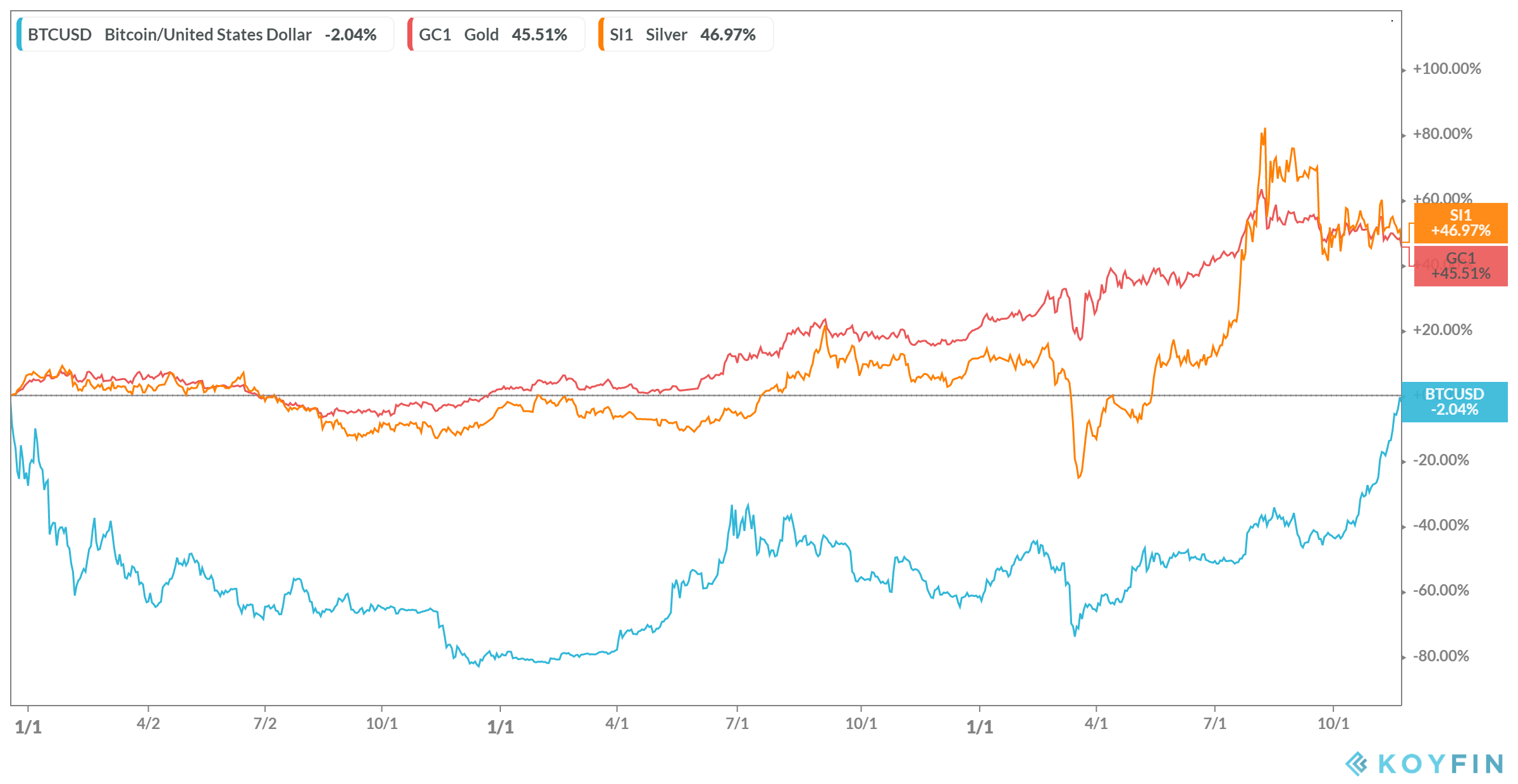
Bitcoin (CRYPTO: BTC) has surged 33.4% over the past 90 days; however, it still trades 29.7% below its price a year ago. This means many buyers have yet to hit their Bitcoin break-even price. The recent rally has pushed Bitcoin from around $63,400 in early July 2026 to nearly $84,621 as of October 3. Despite this rebound, Bitcoin remains about 32.9% below its all-time high of $126,080 recorded in October 2025.
With such strong quarterly growth, we must ask: which Bitcoin buyers are still facing losses?
Bitcoin’s 33% Quarter Still Leaves Many Buyers Underwater

While a 90-day gain highlights recent performance, it doesn’t reflect where most buyers initially entered the market. Bitcoin’s rise began at $63,400, down from about $120,400 a year ago.
Additionally, recovering from a loss requires a more substantial percentage gain. Bitcoin needs to rise about 42% to return to last year’s price and about 49% to hit its record high, even after this recent 33.4% gain.
Looking more closely, momentum has slowed recently. Bitcoin rose 31.4% over the past two months but only gained 7.8% in the last month and just 0.5% over the past week. Most of the significant gains occurred between early August and early September.
Bitcoin’s Break-Even Price Depends on When Buyers Paid

Each holder’s result depends largely on their entry price. Anyone who bought Bitcoin at prices above $84,621 is currently at a loss. The breakdown below shows how much Bitcoin needs to rise for buyers at different entry points to break even.
| Entry Point | Price Paid | Increase Needed to Break Even |
|---|---|---|
| Record High | $126,080 | +49% |
| A Year Ago | About $120,400 | +42% |
| Start of 2026 | About $88,750 | +4.9% |
| Strive’s Latest Purchase | $85,396 | +0.9% |
| Strategy’s Average Cost | $75,419 | None (already 12% in profit) |
Buyers who entered on January 1 need only a 4.9% increase, as Bitcoin is down 4.7% this year. However, those who bought near the all-time high need a nearly 50% increase, while buyers who entered around $63,400 in early July are currently seeing about a 33% gain.
Strategy Holds a Profit While Strive’s Latest Bitcoin Batch Is Underwater

Most Bitcoin transactions occur on exchanges and through ETFs, and individual buyers usually don’t share their purchase costs. However, Strategy Inc. (NASDAQ: MSTR | MSTR Price Prediction), a software company that has shifted to holding Bitcoin, reports an average purchase price of $75,419, for a gain of about 12%.
In contrast, Strive (NASDAQ: ASST), an asset manager with a Bitcoin treasury, purchased its latest batch at an average price of $85,396, putting it about 0.9% above the current price. The timing of purchases matters. Strategy’s average includes older, lower-cost purchases, while Strive’s recent acquisition reflects higher prices.
These examples cover only two companies. Public data doesn’t show the overall percentage of Bitcoin holders who are underwater, so any estimates remain speculative.
Which Bitcoin Buyers Are Still at a Loss in 2026?
In summary, anyone who paid more than about $84,621 is still facing losses. This includes buyers from the beginning of 2026, those who bought a year ago, and anyone who entered near the $126,080 record. Most recent gains benefited long-term holders like Strategy and those who bought near the July lows.
For recent buyers, regaining their Bitcoin break-even price may require patience. Many may sell once they reach that point, potentially slowing Bitcoin’s ascent between $85,000 and $89,000. Additionally, if the price falls below $75,419 (roughly 11% lower), it could even push Strategy’s average purchase price underwater. The question remains: Will Bitcoin surpass the start-of-year Bitcoin break-even price of around $88,750 before the end of 2026?
Contact [email protected] for any questions or corrections.
Sam Daodu is a crypto analyst and the editor of 24/7 Wall St.'s Crypto Desk, where he covers Bitcoin, XRP, Ethereum, Solana and the altcoins investors search for most. His work focuses on price levels, spot ETF flows, on-chain data and the regulatory decisions that move crypto markets, written so a first-time buyer and a seasoned trader can both use it.
Sam has written about crypto professionally since 2019 and has published more than 2,000 articles. Before joining 24/7 Wall St., he wrote for crypto media outlets and Web3 companies and ghostwrote for crypto founders and token launches. His analysis is syndicated on Yahoo Finance, MSN and AOL and has been cited by other crypto news sites. He also founded MacLabs Marketing, a content and personal branding agency for crypto founders and executives.
When he isn't reading charts, Sam is usually at the gym or watching One Piece, a series he maintains has better tokenomics than most altcoins.